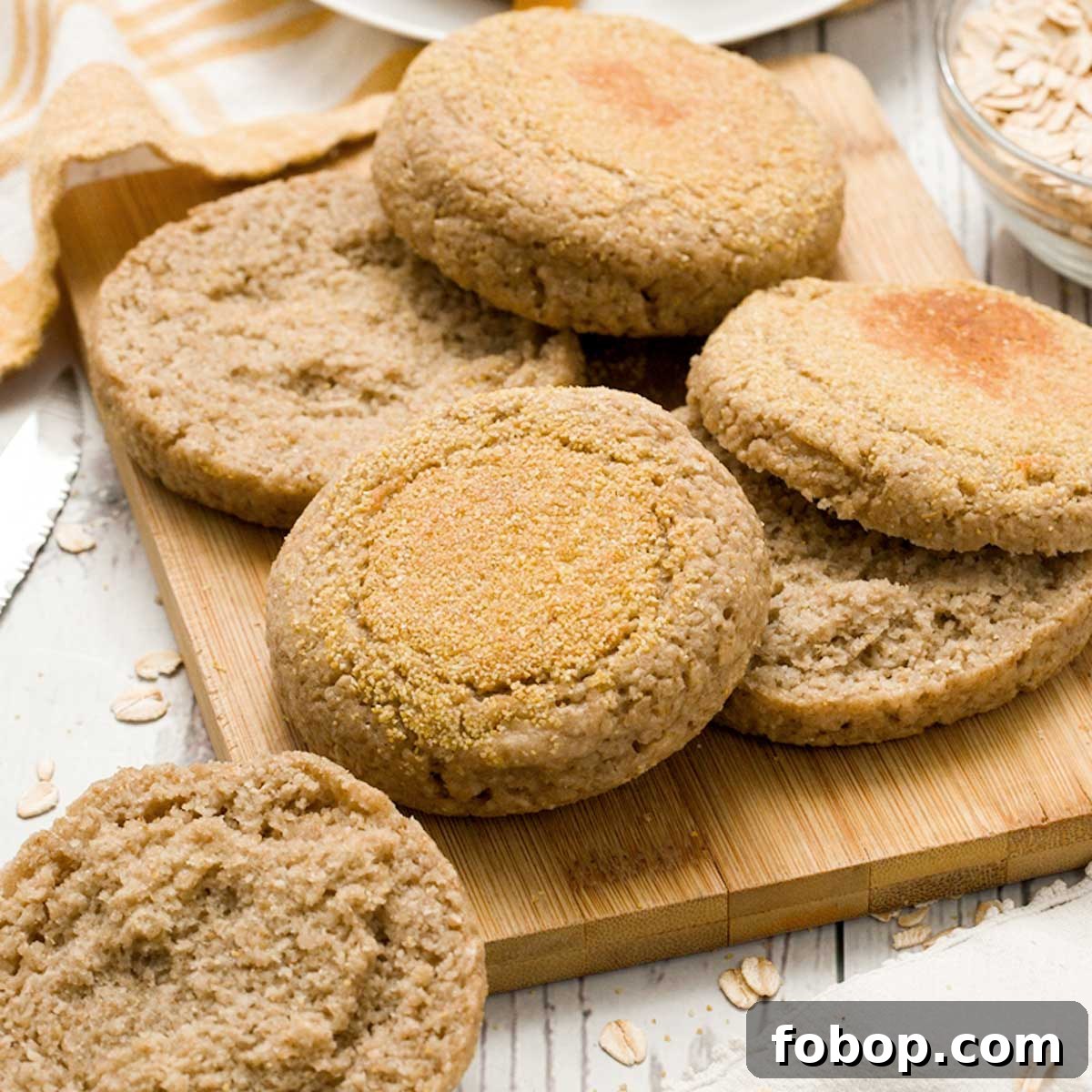
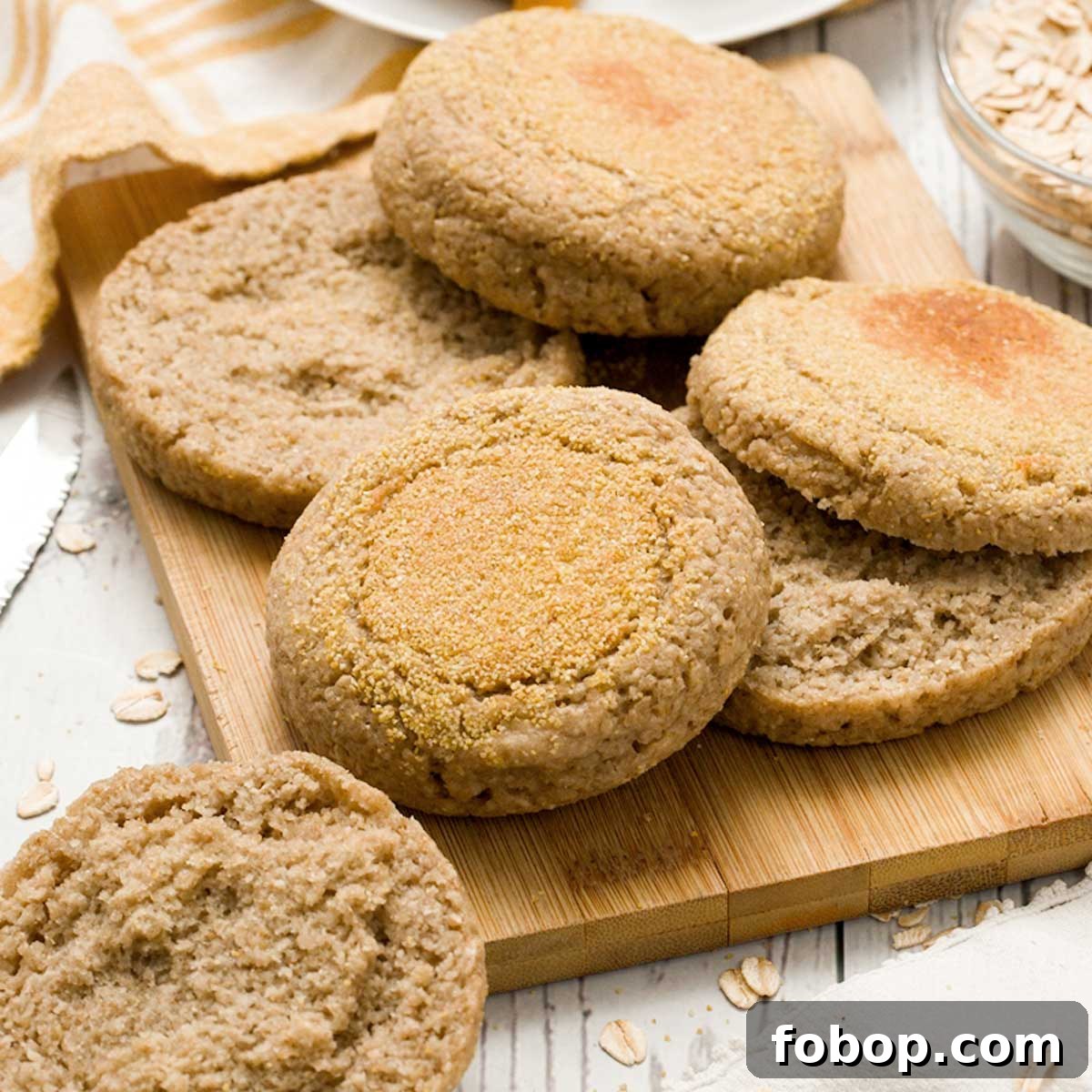
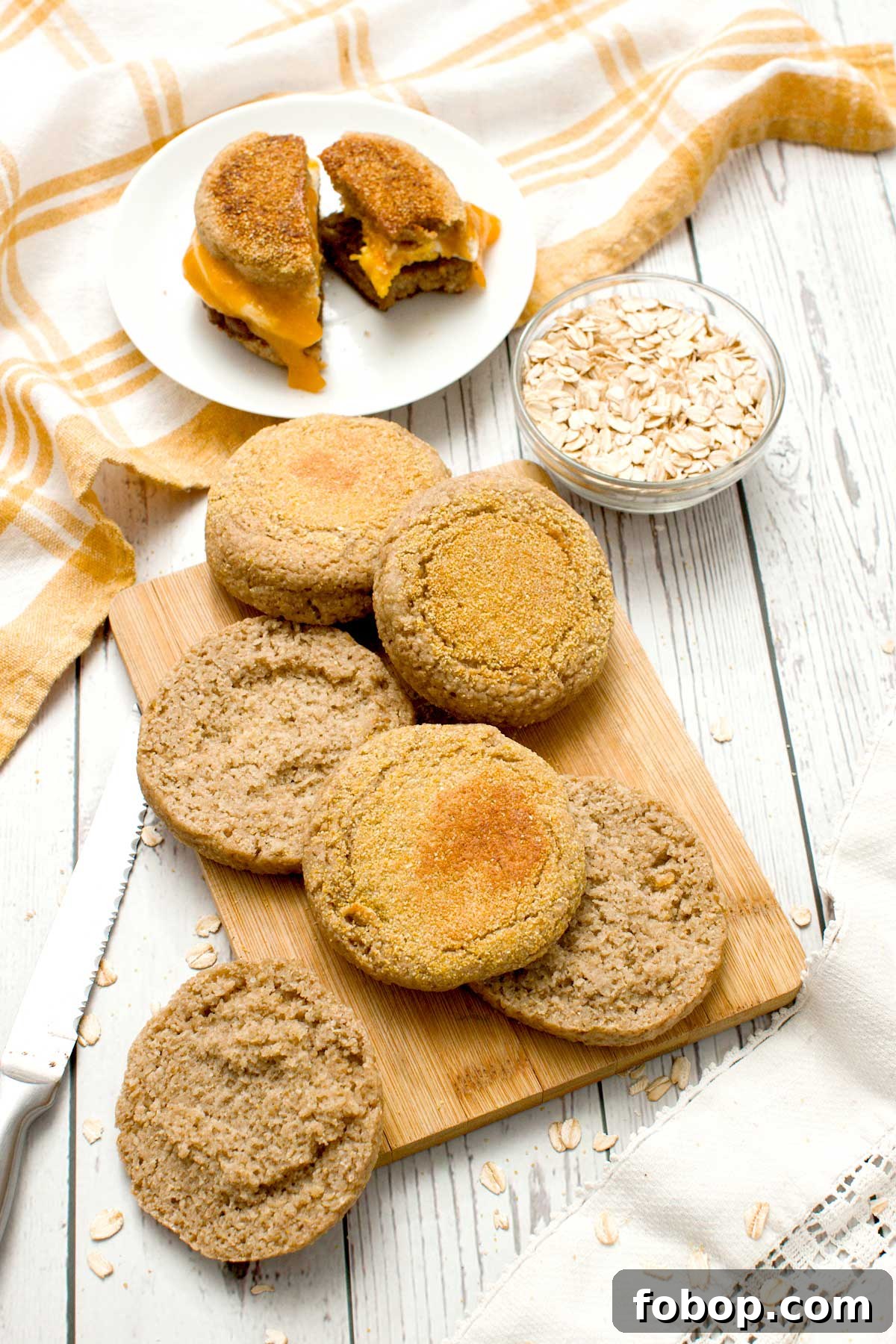
These oat flour English muffins are made on the stovetop, not in a microwave mug. Cooking them in a covered skillet builds structure and yields a lightly crisp exterior when toasted—much closer to a classic English muffin than many quick, spongy versions.
The recipe uses simple ingredients: thick Greek yogurt, oat flour, baking powder, baking soda, and a splash of apple cider vinegar. There’s no yeast and no long rise time. The yogurt contributes moisture and a subtle tang, while the vinegar reacts with the leavening so the muffins lift without tasting eggy or dense.
I tested variations—different heat, extra egg, oven methods—and returned to this stovetop approach because it produces muffins that split cleanly, toast well, and hold up in breakfast sandwiches. They aren’t identical to long-fermented English muffins, but they’re quick, reliable, and excellent for everyday use.
Why This Oat Flour English Muffin Recipe Works
- Stovetop cooking creates real structure: A covered skillet traps steam while the pan sets the exterior, giving a firm, bread-like texture instead of a spongy center.
- Greek yogurt replaces yeast fermentation: The yogurt and apple cider vinegar add acidity that activates the leavening without a rise time, delivering tang and lift.
- Lower egg ratio avoids “omelet bread”: Using minimal egg keeps the flavor neutral and prevents an egg-forward taste.
- Designed to split and toast: These muffins set as they cool, split cleanly, and toast to crisp edges while keeping a sturdy interior for sandwiches.
Why Stovetop English Muffins Are Better Than Microwave Versions
Microwave recipes are fast but often sacrifice texture. The microwave cooks from the inside out and can leave muffins damp or overly spongy unless heavily toasted.
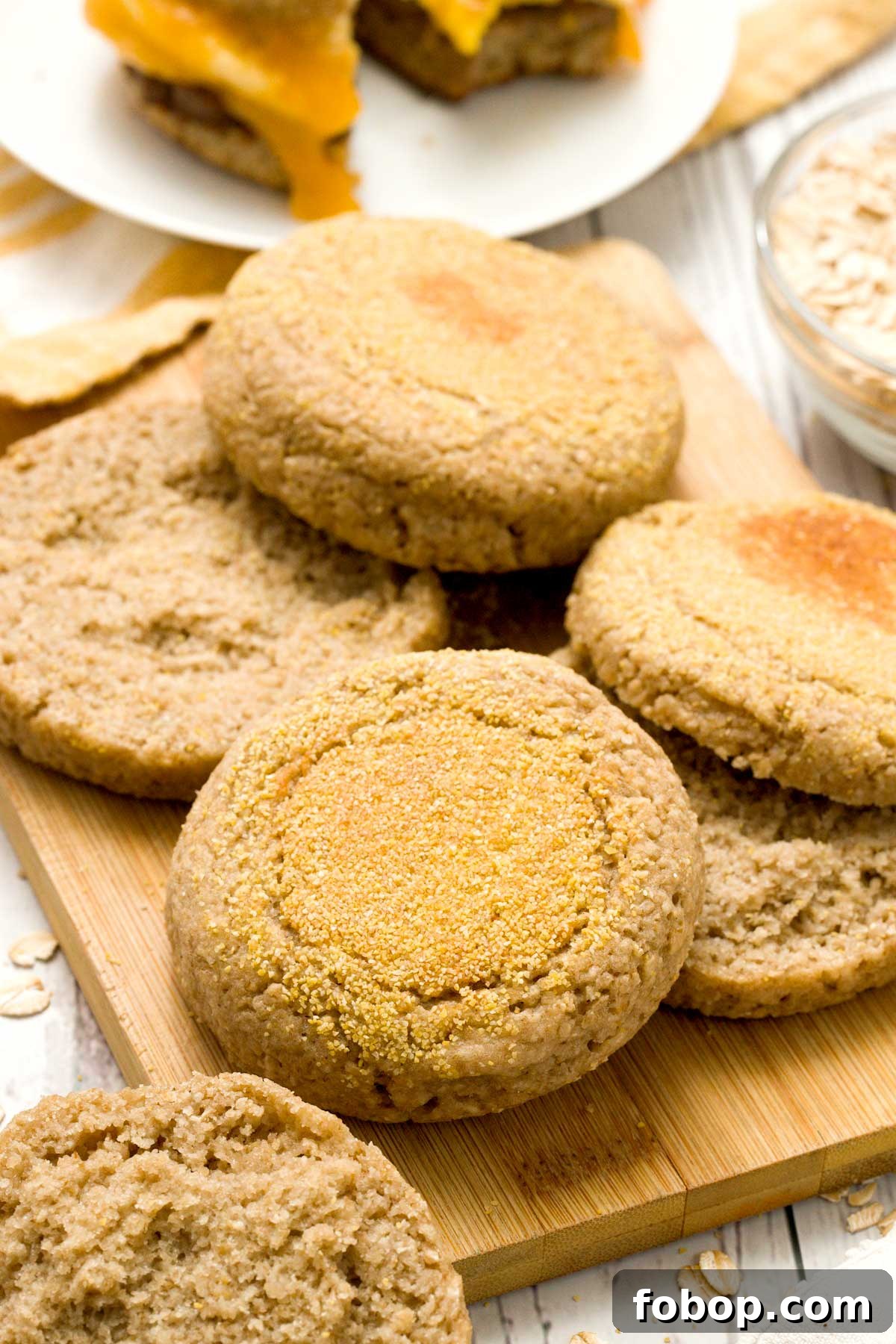
Stovetop cooking gives direct heat to set the outside while a lid traps steam so the interior cooks through more gently. The result holds its shape, splits with the classic nooks and crannies, and toasts like bread—not like a thick pancake pretending to be an English muffin.
This method adds a few minutes but produces a much better final texture for sandwiches and meal prep.
Ingredients & Substitutions
What I use and why it matters for texture and flavor
- Greek Yogurt (thick): Provides structure and acidity. Regular, runnier yogurt made the dough spread and cook unevenly. For dairy-free, use a very thick Greek-style alternative.
- Oat Flour: Absorbs moisture more slowly, so muffins continue to firm up as they cool. Use store-bought oat flour or grind rolled oats until fine.
- Flour Alternatives: The recipe is adaptable, but leavening amounts change with different flours—see the table below for guidance.
| FLOUR | MEASUREMENTS | BAKING SODA AMOUNT |
|---|---|---|
| Oat Flour | 1 cup (129g) | 1/2 teaspoon |
| Almond Flour | 1 cup (112g) almond flour + 1/4 cup (34g) tapioca flour | 1/2 teaspoon |
| Gluten-Free Flour (without xanthan gum) | 3/4 cup (128g) | reduce to 1/4 teaspoon |
| All-Purpose Flour | 3/4 cup (104g) | reduce to 1/4 teaspoon |
- Apple Cider Vinegar: Activates baking soda and adds light tang. White vinegar or lemon juice also work.
- Maple Syrup (optional): Adds a touch of sweetness without making the muffins dessert-like. Honey or agave are fine, or omit entirely.
- Baking Powder: Adds lift and structure—best left as listed.
- Baking Soda: Works with the yogurt and vinegar for extra rise. You can omit it and increase baking powder, but the texture will be softer.
- Salt: Balances flavor and acidity.
- Cornmeal: Pressing dough into cornmeal before cooking gives the classic English muffin exterior. Almond or extra oat flour can be used if needed.
Easily Adapt This Recipe for Your Diet
The recipe is flexible and simple to modify while keeping texture and flavor close to the original.
- Gluten-Free: The recipe is gluten-free when made with certified gluten-free oat flour or the listed gluten-free options.
- Dairy-Free: Use a thick dairy-free Greek-style yogurt; results vary by brand. The dough should be sticky but hold its shape.
- Lower Carb: Use the almond flour plus tapioca option from the table for a lower-carb version.
- Egg-Free: This recipe contains no eggs, avoiding an egg-forward flavor.
Pro Tip: When substituting, watch dough thickness—it should be soft and slightly sticky, not pourable. Adjust yogurt or flour a teaspoon at a time until right.
How to Make My Gluten-Free English Muffin Recipe
Clear step-by-step instructions to make oat flour English muffins on the stovetop. The same steps appear in the recipe card at the bottom.
Step 1: Make the Muffin Dough
In a medium bowl, whisk together 2/3 cup thick Greek yogurt, 1 teaspoon apple cider vinegar, and 1 tablespoon maple syrup (optional) until combined.
Add 1 cup oat flour, 2 teaspoons baking powder, 1/4 teaspoon baking soda, and 1/4 teaspoon salt. Stir with a sturdy spatula or in a stand mixer until you have a slightly sticky, soft dough.
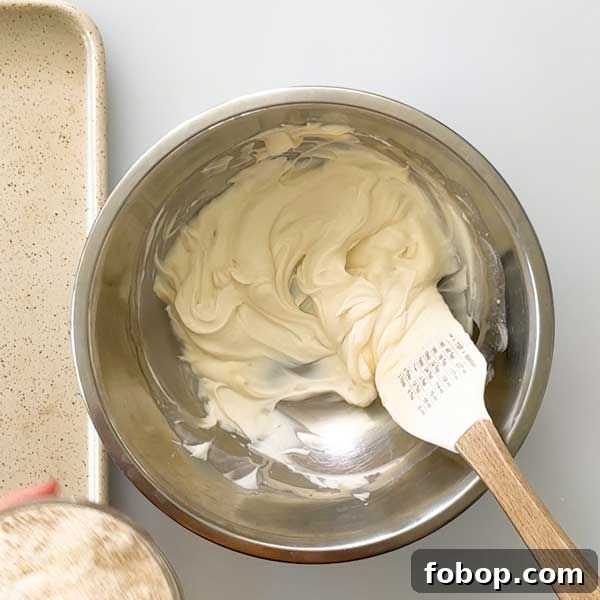
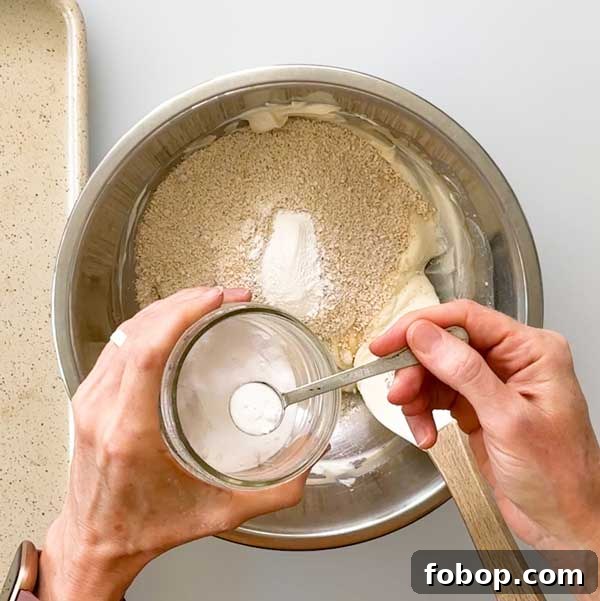
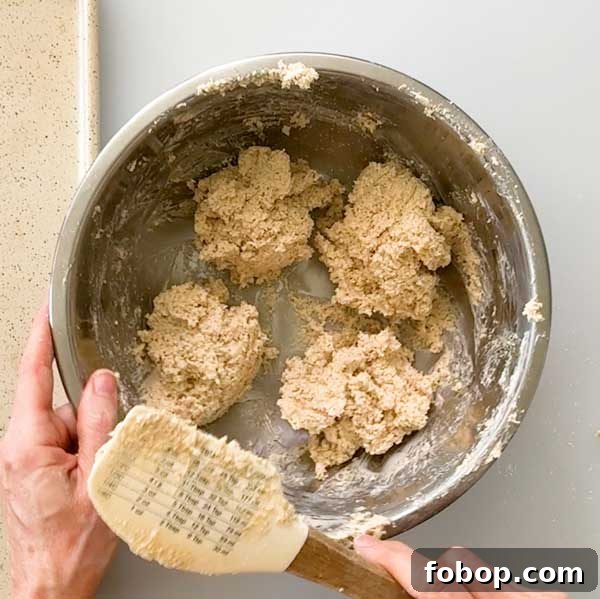
Step 2: Shape the Muffins
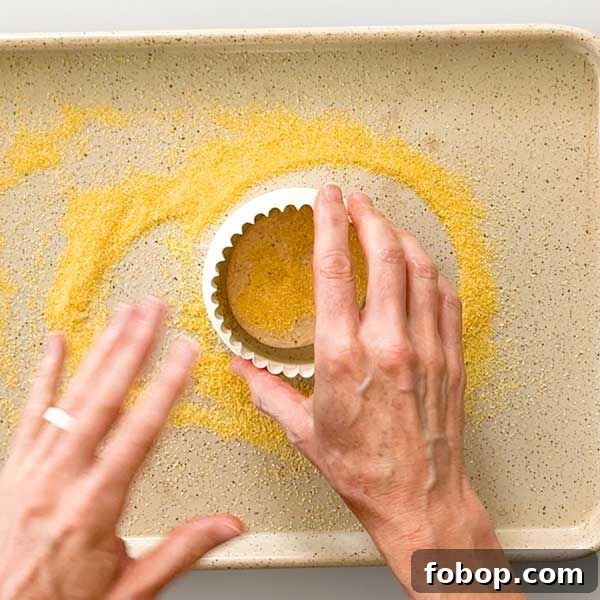
Scatter 1 tablespoon cornmeal on a plate or sheet pan. Divide the dough into four equal portions. Lightly oil your hands and shape each portion into a round disk about 3/4 inch thick.
Note: If using gluten-free flour blends or all-purpose flour instead of oat flour, avoid oiling your hands—use a light dusting of extra flour to prevent sticking.
Press each side of the disks into the cornmeal for that classic English muffin texture. For perfectly round shapes, press the dough inside a slightly larger cookie cutter.
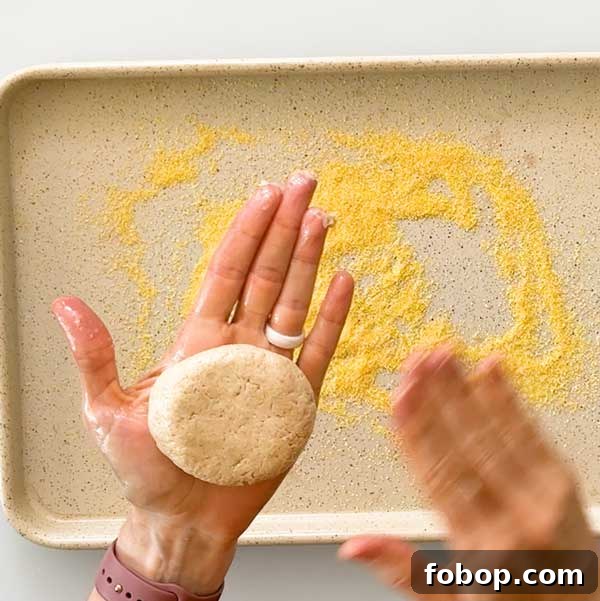
Step 4: Cook the Muffins
Preheat a skillet or griddle over medium-low heat. Place the muffins on the hot surface, cover the pan, and cook 8–10 minutes per side, until golden and cooked through. Watch the heat so they don’t brown too quickly before the centers set. Let the muffins cool completely before slicing.




Expert Tips
Watch the heat: Cook over medium-low. Too hot browns the exterior before the center sets; too low can dry them out.
Use a lid: Covering the pan traps steam to help them cook evenly and avoid a dense center.
Check dough texture: The dough should be thick and slightly sticky. If dry, add a teaspoon of Greek yogurt at a time; if wet, sprinkle in oat flour.
Cool before slicing: Oat flour continues to set as it cools—cutting too soon can make the center appear gummy.
Toast for best texture: Slice and toast to crisp the edges and make them sturdy for sandwiches.
Serving Suggestions
- Cottage cheese scrambled eggs: High-protein, soft eggs pair well with these muffins.
- Jam and butter: Toast and spread with butter or jam for a simple classic.
- Breakfast sandwiches: Use for eggs, cheese, and sausage or bacon—these hold up well.
- Mini pizzas or open-faced toasts: Toasted muffins make a great base for savory toppings.
Cool completely, then store in an airtight container at room temperature for 1–2 days or refrigerate up to 5 days. Split and toast before serving for best texture.
Yes. Bake at 350°F (175°C) for about 10–15 minutes, flipping halfway. The texture may be slightly less crispy than pan-cooked muffins.
They should be golden on both sides and firm. A toothpick inserted in the center should come out clean. If the outside browns too fast, lower the heat and cook longer.
Yes—see the flour substitution table in the Ingredients section for proportions and leavening adjustments.
Yes. Cool, then freeze in a bag with parchment between muffins so they don’t stick. Toast straight from frozen.
They can be—use certified gluten-free oat flour to ensure they’re safe for gluten-free diets.
Split with a fork to reveal nooks and crannies, then toast in a toaster or on a skillet until golden and crisp.
They’re versatile: serve with eggs, avocado, nut butter, jam, or use as sandwich bases. They also work well with soup or as mini pizza crusts.
Do you love yeast-free breads? Check out more easy, no-yeast recipes
- Gluten-Free Cinnamon Pretzel Bites (No Yeast)
- Gluten-Free Cottage Cheese French Bread (No Yeast)
- Cheesy Gluten-Free Garlic Protein Bread (No Yeast)
- Oat Cottage Cheese Bread Sandwich Bun (Gluten-Free)
- Greek Yogurt Flatbread / Naan (No Yeast)
- Gluten-Free Breadsticks (Olive Garden copycat)
- Easy Gluten-Free Buns (Lower Carb with Almond Flour)
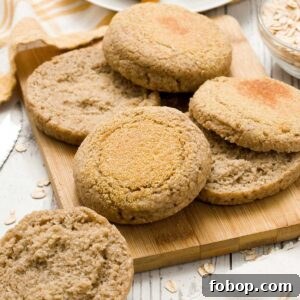
Oat Flour English Muffins (No Yeast, Gluten-Free)
Gluten-Free
Ingredients
- 2/3 cup Greek yogurt (160 ml)
- 1 teaspoon apple cider vinegar
- 1 tablespoon maple syrup (optional)
- 1 cup oat flour (~130 g)
- 2 teaspoons baking powder
- 1/2 teaspoon baking soda
- 1/4 teaspoon salt
- 1 tablespoon cornmeal
Instructions
- In a medium bowl, combine 2/3 cup Greek yogurt, 1 teaspoon apple cider vinegar, and 1 tablespoon maple syrup (if using). Mix until smooth. Add 1 cup oat flour, 2 teaspoons baking powder, 1/4 teaspoon baking soda, and 1/4 teaspoon salt. Stir until a slightly sticky dough forms.
- Sprinkle 1 tablespoon cornmeal on a plate. Divide the dough into 4 equal portions. Lightly oil your hands and shape each portion into a round disk about 3/4 inch thick. If using a flour blend or all-purpose flour, dust with extra flour instead of oil to prevent sticking. Press each side into the cornmeal.
- Place muffins on a preheated skillet or griddle over medium-low heat. Cover and cook 8–10 minutes per side, until golden and cooked through. Adjust heat as needed to avoid overbrowning. Cool completely before slicing.
Video
Notes
Homemade oat flour: Blend rolled oats until finely ground if you don’t have oat flour.
Texture: Dough should be thick and slightly sticky. Add yogurt 1 tsp at a time if too dry, or a little oat flour if too wet.
Cooking: Cook over medium-low and cover to trap steam so the centers cook without burning the exterior.
Toasting: Slice and toast for a crisp finish—perfect for sandwiches or spreads.
Nutrition
Carbohydrates: 27 g
Protein: 8 g
Fat: 3 g
A 5-star review helps others find recipes that actually work.
Important Disclaimer
This recipe was created by a home cook and is not medical advice. Our ingredient approach is reviewed by registered dietitians, but this post is not personalized guidance. Consult a healthcare provider for dietary concerns.
(10)