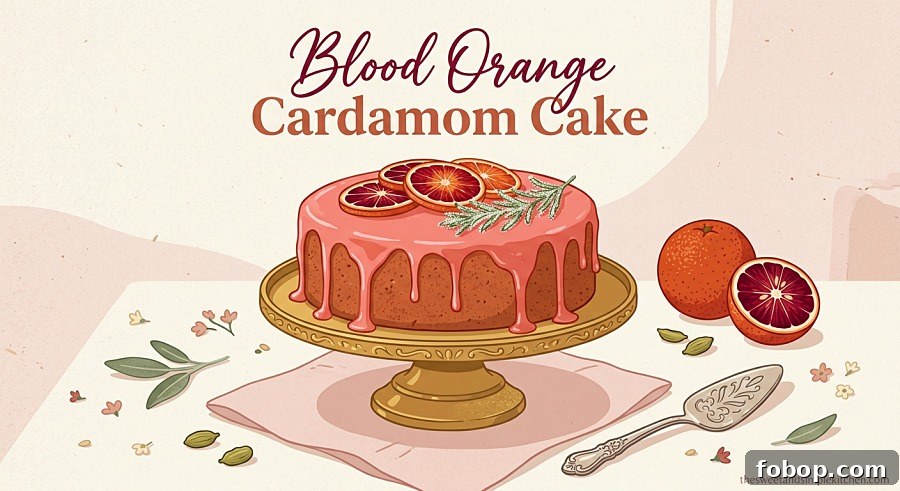
If you’ve ever bitten into a blood orange and wished every cake tasted that bright and fragrant, this blood orange cardamom cake is for you. I make it repeatedly from January through March when blood oranges are at their best. The crumb is tender and plush, the cardamom brings a warm floral note without overpowering the citrus, and the naturally pink blood orange glaze is one of the prettiest finishes you can bake this season.
Blood orange cardamom cake is a moist, butter-based citrus cake flavored with fresh blood orange zest, juice, and ground green cardamom, finished with a glossy blood orange glaze that turns pink naturally. It bakes in one pan in about 35–40 minutes and works equally well as a coffee cake or a celebration dessert.
Below is the full recipe and practical guidance: a quick guide to blood orange varieties, a concise cardamom primer, pan-size conversions, common pitfalls to avoid, and concise answers to the most frequently asked questions about this cake.
Table of Contents
Blood Orange Cardamom Cake Recipe at a Glance
| Detail | Info |
|---|---|
| Prep time | 20 minutes |
| Bake time | 35–40 minutes |
| Total time | About 1 hour 15 minutes (including cooling) |
| Yield | One 9–10 inch round cake (10–12 slices) |
| Difficulty | Easy, beginner-friendly |
| Pan | 9 or 10-inch round, springform, or 10-cup bundt |
| Best season | December through April (blood orange season) |
Why You’ll Love This Cake
What distinguishes this version:
- Tender, plush crumb: Butter, brown sugar, and full-fat sour cream combine to give a soft, slightly melt-in-the-mouth texture without heaviness.
- Natural pink glaze: Anthocyanins in blood orange juice produce a beautiful blush when mixed with powdered sugar—no artificial coloring required.
- Balanced cardamom: The recommended ¾ teaspoon gives a fragrant background note that enhances the orange without overwhelming it.
- Simple method: One bowl for batter, one pan to bake, and a single glaze—no complicated steps.
Ingredients You’ll Need
For the Cake
- ½ cup (113 g) unsalted butter, softened to room temperature
- ½ cup (100 g) granulated sugar
- ½ cup (110 g) light brown sugar, packed
- Zest of 1 blood orange (about 1½ tablespoons)
- 2 tablespoons fresh blood orange juice
- 2 large eggs, at room temperature
- 1 teaspoon vanilla extract
- 1 cup (240 g) full-fat sour cream, at room temperature
- 1½ cups (190 g) all-purpose flour, spooned and leveled
- 2 teaspoons baking powder
- ½ teaspoon baking soda
- ¾ teaspoon ground green cardamom (start with ½ tsp if preferred)
- ¼ teaspoon ground cinnamon
- ¼ teaspoon fine sea salt
For the Blood Orange Glaze
- Juice of 1 large blood orange (about 4–5 tablespoons), minus the 2 tbsp reserved for the cake
- A few drops vanilla extract
- 1½ to 2 cups (180–240 g) powdered sugar, sifted
Optional for Decoration
- Thin blood orange slices (fresh or dried)
- Powdered sugar for dusting
- Fresh rosemary sprigs (sugared if desired)
- 1 egg white + granulated sugar for sugaring herbs
Why Each Ingredient Matters
- Butter + brown sugar: Brown sugar keeps the cake moist and adds a gentle caramel note that complements the citrus.
- Sour cream: Acidity and fat tenderize the crumb and keep it soft.
- Baking powder + baking soda: Soda reacts with acidic ingredients for lift while powder ensures an even rise.
- Zest and juice: Zest delivers aroma; juice provides bright citrus flavor and moisture—both are necessary.
- Green cardamom: Use green cardamom for a citrus-floral note; freshly ground seeds are more aromatic than pre-ground spice.
Tools & Equipment
- 9 or 10-inch round cake pan, springform, or 10-cup bundt pan
- Stand mixer or hand mixer
- Microplane or fine zester
- Citrus juicer or reamer
- Mixing bowls, whisk, and rubber spatula
- Cooling rack and optional offset spatula for glazing
How to Make the Cake (Step by Step)
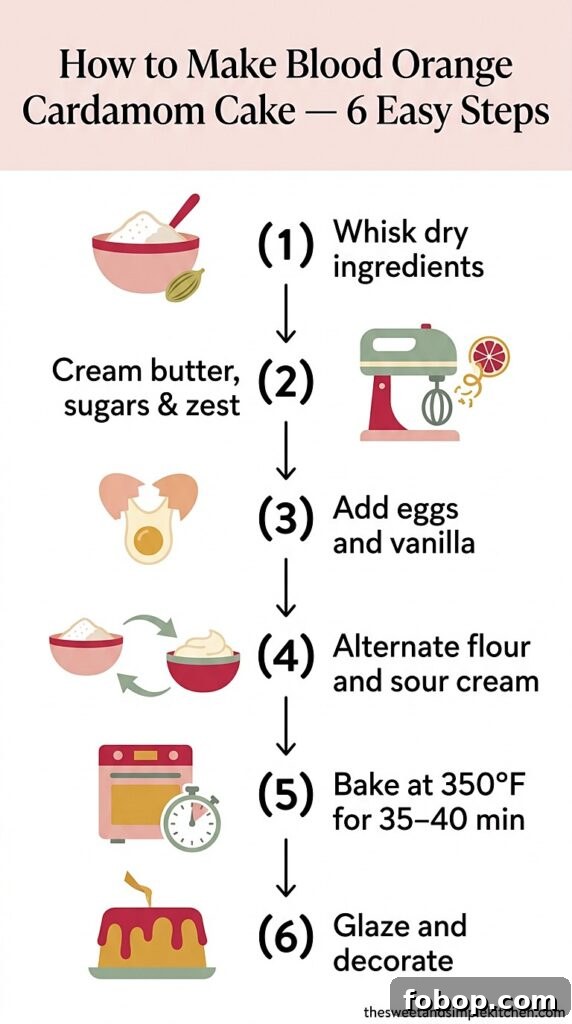
Step 1 — Prep your pan and oven
Preheat the oven to 350°F (175°C). Grease a 9 or 10-inch round pan and line the bottom with parchment, or grease and flour a bundt pan thoroughly.
Step 2 — Whisk the dry ingredients
Whisk together flour, baking powder, baking soda, cardamom, cinnamon, and salt in a medium bowl. Set aside.
Step 3 — Cream the butter, sugars, and zest
Beat softened butter, granulated sugar, brown sugar, and blood orange zest on medium speed until pale and fluffy, about 3 minutes. Proper creaming helps create an airy structure.
Step 4 — Add eggs, vanilla, and orange juice
Add eggs one at a time, beating after each and scraping the bowl. Mix in vanilla and the 2 tablespoons of blood orange juice. The batter may look slightly curdled at this stage—that’s normal.
Step 5 — Alternate flour and sour cream
With the mixer on low, add the dry ingredients in three parts, alternating with sour cream in two additions. Begin and end with the flour mixture. Mix only until each addition disappears.
Step 6 — Bake
Transfer batter to the prepared pan and smooth the top. Bake 35–40 minutes for a 9-inch round (longer for bundt) until a toothpick comes out with a few moist crumbs. Cool in the pan 15 minutes, then transfer to a rack to cool completely before glazing.
How to Make the Blood Orange Glaze
Whisk blood orange juice, vanilla, and 1½ cups sifted powdered sugar until smooth. Add more powdered sugar a tablespoon at a time until the glaze coats the back of a spoon but is still pourable. Pour over a fully cooled cake and let drip naturally.
Pro tip: If your glaze is pale, use Moro blood oranges for the deepest, most vivid pink.
A Quick Guide to Blood Oranges
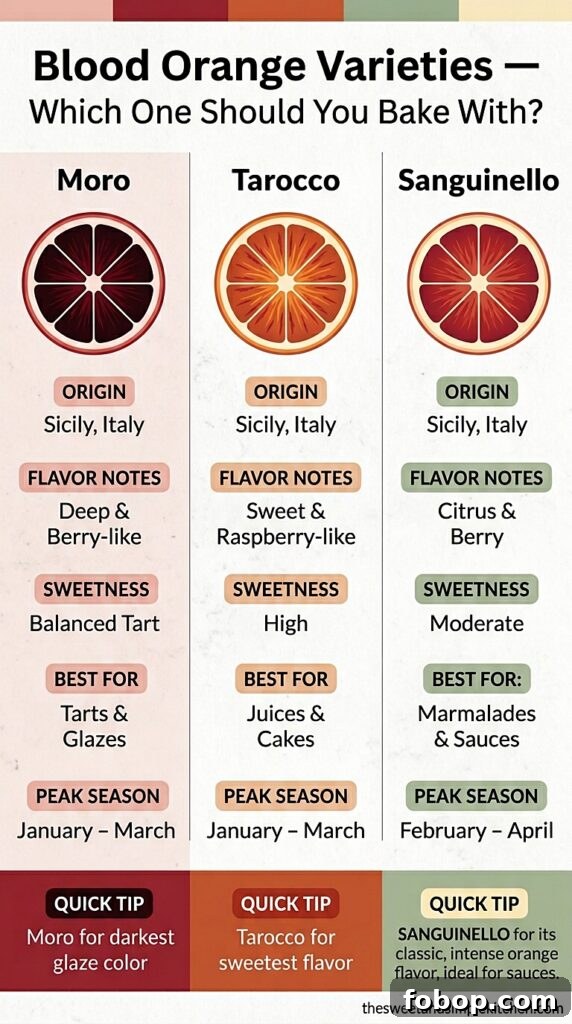
The most common varieties are Moro, Tarocco, and Sanguinello. Moro has the darkest flesh and the boldest flavor, making it ideal for a dramatic pink glaze. Tarocco is sweeter and milder, great for batter when you want a subtler orange note. Sanguinello is sweet-tart and widely available in some regions.
When Are Blood Oranges in Season?
In the U.S., blood oranges are typically available from December through May, with a peak in February and March. If you can’t find them, Cara Cara oranges are a good swap; they offer pink flesh and sweet flavor, though the glaze won’t be as vivid.
All About Cardamom in This Cake
Cardamom complements citrus with floral, slightly minty notes. Use green cardamom for baking—black cardamom is smoky and not suited to sweet cakes. Freshly ground pods are more aromatic than pre-ground spice; roughly 12 pods yield about 1 teaspoon ground.
How Much to Use
| Cardamom Level | Amount |
|---|---|
| Subtle | ½ tsp |
| Balanced (recommended) | ¾ tsp |
| Pronounced | 1 tsp |
Cardamom can become bitter if overused—start at ¾ teaspoon and adjust in future bakes if you prefer more or less intensity.
Pan Size Conversion Chart
| Pan | Bake Time |
|---|---|
| 9-inch round | 35–40 min |
| 10-inch round | 30–35 min |
| 10-cup bundt | 45–55 min |
| 9×5 loaf | 55–65 min |
| Two 8-inch rounds | 22–25 min |
| 12 cupcakes | 18–22 min |
Substitutions That Work
| Ingredient | Substitute |
|---|---|
| Blood orange | Cara Cara, navel + 1 tsp lemon juice |
| Sour cream | Full-fat plain Greek yogurt (1:1) |
| Butter | Neutral oil (equal weight; slightly different crumb) |
| All-purpose flour | 1:1 gluten-free flour blend |
Common Mistakes to Avoid
- Cold ingredients: Make sure butter, eggs, and sour cream are at room temperature so they emulsify properly.
- Overmixing: Stop mixing as soon as the flour is incorporated.
- Skipping zest: Zest carries most of the fruit’s fragrance—don’t omit it.
- Glazing warm cake: Wait until the cake is fully cooled so the glaze stays glossy on top.
- Bottled juice: Fresh-squeezed juice retains color and flavor; bottled juice tends to oxidize and lose pigment.
Pro Tips
- Rub zest into the sugars before creaming to release essential oils and intensify orange flavor.
- Use an oven thermometer to ensure accurate baking temperature.
- Tap the pan gently on the counter before baking to release large air pockets.
- Glaze in two thin layers for a thicker, drippier finish.
How to Decorate
- Keep it simple with just the pink glaze.
- Add fresh or paper-thin dried blood orange slices for a stained-glass look.
- Sugar rosemary sprigs or scatter edible flowers for a special occasion.
How to Store, Freeze, and Make Ahead
- Room temperature: cover loosely, 3 days.
- Refrigerator: airtight container, up to 5 days. Bring to room temperature before serving.
- Freezer (unglazed): wrap tightly and freeze up to 2 months. Thaw, then glaze fresh.
- Make ahead: bake a day ahead and glaze the morning you serve for best sheen.
Variations to Try
- Olive oil version: swap butter for ½ cup extra-virgin olive oil for an Italian-style crumb.
- Almond version: replace ¼ cup flour with almond flour for a nuttier profile.
- Layered cake: bake in two 8-inch pans and fill with mascarpone whipped cream and blood orange curd.
- Mini loaves or cupcakes: adjust bake time as noted in the pan chart.
What to Serve With the Cake
- Strong black coffee or cardamom-spiced chai
- Whipped cream dusted with cardamom
- Vanilla bean or honey ice cream
- Prosecco at brunch
Frequently Asked Questions
Can I use regular oranges instead of blood oranges?
Yes. Cara Cara, navel, or tangelos work well. The flavor remains excellent, but the glaze won’t turn the same pink. If you want color, a small amount of pomegranate or beet juice can be added, though fresh blood orange juice is ideal.
What does cardamom taste like in cake?
Cardamom offers warm, floral, and slightly citrusy notes with hints of mint. At the recommended amount it enhances the orange; used excessively it can taste medicinal.
Why is my blood orange glaze not pink?
Often the cause is a paler variety or bottled juice. Moro blood oranges give the deepest pink. Always use fresh-squeezed juice for best color.
Can I make this cake gluten-free?
Yes. A quality 1:1 gluten-free flour blend that contains xanthan gum works well. Expect a slightly more delicate crumb.
Can I use a bundt pan?
Yes. Use a 10-cup bundt, grease thoroughly, and bake 45–55 minutes. Let cool in the pan for about 10 minutes before unmolding.
How long does the cake stay fresh?
About 3 days at room temperature, up to 5 days refrigerated, or 2 months frozen unglazed. Proper wrapping prevents drying.
Can I make this cake dairy-free?
Yes. Substitute vegan butter and full-fat coconut yogurt or dairy-free sour cream. The result will differ slightly but remains tasty.
Can I double the recipe?
Yes. Double the ingredients and bake in a 9×13 pan for about 40–45 minutes, or split between two 9-inch rounds for layers.
Final Thoughts
If you bake one citrus cake this season, try this one. Blood orange season is short, and this recipe captures the fruit’s raspberry-tinged brightness in a tender cake with a natural pink glaze. Bookmark the recipe and adjust the cardamom to your taste—readers often prefer anywhere from ½ to 1 teaspoon. Happy baking: may your glaze be pink and your crumb be plush.