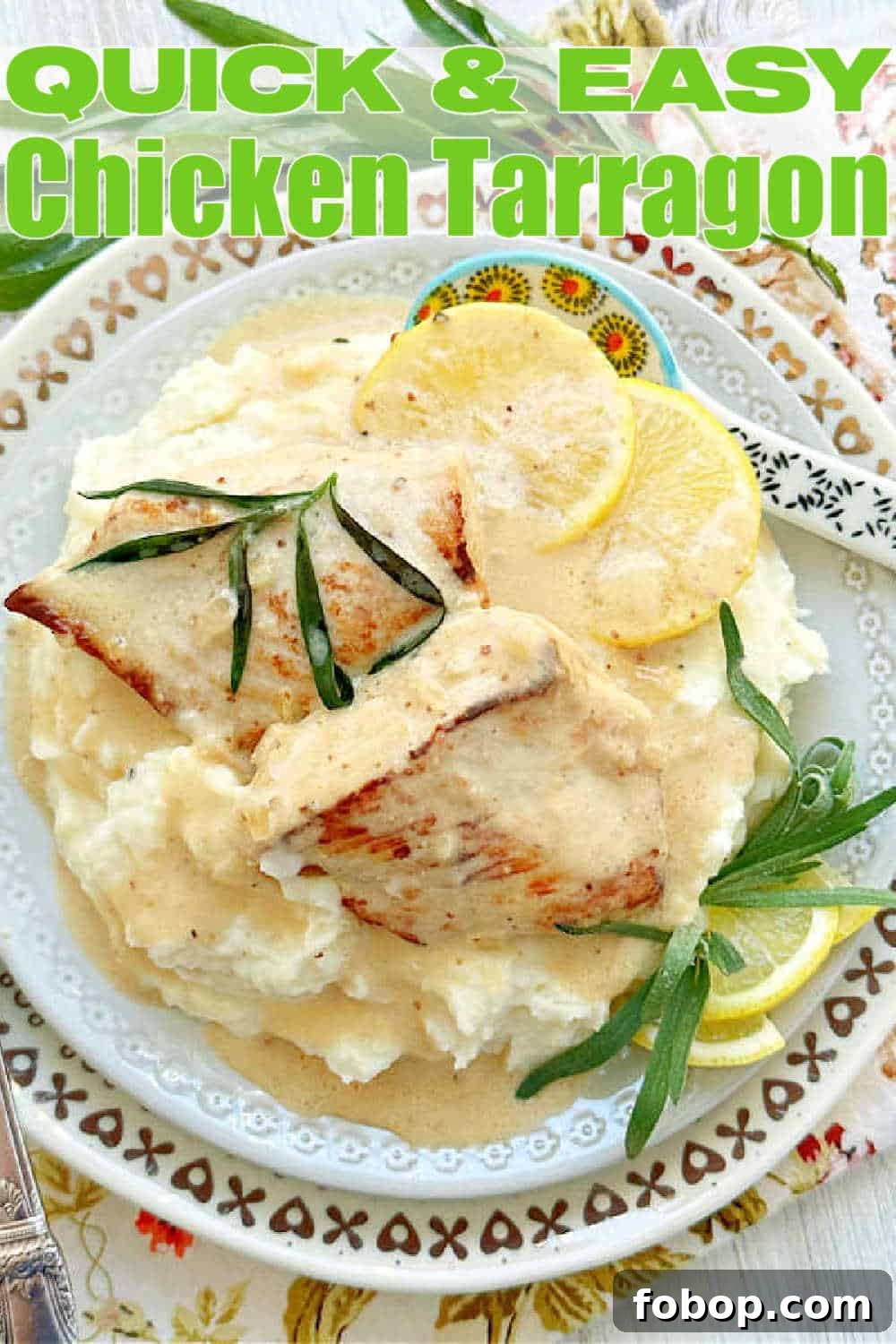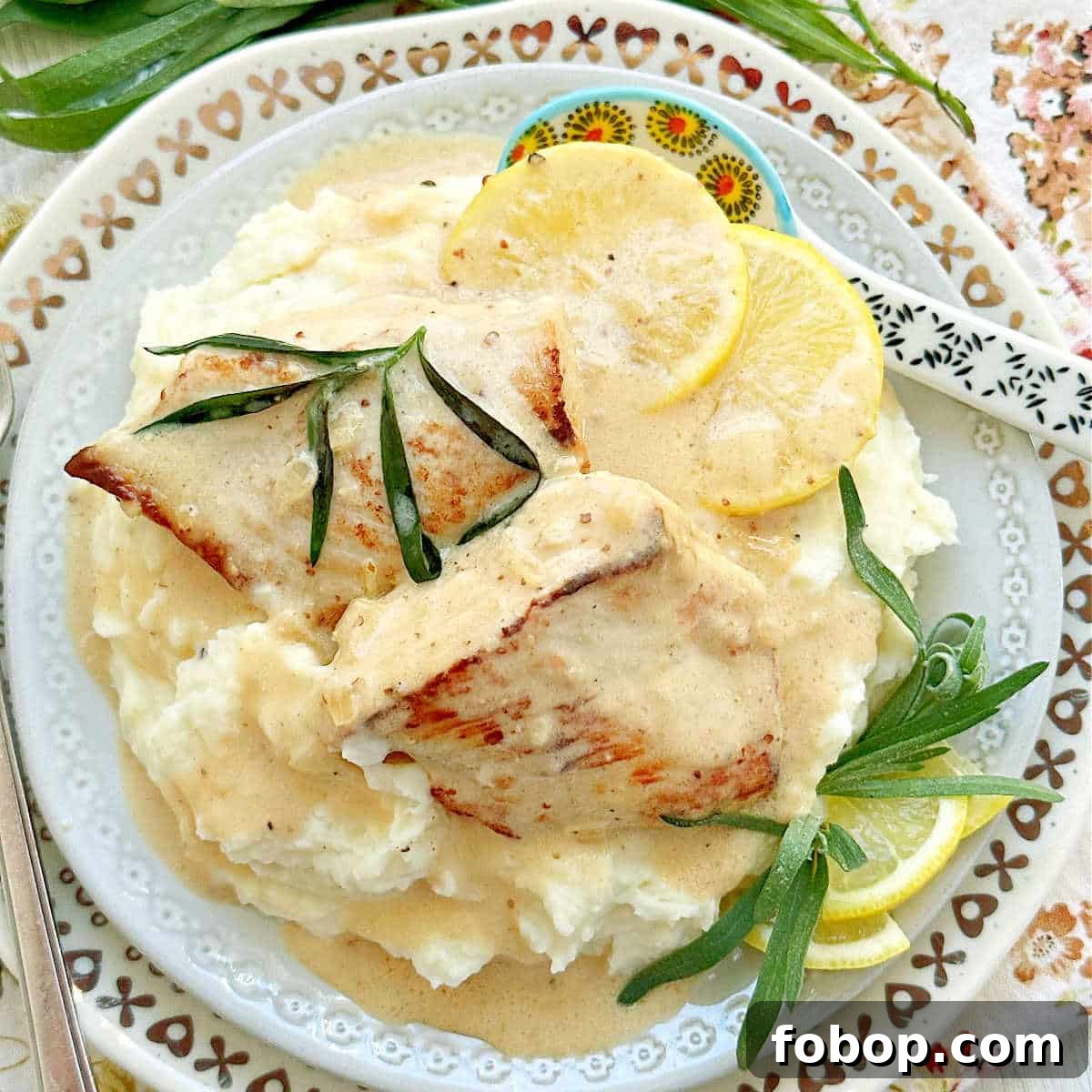
This chicken tarragon recipe features a silky, creamy sauce made with fresh tarragon, dry white wine, lemon, cream and Dijon mustard.
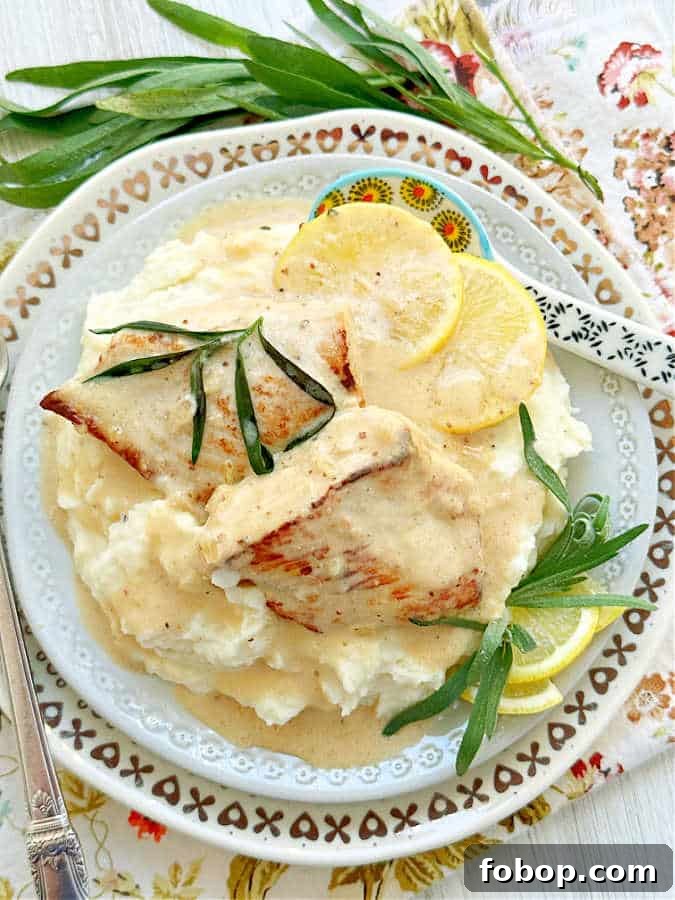

This elegant one-pan chicken tarragon feels slightly French but is easy enough for a weeknight dinner. The method is straightforward: sear the chicken, build a pan sauce in the same skillet, then simmer briefly until the chicken is cooked through. Clear step-by-step directions and photos are included.
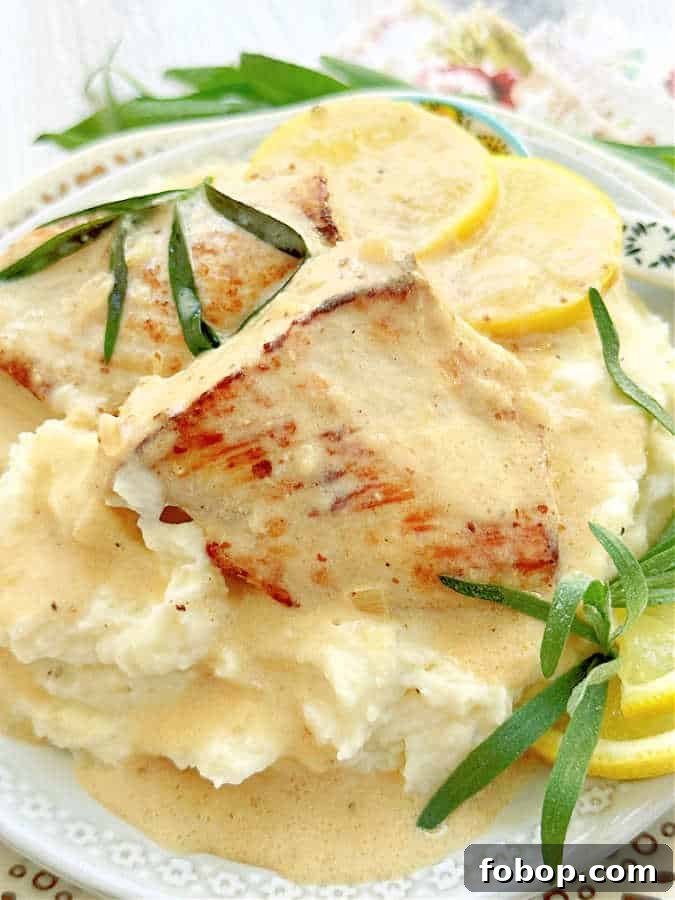
What is chicken tarragon?
Chicken tarragon is chicken cooked in a pan sauce flavored with tarragon. Variations exist using thighs, a whole chicken, or breasts. For ease and quick cooking, this recipe uses boneless, skinless chicken breasts.
A pan sauce is made in the same skillet used to sear the protein, capturing the browned bits and juices to enrich the finished sauce.
Why this recipe works
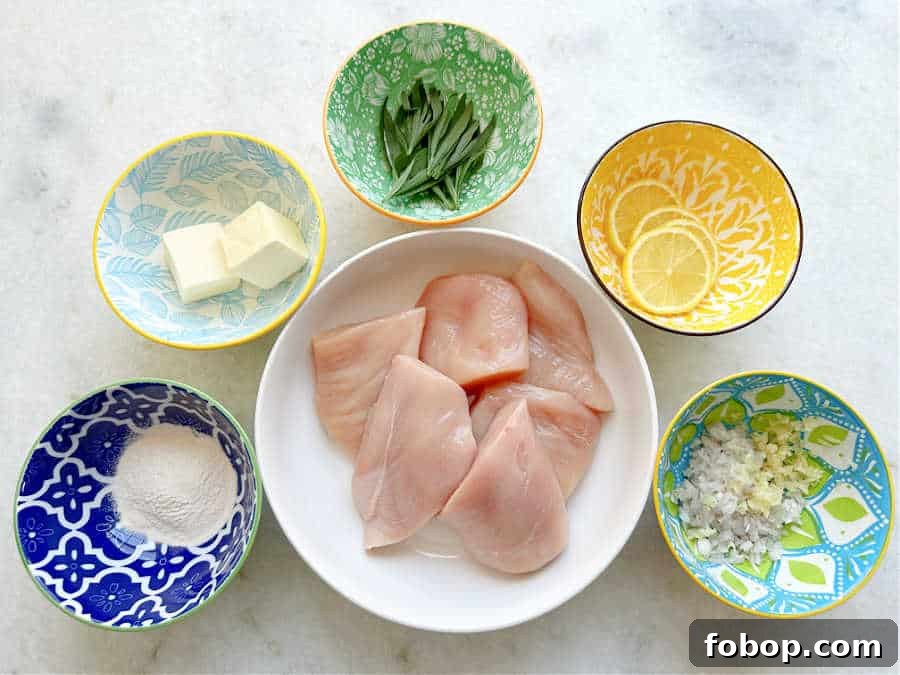
This recipe is fast to prepare and satisfies as a family favorite. A little mise en place makes the process smooth. A butter-and-flour roux thickens the sauce while white wine, Dijon, chicken broth, lemon and fresh tarragon create a balanced, velvety finish. Serve the browned chicken and creamy tarragon sauce over mashed potatoes or rice for a comforting meal, or pair with cauliflower mash for a lower-carb option.
Ingredients for creamy tarragon chicken
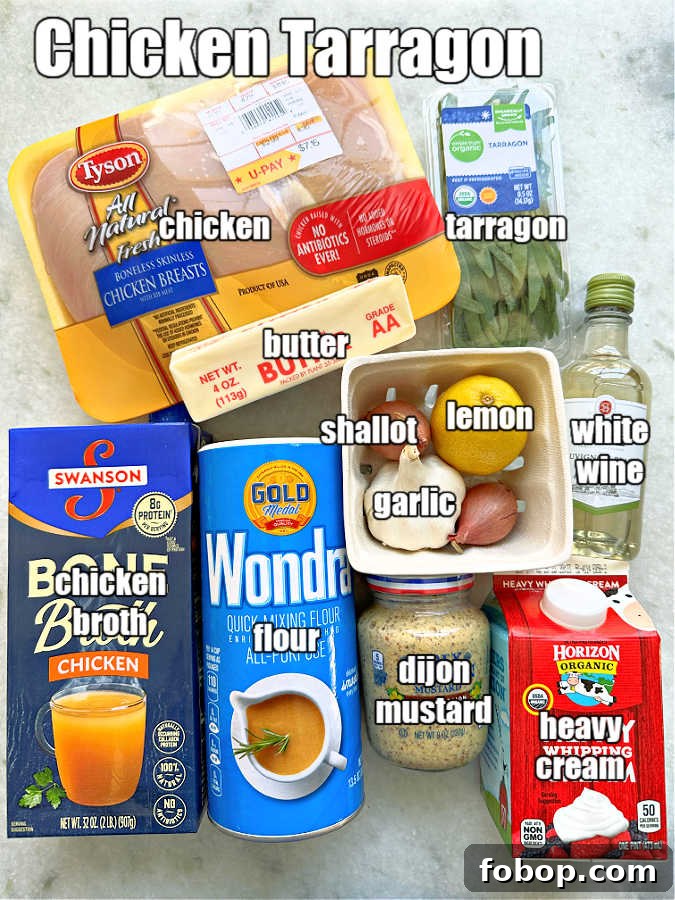
- Chicken – Boneless, skinless chicken breasts are used here. Boneless skinless thighs can be substituted; cook to an internal temperature of 170°F for thighs and 165°F for breasts.
- Tarragon – Fresh tarragon is recommended for the best flavor. You can chop the leaves if preferred. If using dried tarragon, substitute at a 3:1 ratio (1 tsp dried = 1 tbsp fresh).
- Butter – Used for browning the chicken and making the roux to thicken the sauce.
- Flour – Thickens the sauce; cornstarch can be used as an alternative.
- Shallots – Finely chopped; red onion can be used if shallots are unavailable.
- Garlic – Minced; the recipe uses two to three cloves depending on taste.
- White wine – Use a dry white wine such as Sauvignon Blanc.
- Chicken broth – Adds savory depth to the sauce.
- Heavy cream – Creates a rich, silky sauce. Half-and-half can reduce calories but will be less rich.
- Lemon – Slices add brightness and a pretty garnish.
- Dijon mustard – Adds tang and depth to the sauce.
- Salt and pepper – To taste.
Instructions
Prepare all ingredients before you start so everything is ready to go.
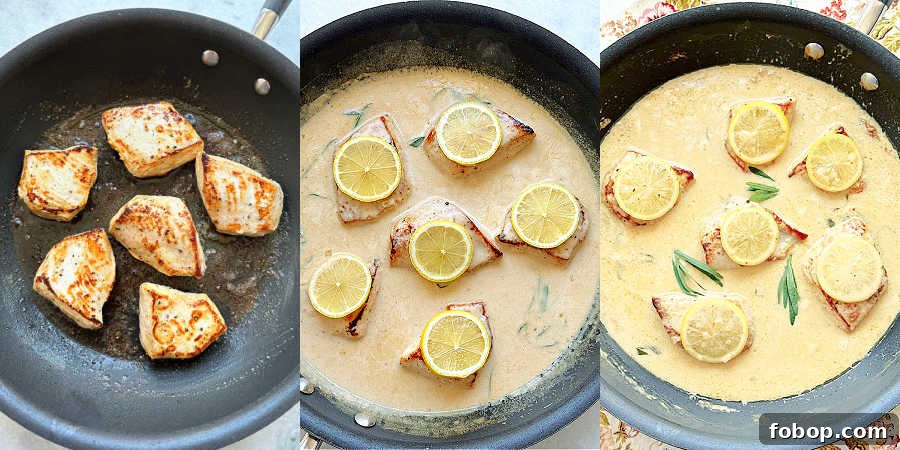
- Heat 2 tablespoons of butter in a large nonstick skillet over medium-high heat. Add the chicken and sear until golden, about 2 minutes per side. Remove the chicken to a plate.
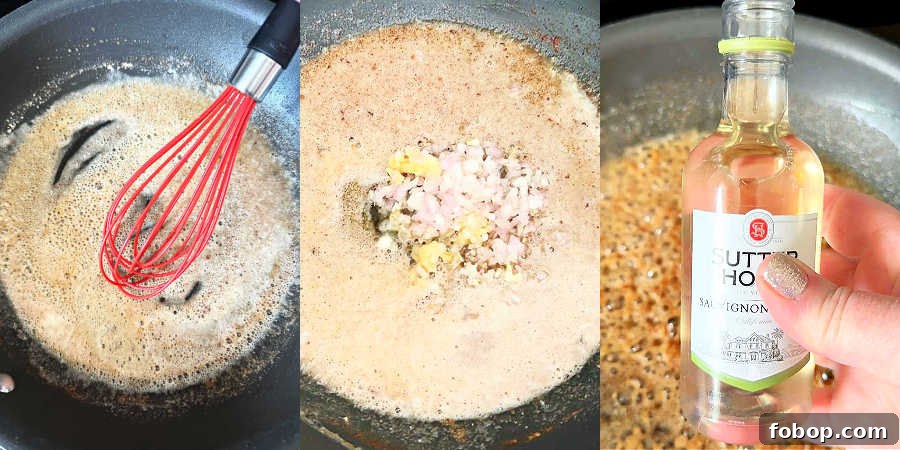
- Melt the remaining tablespoon of butter in the same pan over medium heat. Whisk in the flour and cook about one minute to form a roux.
- Add the shallots and garlic; cook, whisking, until fragrant, about one more minute.
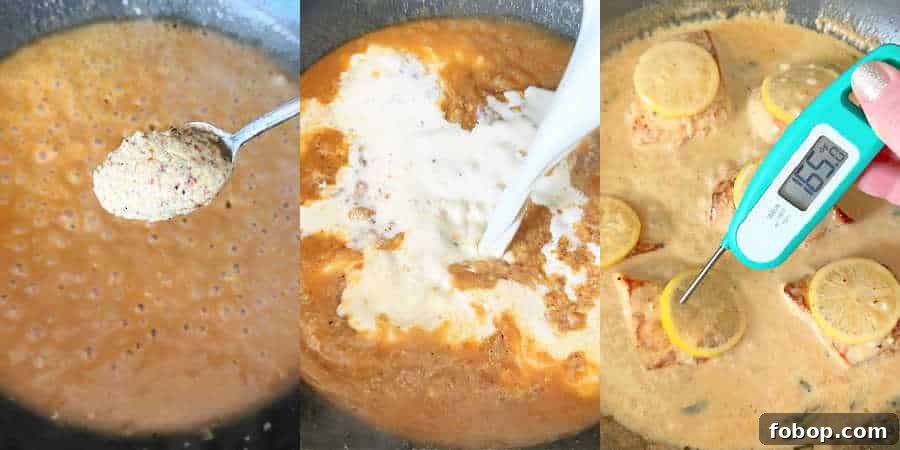
- Pour in the white wine and bring to a low boil, scraping up any browned bits. Whisk in the Dijon mustard until smooth.
- Add the chicken broth and heavy cream and bring the mixture to a gentle simmer.
- Stir in the fresh tarragon, then return the chicken to the sauce. Top each breast with a lemon slice.
- Reduce heat to maintain a low simmer, cover the pan, and cook about 10 minutes or until the chicken reaches 165°F in the thickest part.
- Serve immediately spooning the creamy tarragon sauce over the chicken.
Frequently Asked Questions
What does tarragon taste like?
Tarragon has a pungent, bittersweet flavor often described as similar to licorice, anise and fennel due to natural aromatic compounds. It brings brightness and a subtle anise note to sauces.
What herbs pair well with tarragon?
Parsley pairs nicely with tarragon—fresh tarragon softens parsley’s grassy notes and the combination works well in sauces and garnish. Basil, fennel fronds or dill can also substitute for fresh tarragon in a pinch.
How much dried tarragon should I use?
Use dried herbs at roughly one-third the volume of fresh. For example, 1 teaspoon dried tarragon replaces 1 tablespoon fresh.
What can I use instead of tarragon?
Good fresh substitutes include basil, fennel fronds or dill. For dried tarragon swaps, try dried oregano or marjoram.
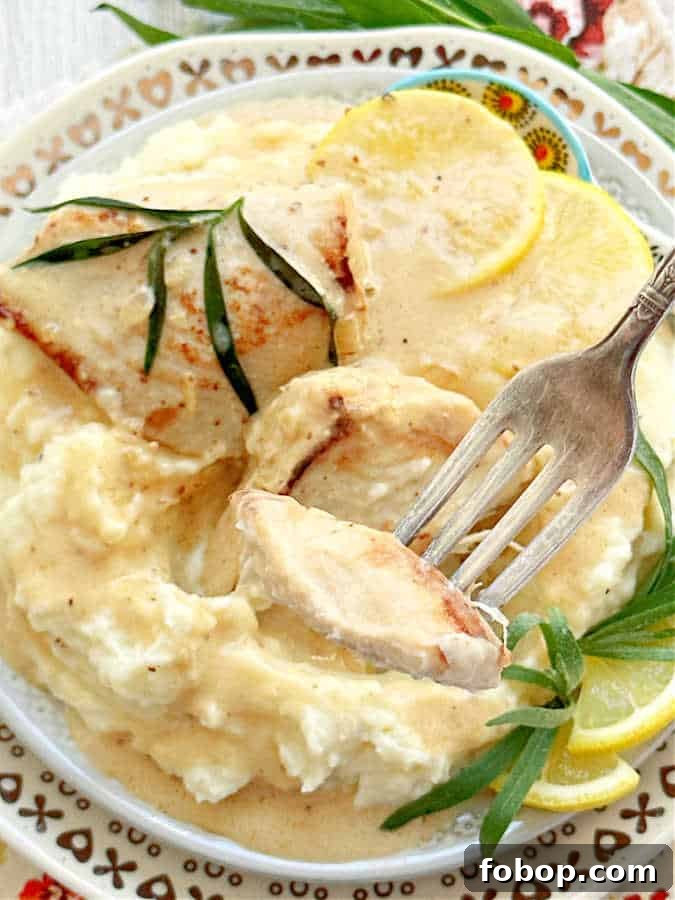
Serving suggestions
- Mashed potatoes to soak up the sauce
- Rice pilaf
- Broccoli au gratin or steamed green vegetables
- Roasted potatoes
- Green beans almondine
Storage directions
This dish is best eaten fresh. Store any leftovers in an airtight container in the refrigerator for up to three days. To reheat, add chicken and sauce to a skillet, cover and warm over medium heat until the chicken reaches 165°F. Freezing is not recommended because the cream sauce can separate and change texture when thawed.
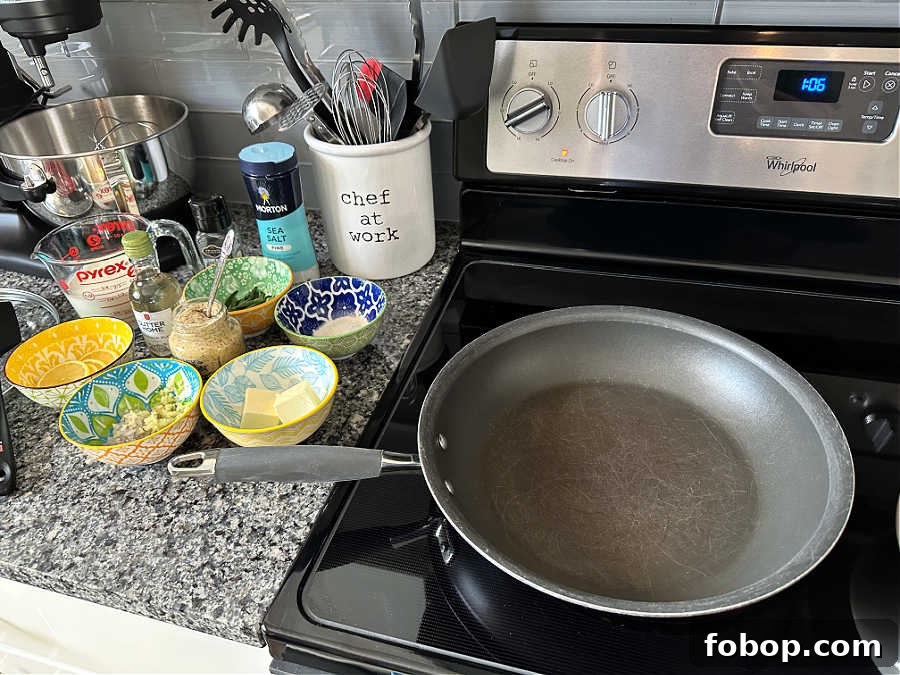
Kitchen tools
- Large nonstick skillet with a lid
- Metal tongs for flipping the chicken
- Whisk for making the sauce
- Instant-read thermometer to check internal temperature
Recipe summary
Chicken Tarragon
This chicken tarragon has a creamy sauce made with fresh tarragon, white wine, lemon, cream and Dijon mustard.
Prep Time: 15 minutes • Cook Time: 20 minutes • Servings: 4 • Calories: 473 kcal
Ingredients
- 32 oz boneless, skinless chicken breasts
- 3 tbsp butter
- 2 tbsp all-purpose flour
- 2 tbsp finely chopped shallots
- 3 cloves garlic, minced
- 6 oz dry white wine
- 1/2 cup chicken broth
- 1/2 cup heavy cream
- 1 tbsp Dijon mustard
- 1 tbsp fresh tarragon
- 6 lemon slices
- Salt and pepper to taste
Instructions
- Melt 2 tablespoons butter in a large nonstick skillet over medium-high heat. Add chicken and brown about 2 minutes per side. Remove to a plate.
- Melt remaining tablespoon butter in the pan over medium. Add flour and whisk, cooking about 1 minute.
- Add shallots and garlic, whisk and cook until fragrant, about 1 minute.
- Add wine and bring to a low boil. Whisk in Dijon until smooth.
- Add chicken broth and heavy cream; simmer gently.
- Stir in fresh tarragon, return chicken to the sauce, and top each breast with a lemon slice.
- Reduce heat to a low simmer, cover, and cook about 10 minutes until chicken reaches 165°F.
- Serve immediately.
Nutrition
Calories: 473 kcal | Carbohydrates: 7 g | Protein: 51 g | Fat: 26 g | Saturated Fat: 14 g | Sodium: 494 mg
Foodtastic Mom participates in affiliate programs; some product links may generate a small commission at no extra cost to you.
Thanks for reading. If you make this recipe, consider saving it and sharing your results on social media.