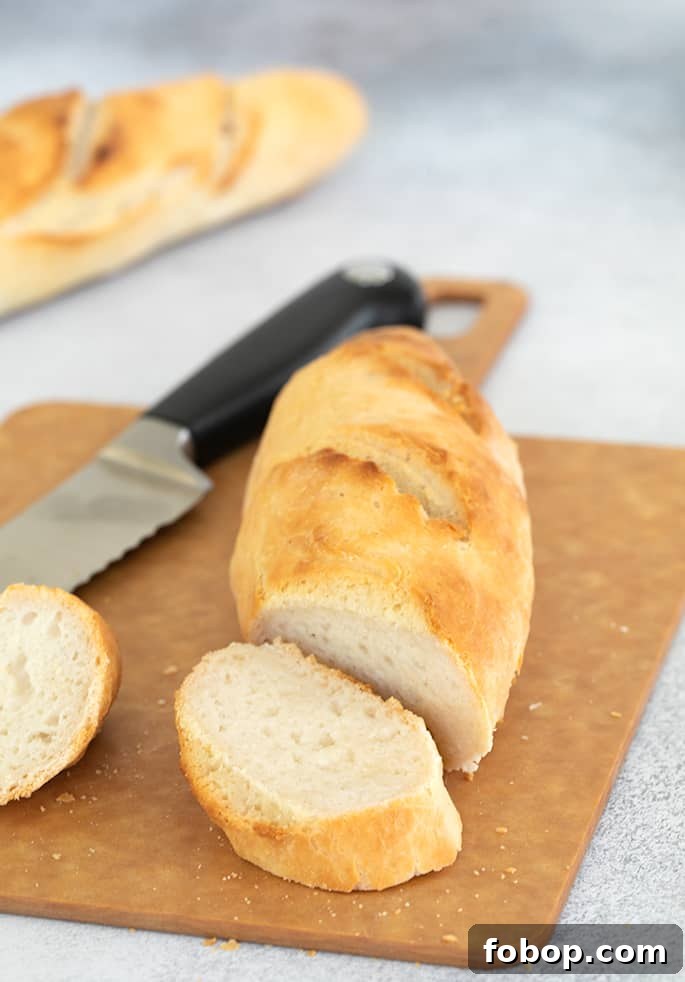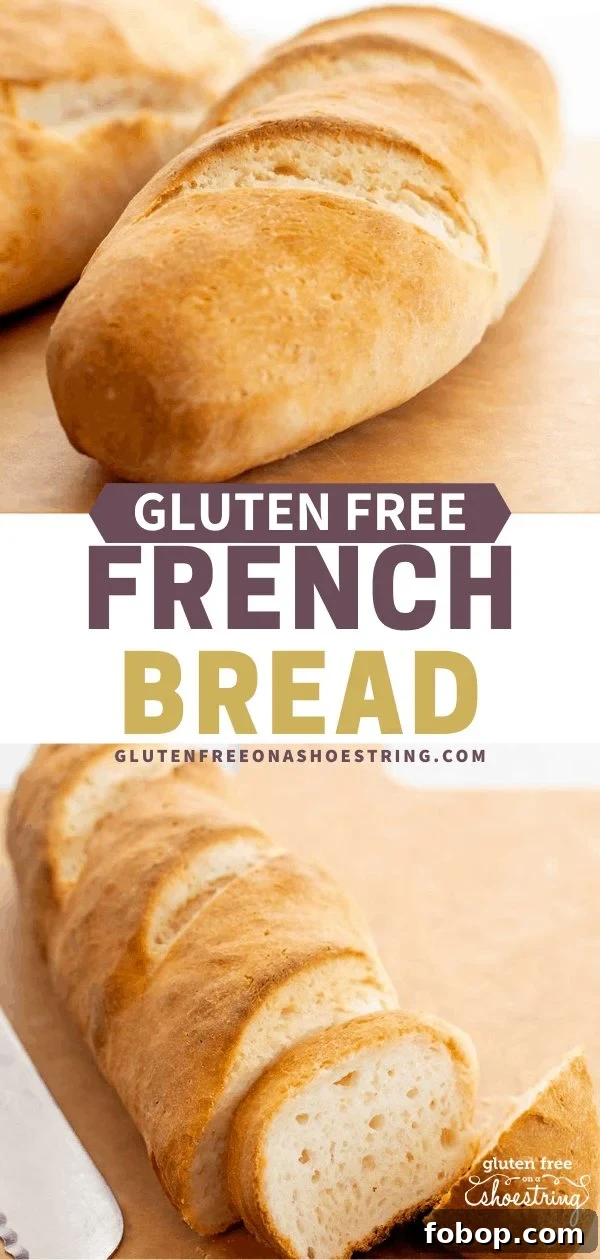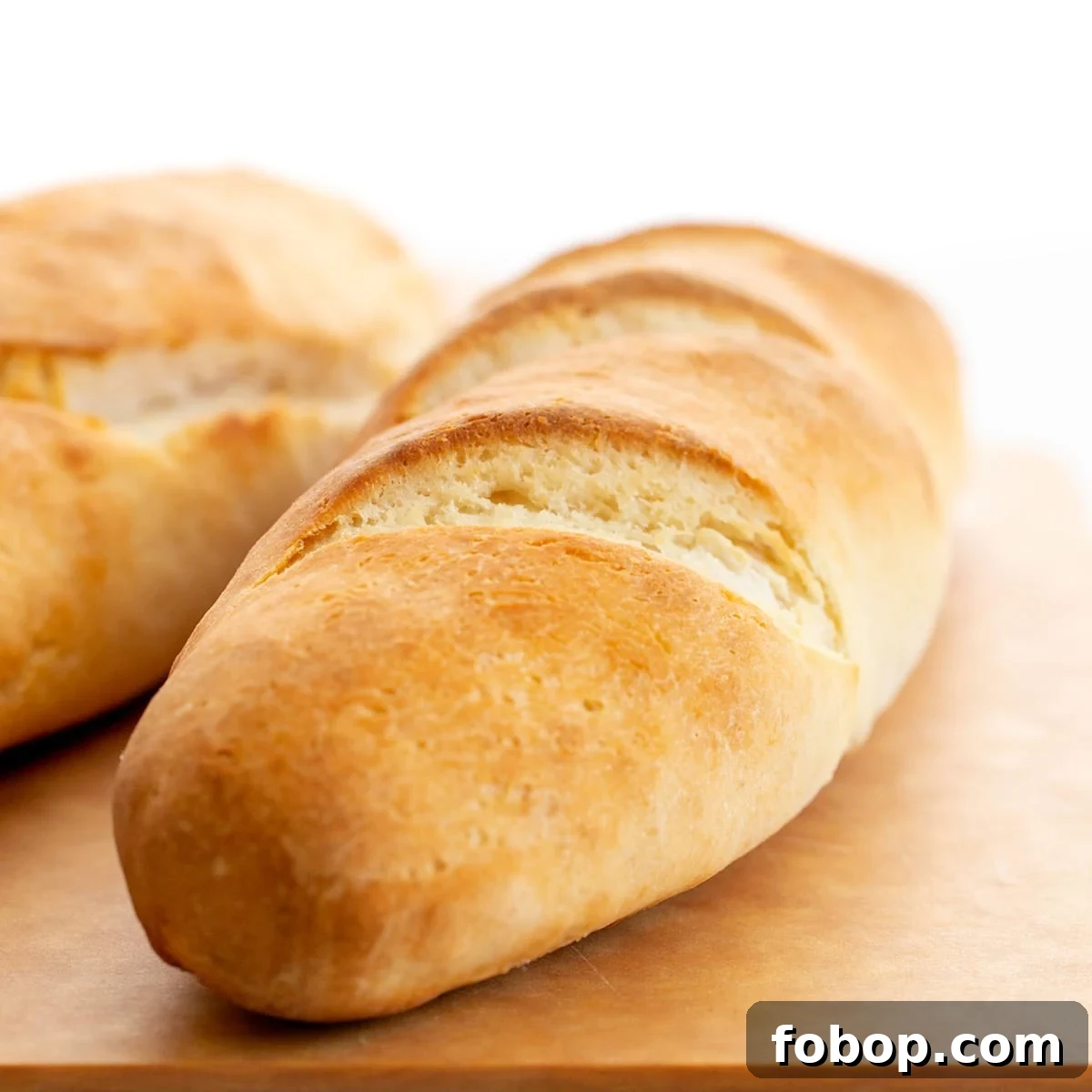
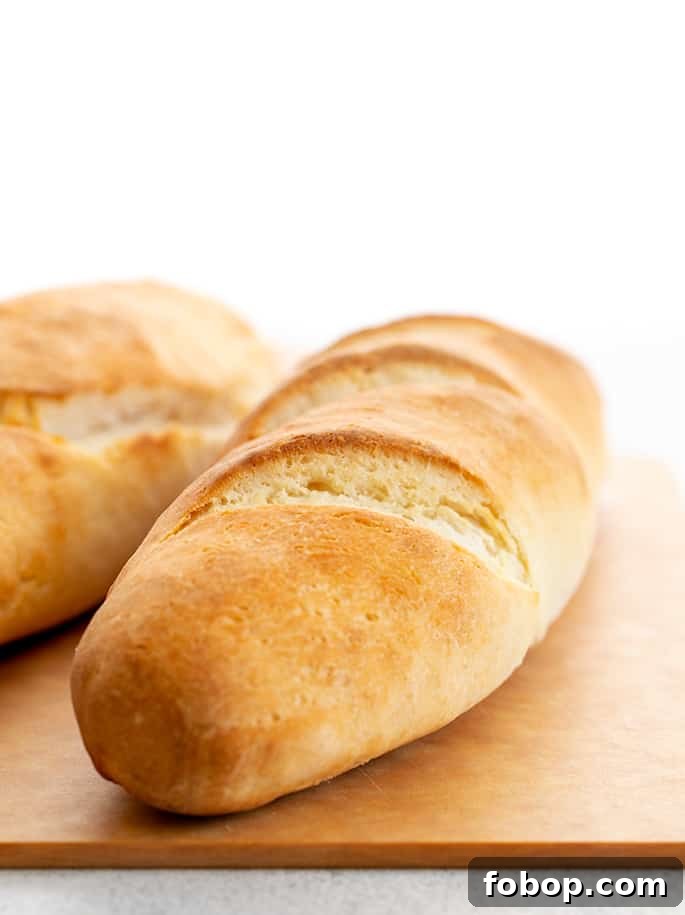
This gluten-free French bread recipe produces baguettes that rise quickly and bake even faster. They deliver a thin, crisp crust and a soft, tender interior—ideal for sandwiches, garlic bread, or bruschetta.
What makes this gluten free French bread recipe special
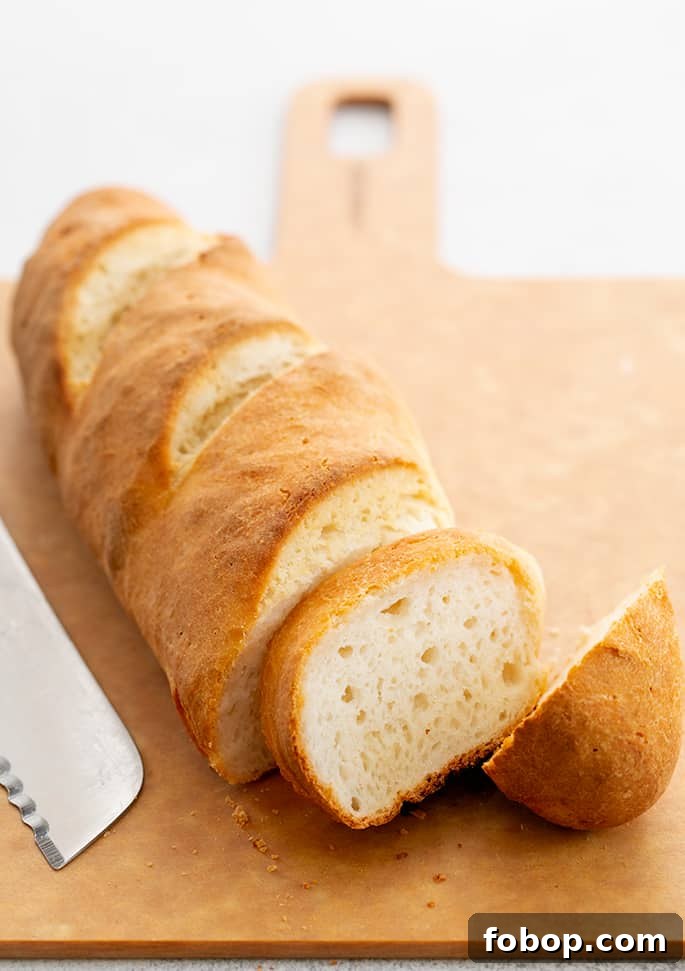
These baguettes have a crisp, thin exterior and a soft, almost springy crumb. The dough is quick to prepare and highly versatile. It needs a brief chill—at least 30 minutes in a sealed container—before shaping, but it does not require a long first rise. The batch yields two 10-inch baguettes, or one longer loaf if you prefer, and the recipe scales well if you want to double it.
The recipe relies on vigorous mixing in a stand mixer with the paddle attachment. Beating until the dough becomes whipped in texture (similar to thick mashed potatoes) creates the tender interior. If you don’t have a stand mixer, a food processor with a steel blade can be substituted.
Tips for shaping and baking gluten free baguettes
I typically use an all-purpose gluten-free flour blend (Better Batter is preferred) rather than a bread flour blend. Baguette shaping differs slightly from other loaves: pat the dough into a rectangle, fold the long sides toward the center, then fold the rectangle over itself, sealing any gaps. For this recipe, I focus on pinching closed any seams to create a cohesive dough piece, then rolling it so the loaf is thicker in the center and tapered at the ends.
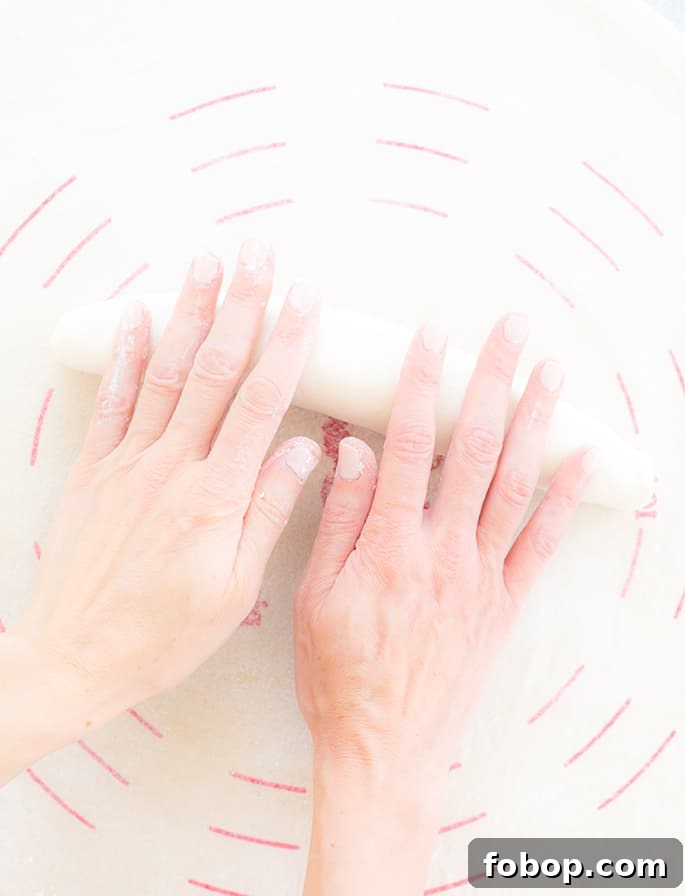
To shape: place the palms together on top of the cylinder of dough, roll the dough away from your body and then back toward it while moving your hands in a half-moon motion outward toward the edges. This motion helps create the tapered baguette shape. A video demonstration is helpful if available.
Baking gluten free baguettes
You don’t need a special perforated baguette pan for this recipe. While those pans promote air circulation and an even crust, they aren’t necessary here. For a crisp crust, introduce steam to the oven during the first moments of baking by tossing a few ice cubes on the oven floor just after the loaves go in, then closing the door quickly. If you prefer not to add ice, spraying the loaves with cool water from a clean spray bottle right before or just after placing them in the oven also works well.
Getting this gluten free baguette dough to rise
Initially I expected a very wet dough, which is common with many gluten-free recipes. However, a very high-hydration dough in this recipe produced loaves that browned poorly, lacked a crisp crust, and stayed overly soft. A slightly drier dough bakes better, holds shape, and is easier to shape, although it benefits from a bit more yeast and slightly longer rising time.
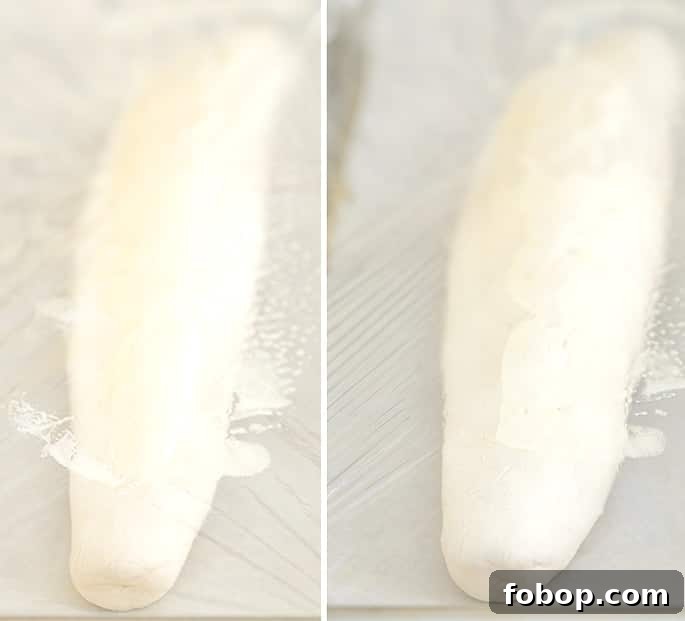
The dough’s consistency is neither stiff nor fragile. Shape without adding excessive flour; use tapioca starch for dusting rather than all-purpose flour to avoid altering texture. The dough will rise, but don’t expect it to double. Aim for about 150% of the original size. Cover the dough with lightly oiled plastic wrap that seals but allows a little space for expansion.
Rising gluten free yeast dough
Rising times vary with kitchen temperature and humidity. Warmer, more humid environments shorten rising time; cool, dry air slows it. The dough is done rising when it reaches about 150% of its starting volume. Overproofed dough will begin to show surface breaks and look pockmarked; stop the rise before this stage. This dough tends to rise fairly quickly, so monitor it closely.
Ingredients and substitutions for these gluten free baguettes
Gluten free, dairy free options
The only dairy called for is 1 tablespoon of butter. Replace it with a vegan buttery stick such as Earth Balance or a plant-based butter like Melt or Miyoko’s for a dairy-free version.
Egg-free options
The recipe uses one egg white for structure. If you need to avoid egg whites, you can substitute aquafaba (the liquid from a can of chickpeas) in an equal weight. Whisk the aquafaba until foamy before adding it to the dough to help mimic the egg white’s structure.
Can you make this gluten free French bread recipe without yeast?
No. Yeast is required for this recipe. There is no direct replacement; if you need a yeast-free bread, look for recipes specifically developed without yeast.
Instant yeast versus active dry yeast
If you have active dry yeast instead of instant, use about 125% of the instant yeast amount and proof it in a portion of the warm water from the recipe before adding it to the dough. For example, if the recipe calls for 6 grams instant yeast, use roughly 7.5 grams active dry yeast and bloom it in a small amount of the warm water.
Gluten free Baguette FAQs
Yes. A baguette is a long, crusty loaf of French origin. The terms “gluten free French bread” and “gluten free baguette” are used interchangeably here.
Check that you measured ingredients by weight when recommended, used an appropriate all-purpose gluten-free flour blend, and avoided adding extra flour during shaping. Environmental factors can also slow the rise; sometimes the dough simply needs more time.
Yes. The loaves freeze well. Cool completely, slice horizontally about three-quarters of the way through so the loaf stays together, wrap tightly in freezer-safe plastic, and freeze up to three months. Defrost at room temperature.
Yes. For slightly stale bread, sprinkle lightly with lukewarm water. For very stale loaves, briefly run under the tap. Place the wet loaf on a parchment-lined sheet and warm in a 300°F oven for about 10 minutes. Excess moisture will bake off, restoring a fresh, toasty texture.
Gluten Free French Bread Baguettes Recipe
Equipment
- Stand mixer with paddle attachment
Ingredients
- 1 ¾ cups (245 g) all purpose gluten free flour blend (I used Better Batter)
- ¾ teaspoon xanthan gum (omit if your blend already contains it)
- ¼ cup (36 g) tapioca starch/flour, plus more for sprinkling
- 2 teaspoons (6 g) instant yeast
- ½ teaspoon kosher salt
- ¾ cup (6 ounces) warm water (about 95°F)
- 1 egg white (about 25 g), at room temperature
- 1 tablespoon (21 g) honey
- 1 teaspoon apple cider vinegar
- 1 tablespoon (14 g) unsalted butter, at room temperature (or vegan butter)
- Cooking oil spray
Instructions
- In the bowl of a stand mixer fitted with the paddle attachment, whisk together the flour, xanthan gum, tapioca starch, and yeast. Add the salt and whisk again.
- Make a well in the center and add the water, egg white, honey, vinegar, and butter. Mix to combine.
- Beat on medium speed for about a minute; the dough will clump.
- Increase to medium-high and beat until the dough sticks to the sides of the bowl and appears whipped. Transfer to a tightly sealed container and refrigerate at least 30 minutes and up to 3 days.
- When ready to shape, turn chilled dough onto a surface lightly dusted with tapioca starch. Dust the top lightly and knead gently to smooth.
- Divide the dough into two equal portions using a bench scraper or large knife.
- Work with one piece at a time. Dust lightly as needed, form a cylinder, and pinch any seams closed so they don’t separate during rising and baking.
- Place palms together on top of the cylinder and roll the dough away from your body, then back, moving your hands outward in a half-moon motion to taper the ends and thicken the center.
- Place loaves a few inches apart on a parchment-lined baking sheet. Cover with lightly greased plastic wrap and let rise in a warm, draft-free spot to about 150% of the original size.
- Preheat the oven to 475°F while the dough is nearing the end of its rise. Position the top rack slightly higher than center.
- Uncover, score each roll three times about 1/4-inch deep with a sharp knife or lame, and spray tops and sides with cooking oil spray.
- Place the baking sheet on the top rack, toss a few ice cubes on the oven floor, and close the door quickly to generate steam.
- Bake 18 minutes, rotate the sheet, then bake about 5 more minutes until lightly golden and the internal temperature reaches about 190°F.
- For a softer crust, wrap hot rolls in a tea towel while cooling. Cool at least 10 minutes before serving.
Video
Nutrition information is automatically calculated and should be used as an approximation.
Like this? Leave a comment below!