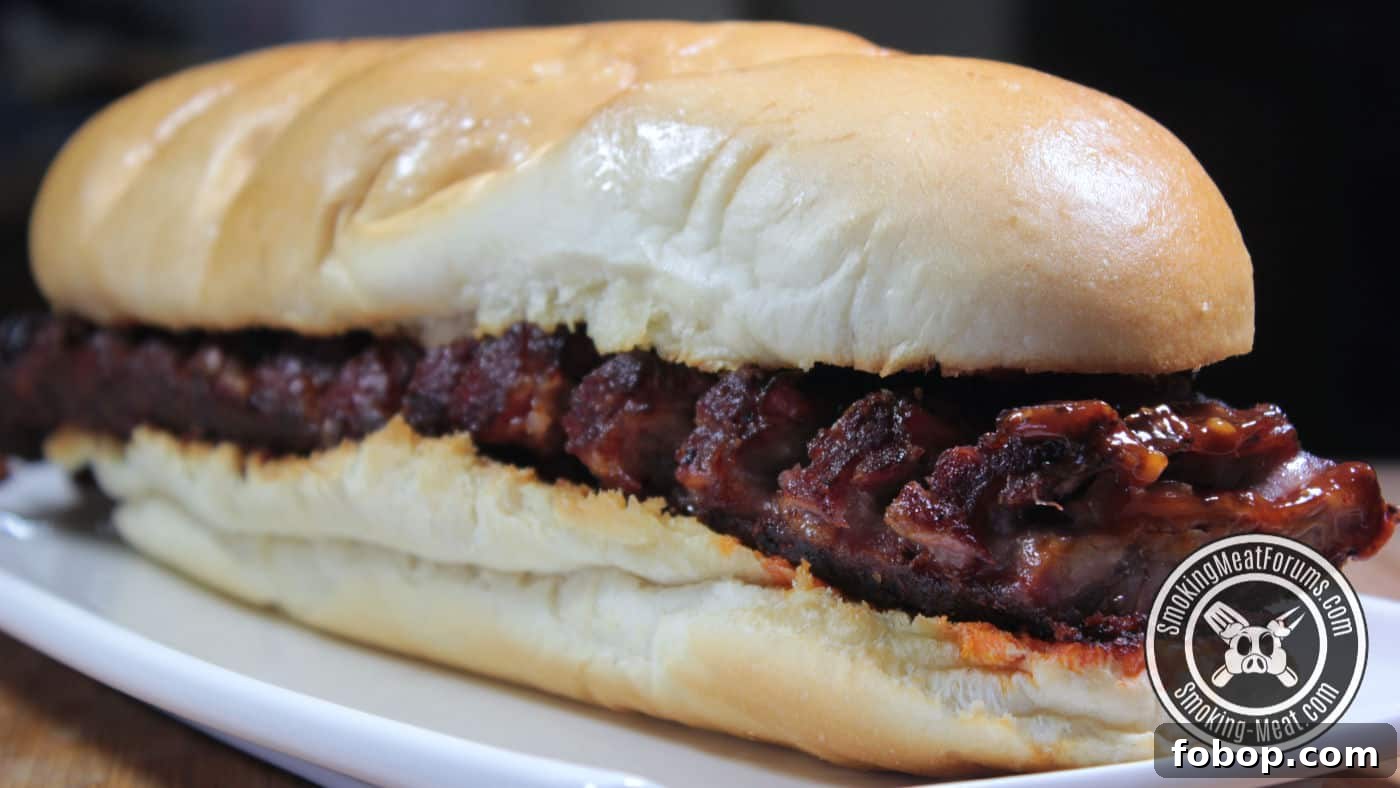
Imagine a smoky, juicy slab of baby back ribs, the bones removed, piled onto a sandwich bun or a French loaf — this is the smoked baby back rib sandwich. Tender, flavorful meat with a crisp, smoky crust makes a sandwich that’s bold, satisfying, and unforgettable.
This recipe aims to produce deeply flavored, ultra-tender ribs using a straightforward smoking approach. Follow the steps below for a sandwich-worthy result that’s perfect for sharing or keeping all to yourself.
- Prep Time: 25 minutes
- Cook Time: 5 hours
- Smoker Temp: 225°F (107°C)
- Recommended Wood: Apple and Mesquite
- 2 racks of baby back ribs (avoid “extra meaty” cuts — they can become dry)
- Yellow mustard
- Your preferred pork rub (the method uses multiple applications)
- Barbecue sauce for finishing
- Heavy-duty foil (18″–30″)
- 2 French loaves or large sandwich rolls
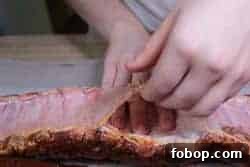
A thin, somewhat plastic-like membrane covers the bone side of the ribs and should be removed for better texture. Lay the rack bone-side up on a flat work surface. Work a finger or a spoon handle under the membrane near the center, lift, and peel it off in one piece when possible. If the membrane proves stubborn, use a paper towel for a better grip.
Tip: Always remove the membrane before applying rub. It allows seasonings to penetrate and improves tenderness.
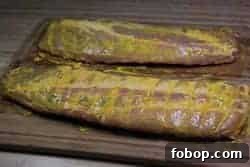
After membrane removal, coat both sides of the ribs lightly with yellow mustard. Mustard acts as a binder for the rub and won’t leave a noticeable mustard flavor once cooked. Apply mustard to the bone side first, then sprinkle a generous layer of rub. Wait five minutes until the rub looks slightly damp — that indicates it has combined with the mustard and surface juices.
Turn the racks meat-side up, apply more mustard if needed, and season generously with rub. Let the ribs sit for 5–10 minutes to allow the rub to form a paste.
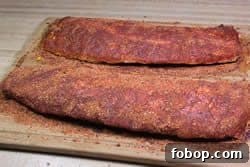
For deeper flavor, wrap the seasoned ribs tightly in plastic wrap and place them in a pan to catch any leaks. Refrigerate overnight. The next morning, unwrap and allow the racks to come to room temperature for a short while while you prepare the smoker. The rub will have developed into a flavorful paste.
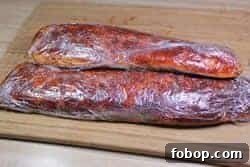
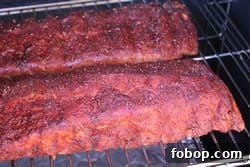
Set your smoker for indirect cooking at about 225°F (107°C). This temperature works well with charcoal, gas, electric, wood, or pellet smokers. If your smoker has a water pan, fill it. Plan on enough smoking wood for 2–3 hours; a blend of apple and mesquite strikes a nice balance of sweet and bold smoke.
To achieve tender ribs that easily release from the bones, use the 2-2-1 method: 2 hours unwrapped smoking, 2 hours wrapped in foil to braise and tenderize, and 1 hour unwrapped to firm up the exterior and add final smoke.
Step 1: Place ribs bone-side down directly on the smoker grate and smoke for about 2 hours at 225°F.
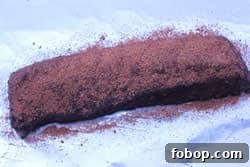
Step 2: Remove the ribs and place each rack on a long sheet of heavy-duty foil. Sprinkle additional rub over the top, seal the foil tightly, and return the wrapped racks to the smoker for 2 hours. During this wrapped stage the meat braises in its own juices; added smoke has minimal effect while foil is sealed.
Step 3: Carefully remove the foil after 2 hours, watch for hot steam, and place the racks back on the grate meat-side up. Sprinkle more rub if desired and smoke for an additional hour at 225°F to firm up the bark and add a finishing layer of smoke.
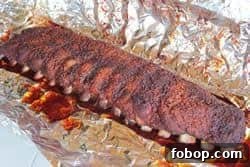
Bring the racks inside and set them bone-side up on a cutting board. Gently twist and pull each bone upward; if the ribs were cooked correctly, the bones should come away easily. If a bone is stubborn, slice along both sides of the bone to free it. Check the narrow tips for any small bone fragments and remove them.
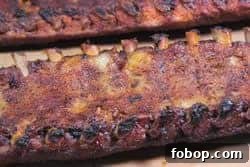
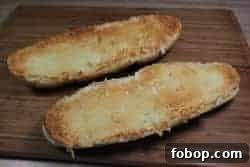
While the ribs finish, brush the inside of your bread with melted butter and toast it lightly in the oven or on a grill. Lay the entire boneless rack onto the bottom half of the loaf, or pull the meat apart slightly to fit large rolls.
Slather the meat with your favorite barbecue sauce and add optional toppings such as onions, pickles, slaw, cheese, or bacon. Place the top on the sandwich, slice, and serve immediately while the meat is hot and juicy.
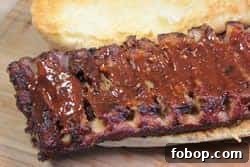
- Keep the ribs simple with meat and sauce, or add any toppings you prefer — tomatoes, raw or grilled onions, slaw, or cheese all work well.
- Avoid baby backs labeled “extra meaty.” Those often carry leftover loin meat that becomes dry when cooked as long as baby backs. Choose standard, leaner baby backs for the best results.
- Applying rub multiple times builds flavor and bark. If your rub is low in salt, applying it at several stages helps season the meat well.
- To make individual sandwiches, cut the deboned slab into three sections and serve each section on a large bun with sauce and toppings.