On a clear spring morning my father and I pulled into the parking lot of Harmony Methodist Church in Alton, Halifax County, Virginia. Alton sits just over the North Carolina–Virginia border, north of Durham, NC. We were searching for an ancestor—John B. Talbott—and had been told he was buried in this small church cemetery. We found his grave exactly where the information said it would be.
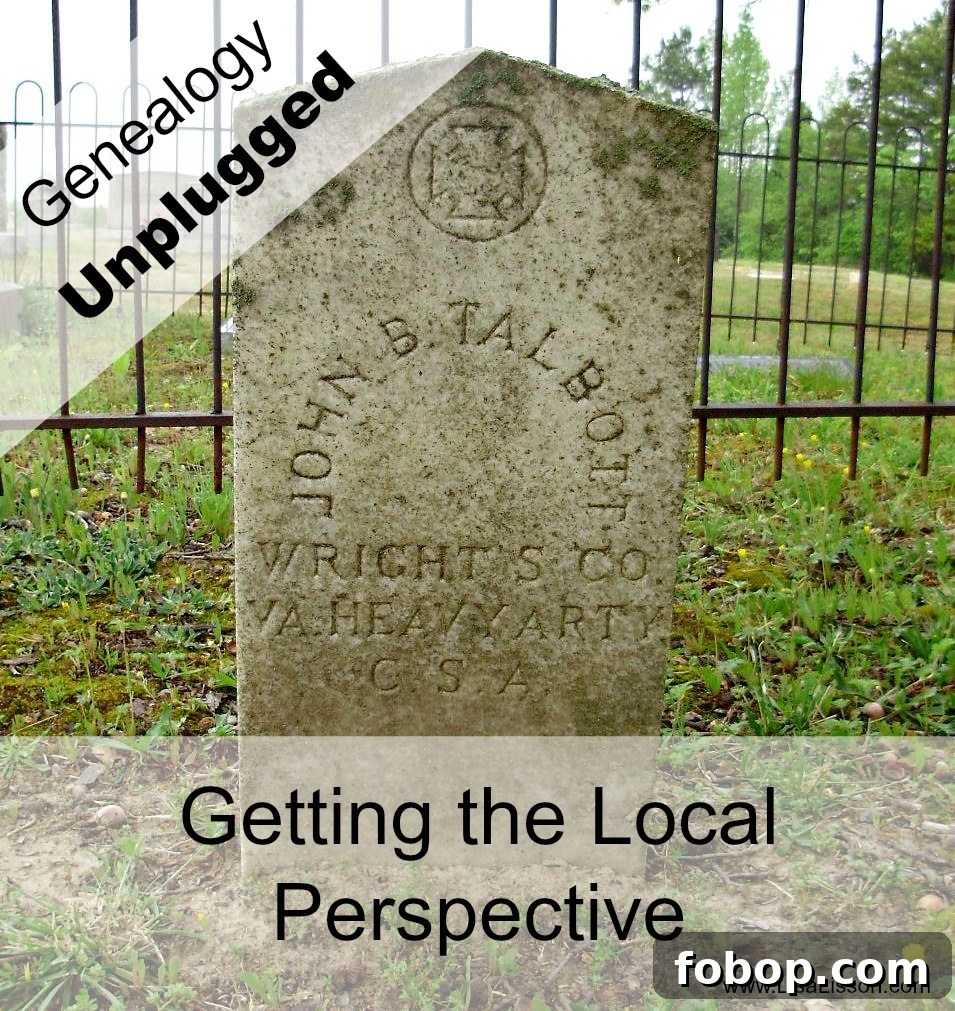
But that was only part of this genealogy story…
We had been at the cemetery only a few minutes when an older gentleman in a pickup truck pulled up behind us. A member of the church, he was curious about why strangers were visiting. In short, he checked us out to be sure we weren’t causing trouble.
After introductions, we explained we were looking for our ancestor’s grave.
That’s when things changed.
In a gentle Virginian drawl, the man opened up about the local history and the Talbott family. He pointed out places where family members had lived and described the families they had married into. He invited us into the church to see where the family had worshipped. He even shared a colorful family anecdote: John B. Talbott returned from the Civil War with several cannon balls he kept in the barn. Those cannon balls stayed in the family for years and were reputedly stacked in such a way that the passenger-side car door could not be opened unless the car was backed out of the barn first. He also gave us names of other residents who could provide more information.
As an added surprise, he and my father had attended the same school as children and shared many mutual acquaintances.
Why tell this story?
- Because talking to locals can yield genealogical details you won’t find online or in books.
- Because people from the area can point you to local resources, databases, and family stories preserved in the community.
- Because learning about where your ancestors lived adds color and context to their lives and can help you track them if they moved elsewhere.
- Because, in a short time, this local man shared both historical facts and family oral history that enriched our research.
So… UNPLUG!
Step away from the computer and visit the places your ancestors called home. If you don’t have a friendly church member strike up a conversation with, contact the local historical society or the local genealogical society. I won’t leave such opportunities to chance meetings anymore; I’ll intentionally seek out local people to talk with when planning future research trips.
Ask questions. Listen carefully.
Did you find this helpful? Feel free to share on Twitter and/or Pinterest!