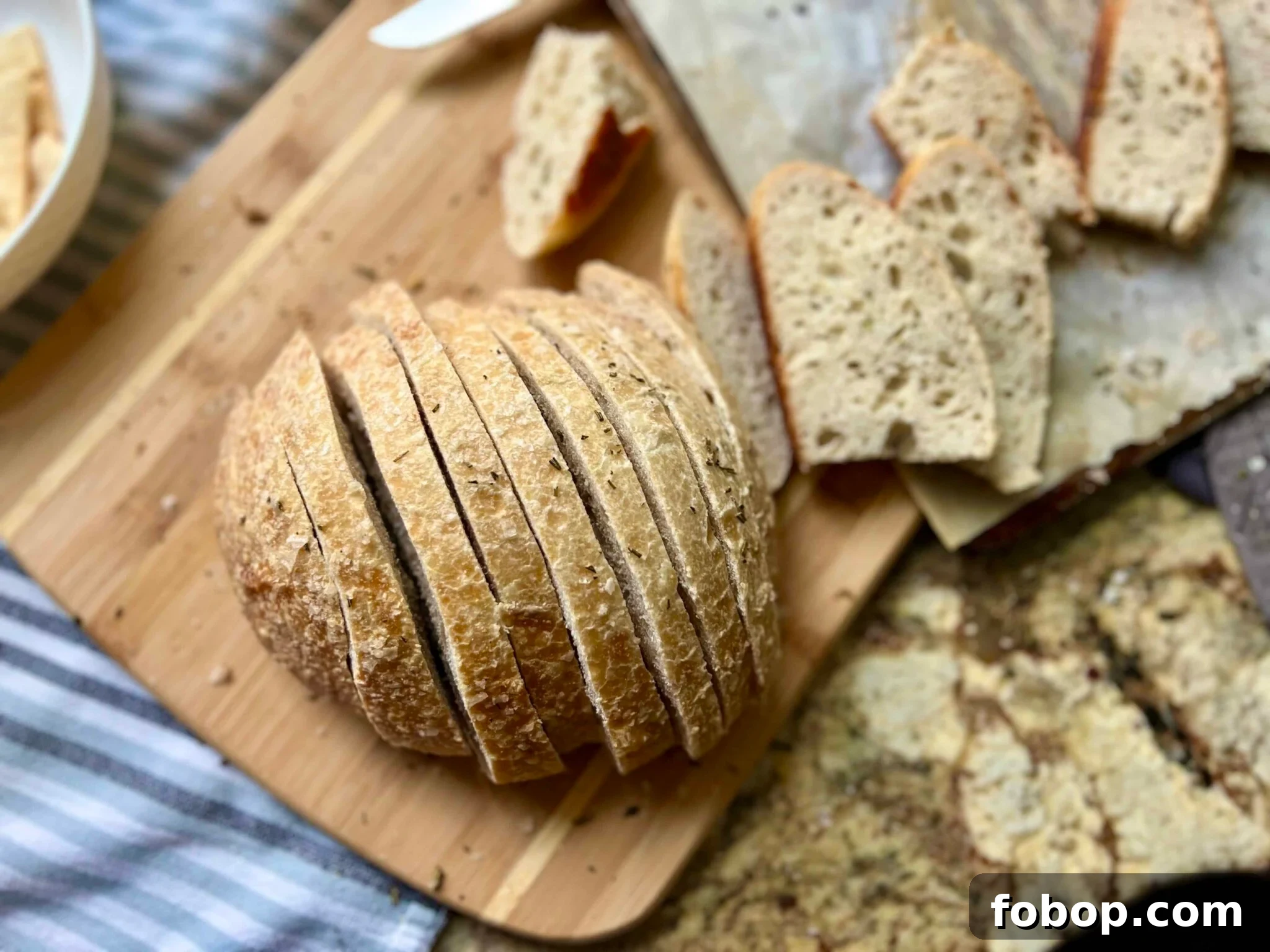
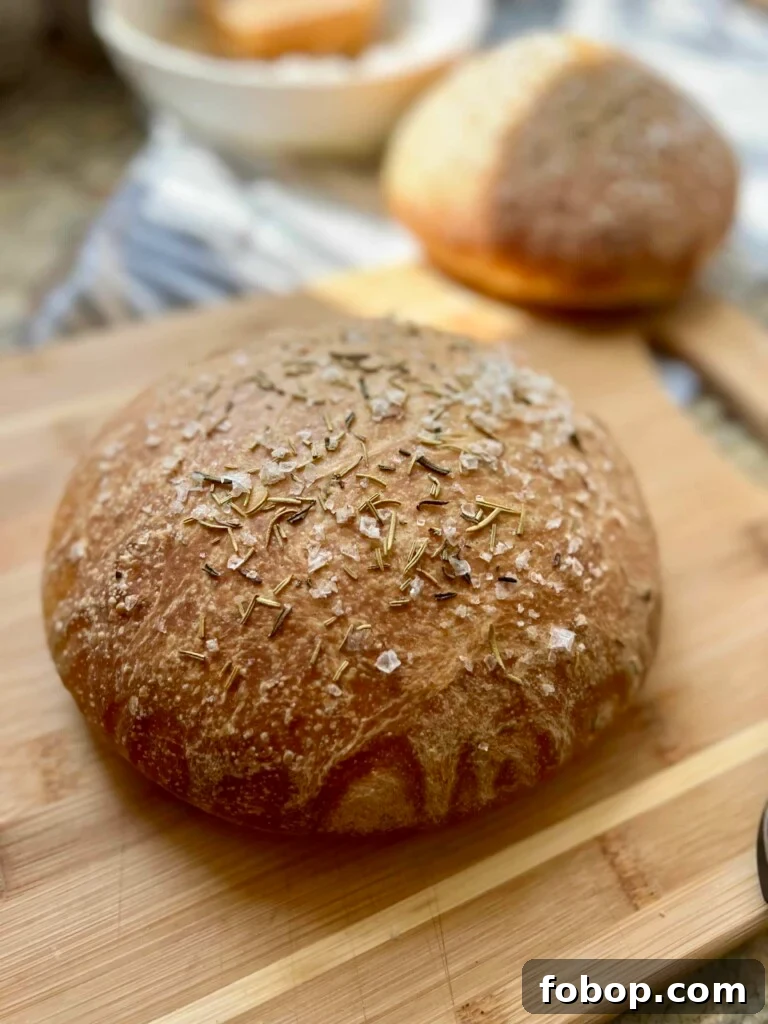
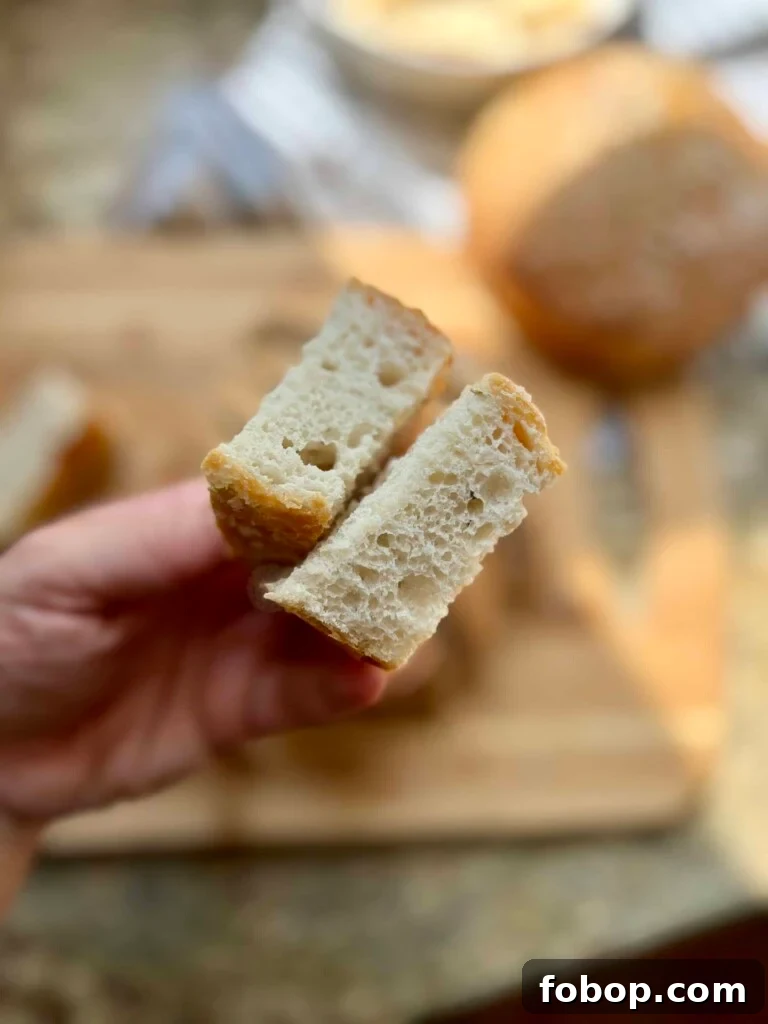
Soft Rosemary Sourdough Bread is an ideal small loaf for the dinner table. Tender and soft with a mild sourdough tang, it’s delicious finished with flaky sea salt and fresh rosemary. It works beautifully instead of rolls for Sunday dinner and pairs well with savory focaccias. The dough is slightly enriched, which gives the loaf its soft, pull-apart texture. Read on for ingredients, a sample schedule, and clear instructions to get this rosemary sourdough onto your table.
Important Ingredients in Soft Rosemary Sourdough Bread
- Sourdough Starter: Use an active, ripe starter (doubled, bubbly, mildly sour) to build the levain.
- Salt: Essential for flavor and structure—do not omit.
- Bread Flour: A higher-protein (about 12.5%) bread flour yields better gluten development and a springy crumb.
- Olive Oil: Keeps the crumb soft and moist; a mild-flavored oil works best.
- Water: Adjust water temperature to keep dough temperature around 78–80°F—warmer water in a cool room, cooler water in a warm room.
- Rosemary: Fresh rosemary gives the best flavor; dried can be used if fresh isn’t available.
- Flaky Sea Salt: A light sprinkle of flaky sea salt on top adds a wonderful finish.

Sourdough Sample Schedule for Soft Sourdough Rosemary Bread
Sourdough requires more time than commercial yeast bread. This sample schedule assumes you keep the dough temperature near 78–80°F to help plan your bake.
Note: The schedule assumes the dough temperature is maintained at about 78–80°F.
| 8:00 AM – 11:30 AM | Mix levain (1:1:1). Cover and let sit 3–4 hours until bubbly and ripe. |
| 11:30 AM – 11:45 AM | Mix dough. |
| 11:45 AM – 3:45 PM | Bulk fermentation. |
| 3:45 PM – 4:00 PM | Finish bulk fermentation (or optionally cold bulk overnight), then divide and shape loaves. |
| 4:00 PM – 6:30 PM | Proof loaves in a warm place (78–80°F) for 2–3 hours until puffed and nearly doubled. Do not bake until the dough has visibly risen. |
| 6:30 PM – 7:00 PM | Preheat oven to 425°F. Top and bake loaves about 20–25 minutes until fully baked. |
How to Make Sourdough Rosemary Bread
Mix the Dough
Weigh ingredients on a kitchen scale for best results. Combine the ripe levain, water, sugar, olive oil, salt and most of the flour in the bowl of a stand mixer. Reserve a small amount of flour to add as needed so you don’t over-dry the dough. Knead 8–12 minutes until the dough becomes smooth and tacky, adding reserved flour if necessary. Fold in the chopped fresh or dried rosemary. The dough should pass a windowpane test before moving to bulk fermentation.
Note: If you prefer, a ripe, bubbly starter can substitute for the levain in this recipe.
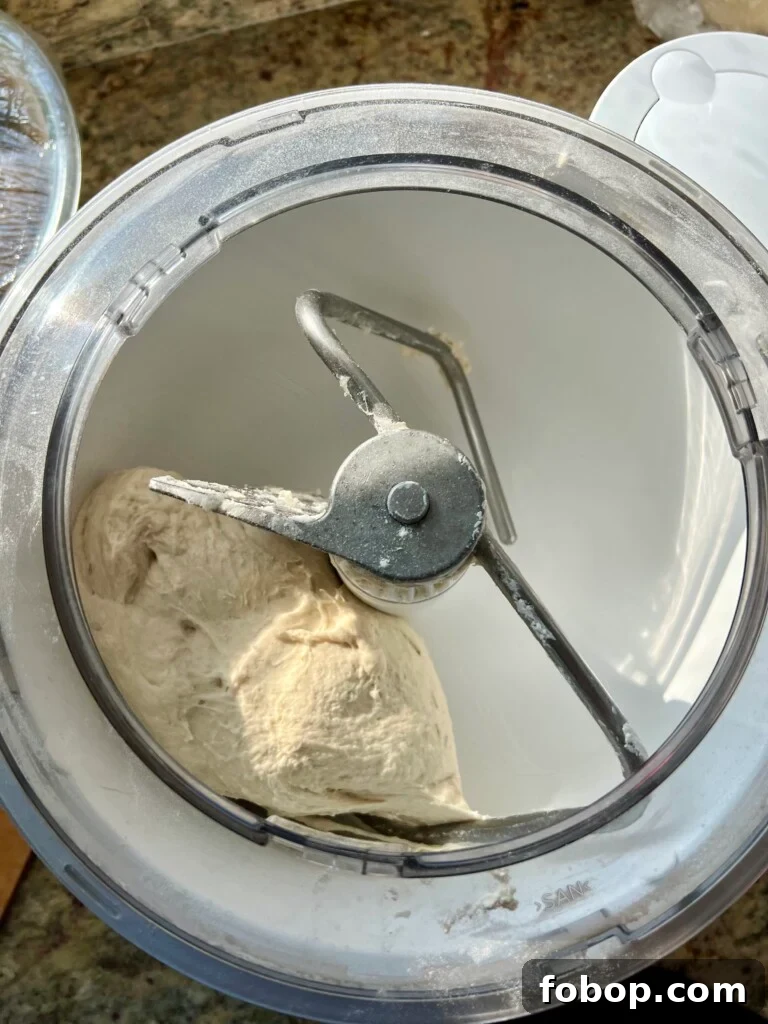
Bulk Fermentation
Transfer the dough to a covered container and keep its temperature near 78–80°F during bulk fermentation. At this temperature the bulk fermentation will take roughly four hours. The dough should feel stronger, more cohesive and slightly aerated at the end—typically it rises about 20–30%.
Cold Fermentation Option: If you want to split the process across days, refrigerate the dough after bulk fermentation for up to 48 hours. When you shape the loaves, allow extra time for them to warm and rise back to the target dough temperature before baking.
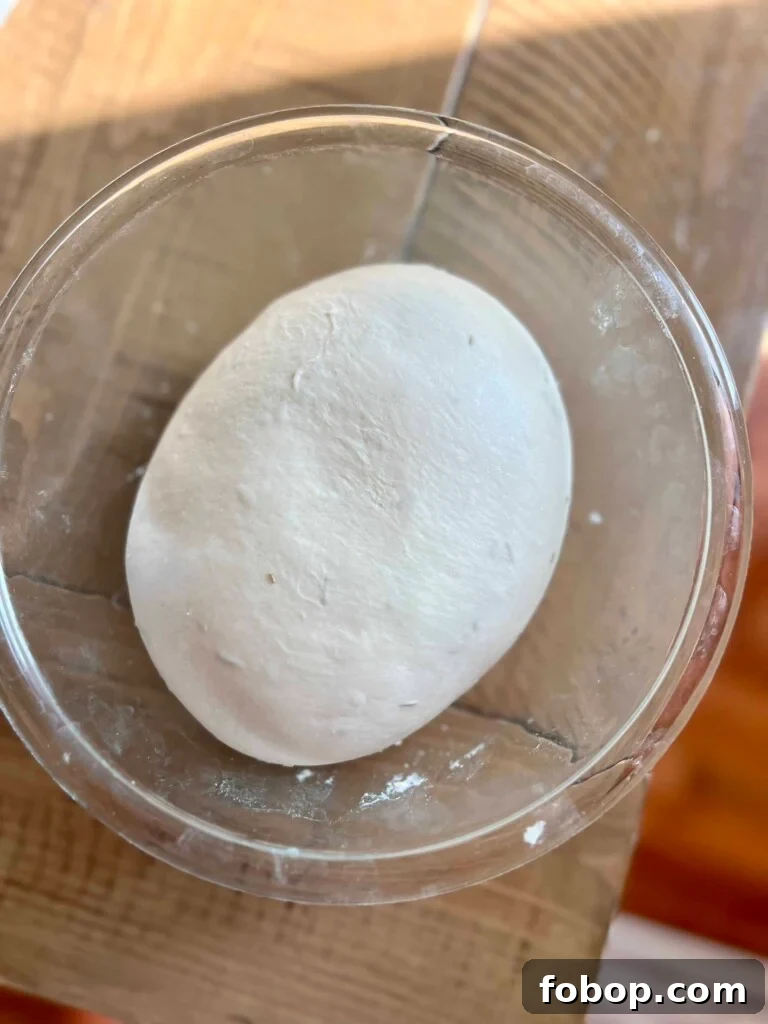
Shape and Proof
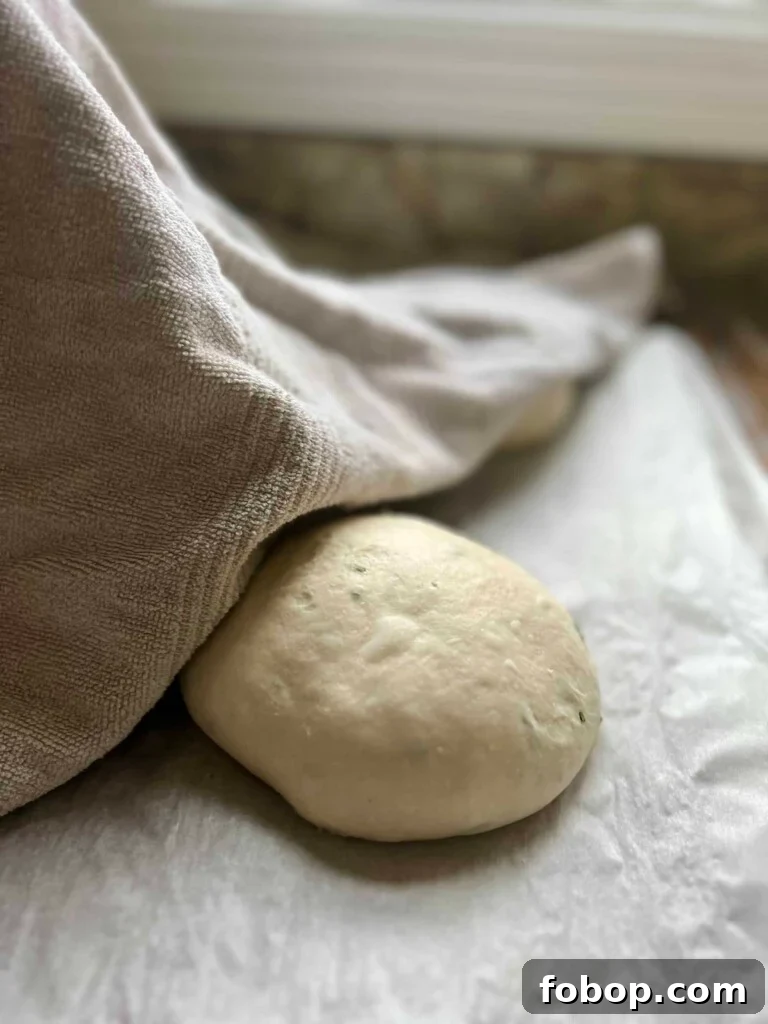
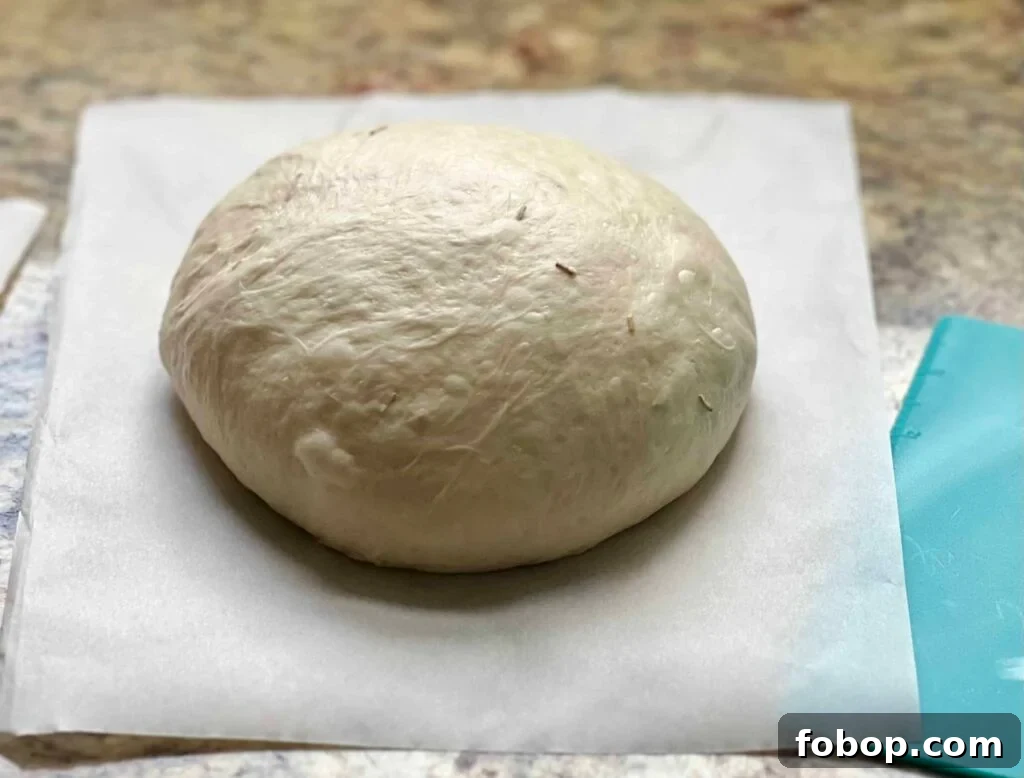
Turn the dough onto a lightly floured surface and cut into two pieces. Use a bench scraper and your hands to create tension and form each piece into a taut round. Place each loaf on a parchment-lined baking sheet, cover, and proof in a warm spot (78–85°F) until light, airy and nearly doubled in size—about 2–3 hours. Proper proofing is key: do not bake until the loaves have noticeably risen and feel airy.
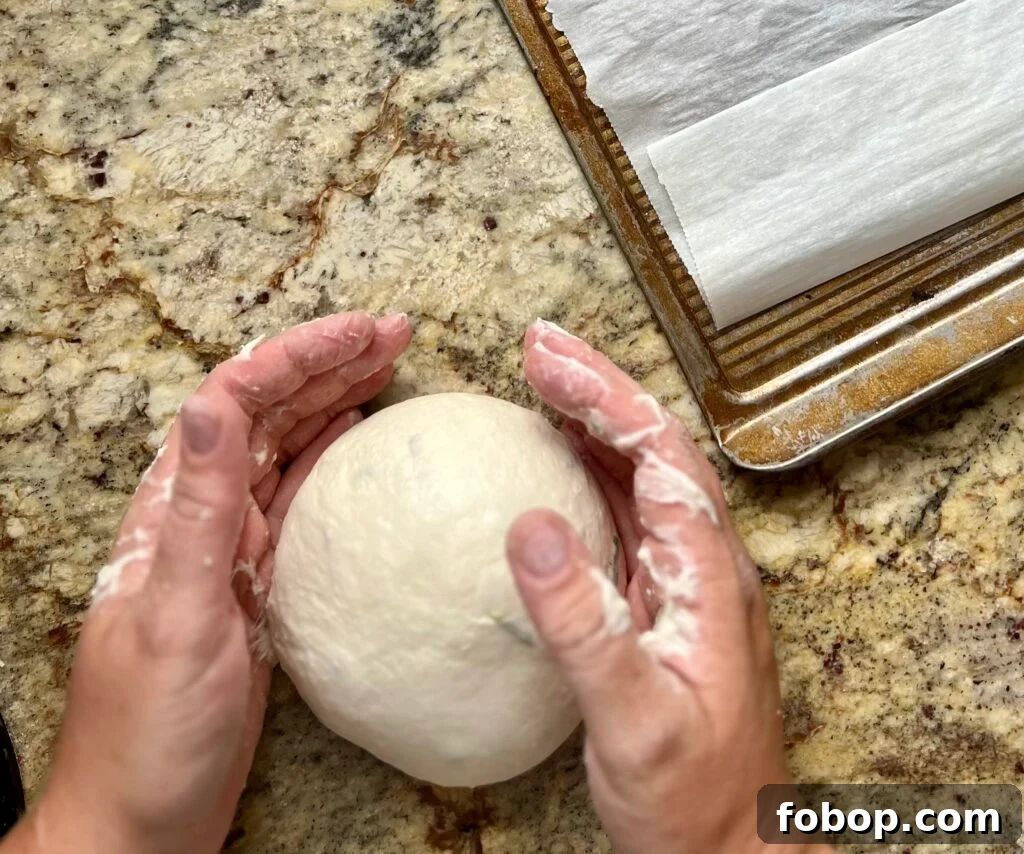
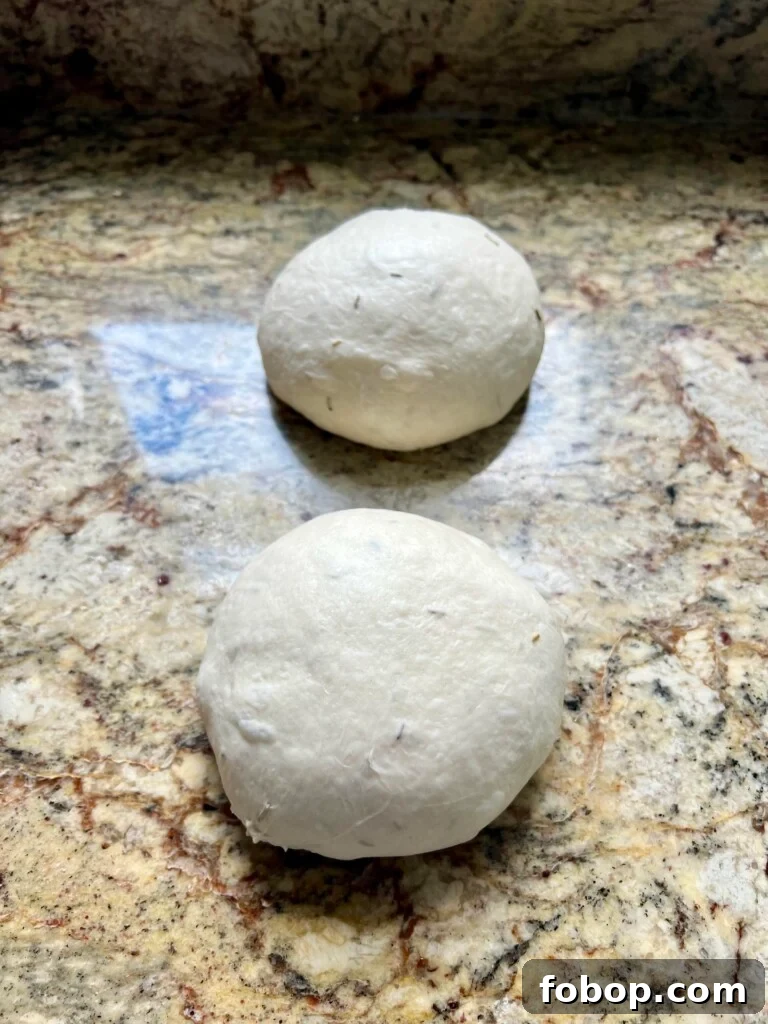
Top and Bake
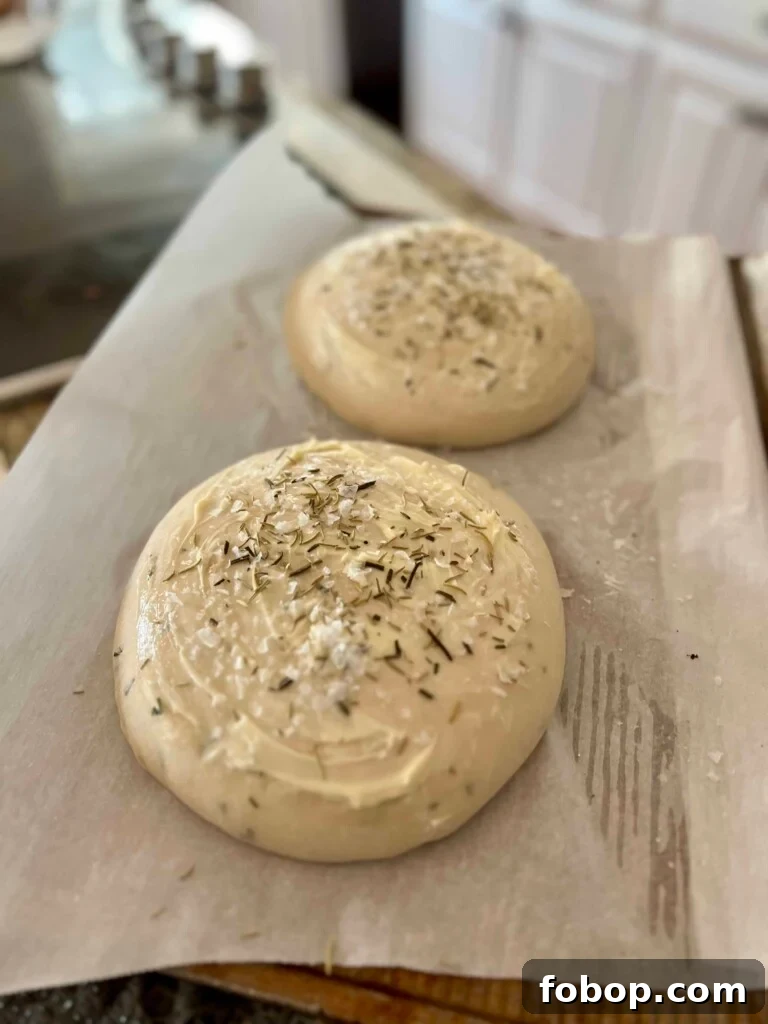
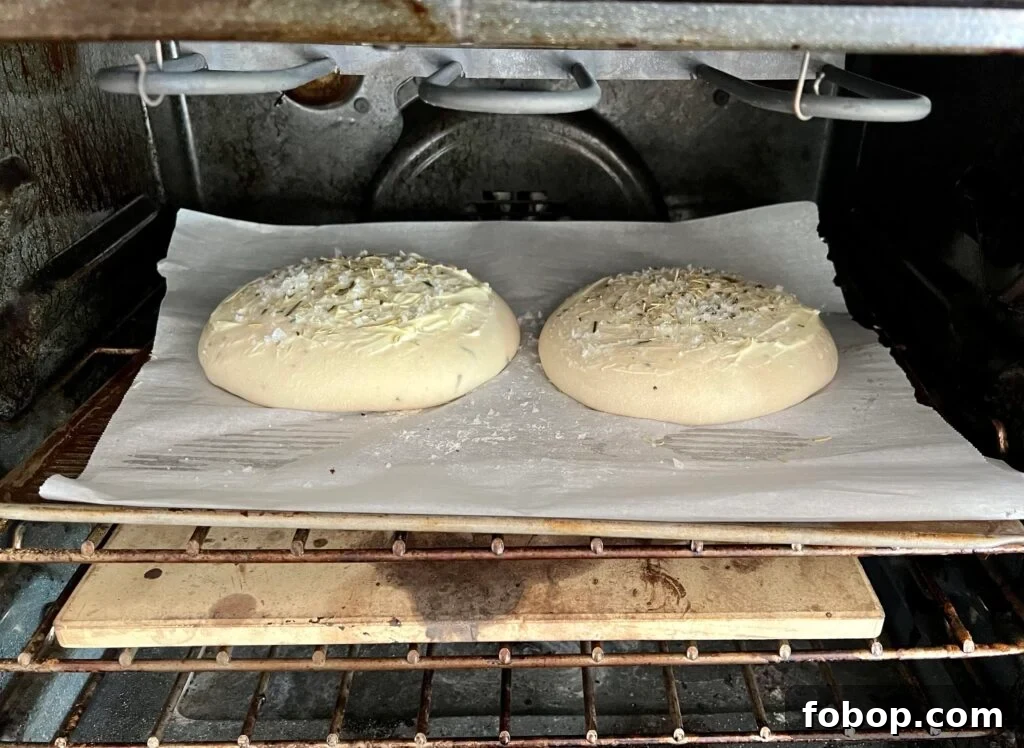
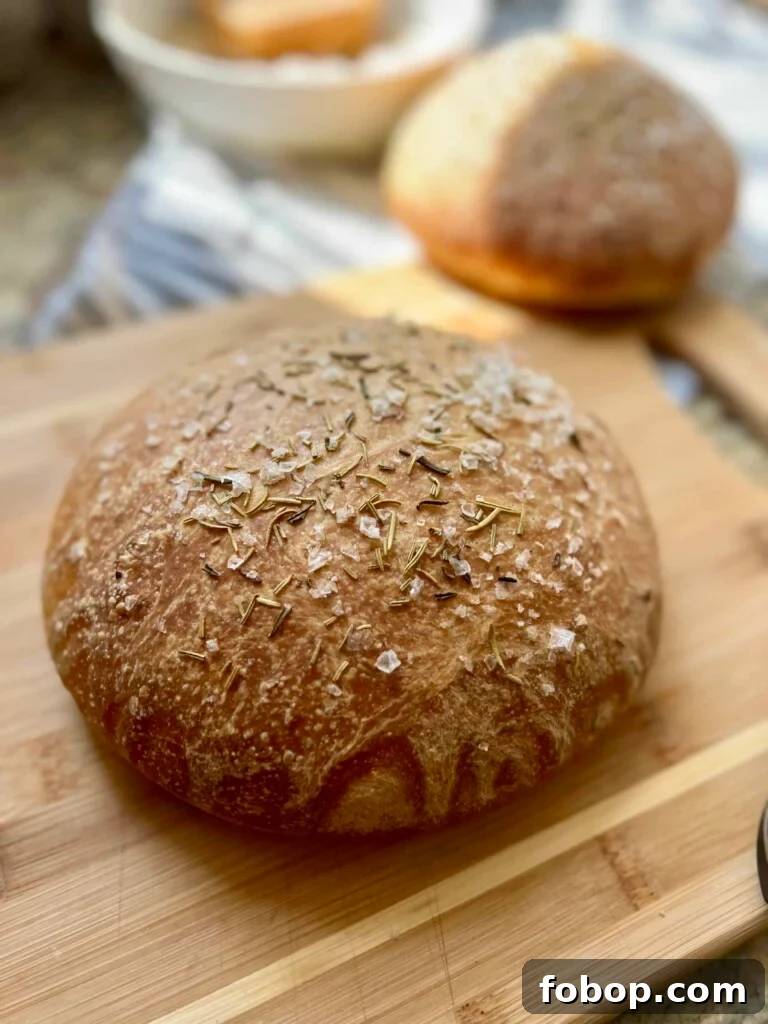
Preheat the oven to 425°F. Gently smooth very soft butter over the tops of the proofed loaves without deflating them. Sprinkle reserved rosemary and flaky sea salt over the buttered tops. Bake 20–25 minutes until well browned and fully baked (internal temperature around 200°F). Allow the loaves to cool completely before slicing for the best texture.
If you like this sourdough rosemary bread, you’ll also like:
- Cheesy Pull Apart Sourdough
- Soft Sourdough Sandwich Bread
- Caramelized Onion Sourdough Bread
- Buttery Sourdough Pull Apart Bread
- Sourdough Challah Bread
Frequently Asked Questions
This recipe produces two smaller loaves. Cool completely, then freeze one loaf for later or slice and freeze individual slices for quick reheating.
The recipe is written for an open bake on a sheet for a softer crust and a finer crumb, but you can bake in a dutch oven if you prefer a slightly different crust and oven spring.
Fresh rosemary gives the best aroma and flavor. Dried rosemary is an acceptable substitute if that’s what you have.
Dense dough usually means it didn’t proof enough. Keep dough temperature near 78–80°F during bulk fermentation and proofing. If your room is cool, warm the dough gently (for example, in an oven with just the light on) until the dough is light, jiggly and nearly doubled before baking.
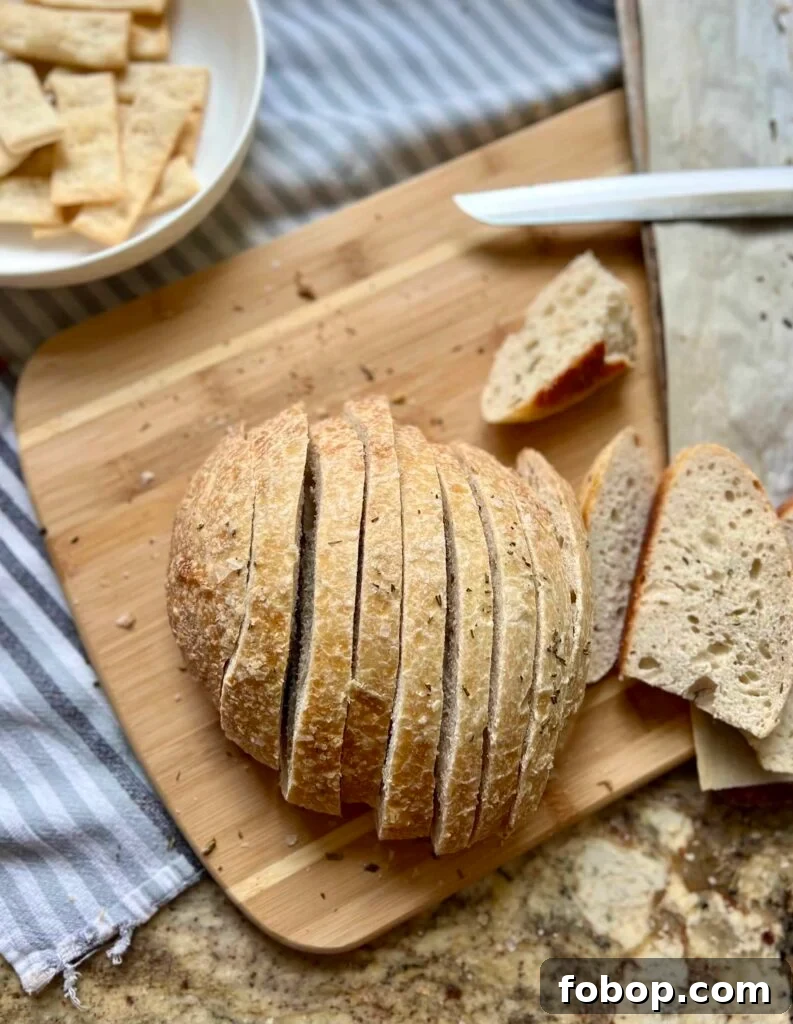
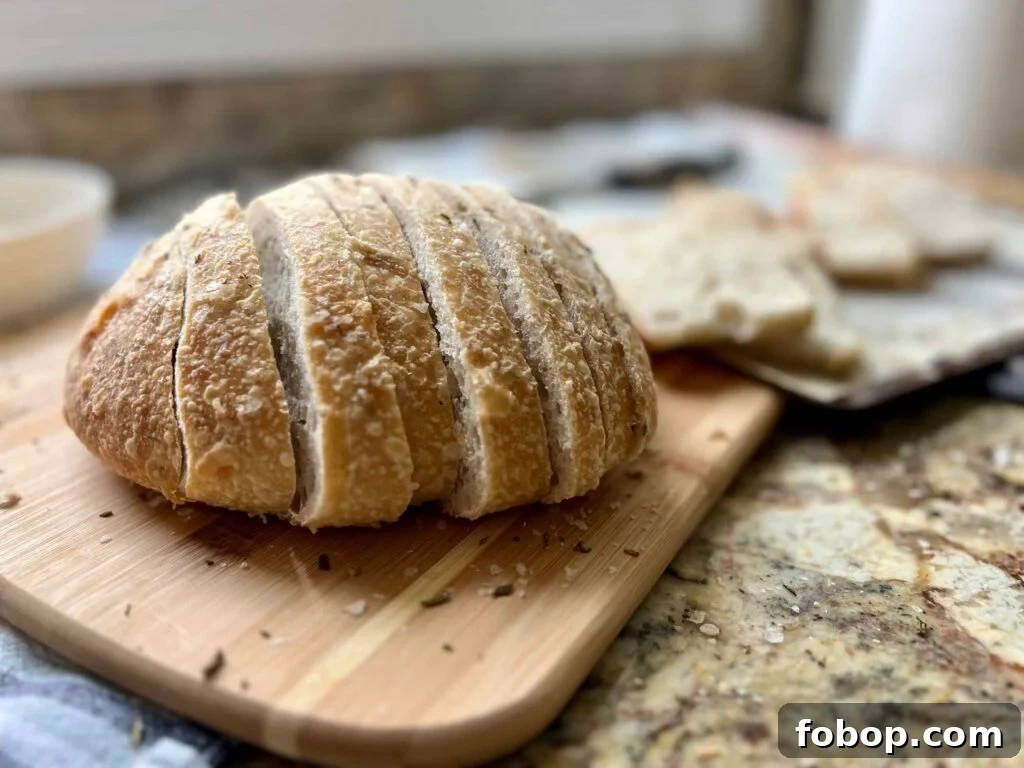
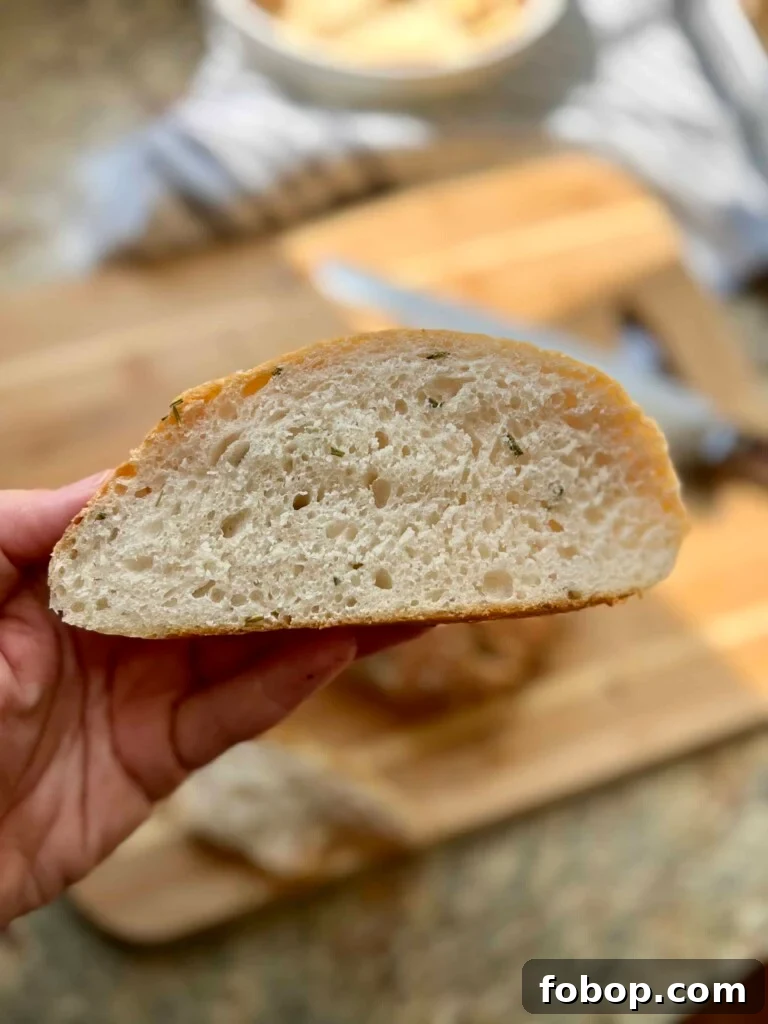
Soft Sourdough Rosemary Bread
Equipment
-
mixer
-
baking sheet
-
parchment paper
Ingredients
Levain (1:1:1) ready in 3–4 hours at 78–80ºF
- 45 grams ripe/active sourdough starter (about 3 Tbsp)
- 45 grams water (about 3 Tbsp)
- 45 grams all-purpose or bread flour (about 1/3 cup)
Soft Sourdough Rosemary Bread
- 120 grams ripe/active levain (about 1/2 cup)
- 350 grams water (about 1 1/2 cups)
- 15 grams sugar (about 1 Tbsp)
- 15 grams olive oil (about 1 Tbsp)
- 12 grams salt (about 2 tsp)
- 3–4 grams fresh or dried rosemary, chopped (about 1 Tbsp)
- 600 grams bread flour (about 4 1/4 cups)
Topping
- 30 grams softened butter (about 2 Tbsp)
- A sprinkle of flaky sea salt
- A sprinkle of reserved fresh or dried rosemary
Instructions
Levain (1:1:1)
- Mix 45 g ripe starter with 45 g flour and 45 g water. Cover and let sit 3–4 hours at 78–80ºF until doubled, peaked and bubbly.
Soft Sourdough Rosemary Bread
- In a mixer bowl, combine levain, water, sugar, olive oil, salt, rosemary and most of the flour. Reserve about 1/2 cup flour to add while kneading to avoid adding too much.
- Knead 8–10 minutes until the dough is smooth, soft and tacky but not overly sticky. Add small amounts of reserved flour if needed.
- Bulk Fermentation: Place dough in a covered container and keep at about 78°F for 4–5 hours. It should be puffed, elastic and slightly risen at the end; extend time if necessary.
- Overnight Option: After bulk fermentation you may refrigerate the dough 24–48 hours. When ready, shape and allow extra time for the chilled dough to proof up to temperature.
- Shaping: Turn dough onto the counter, divide in half, and shape into taut rounds. Place on parchment-lined baking sheet.
- Proofing: Cover and proof in a 78–85°F environment until puffed and nearly doubled, about 2–3 hours. Do not bake if underproofed.
- Topping: Brush with very soft butter and sprinkle with rosemary and flaky sea salt.
- Baking: Preheat oven to 425°F and bake 20–25 minutes until deeply golden and cooked through. Cool completely before slicing.
Notes
Rosemary: Fresh leaves give the best flavor—strip from the sprigs and chop finely.
Flaky Sea Salt: A light sprinkle of flaky salt enhances the final flavor.
Nutrition
, Carbohydrates: 24g
, Protein: 4g
, Fat: 3g
Nutrition information is automatically calculated and is an approximation.
Like this? Leave a comment below!