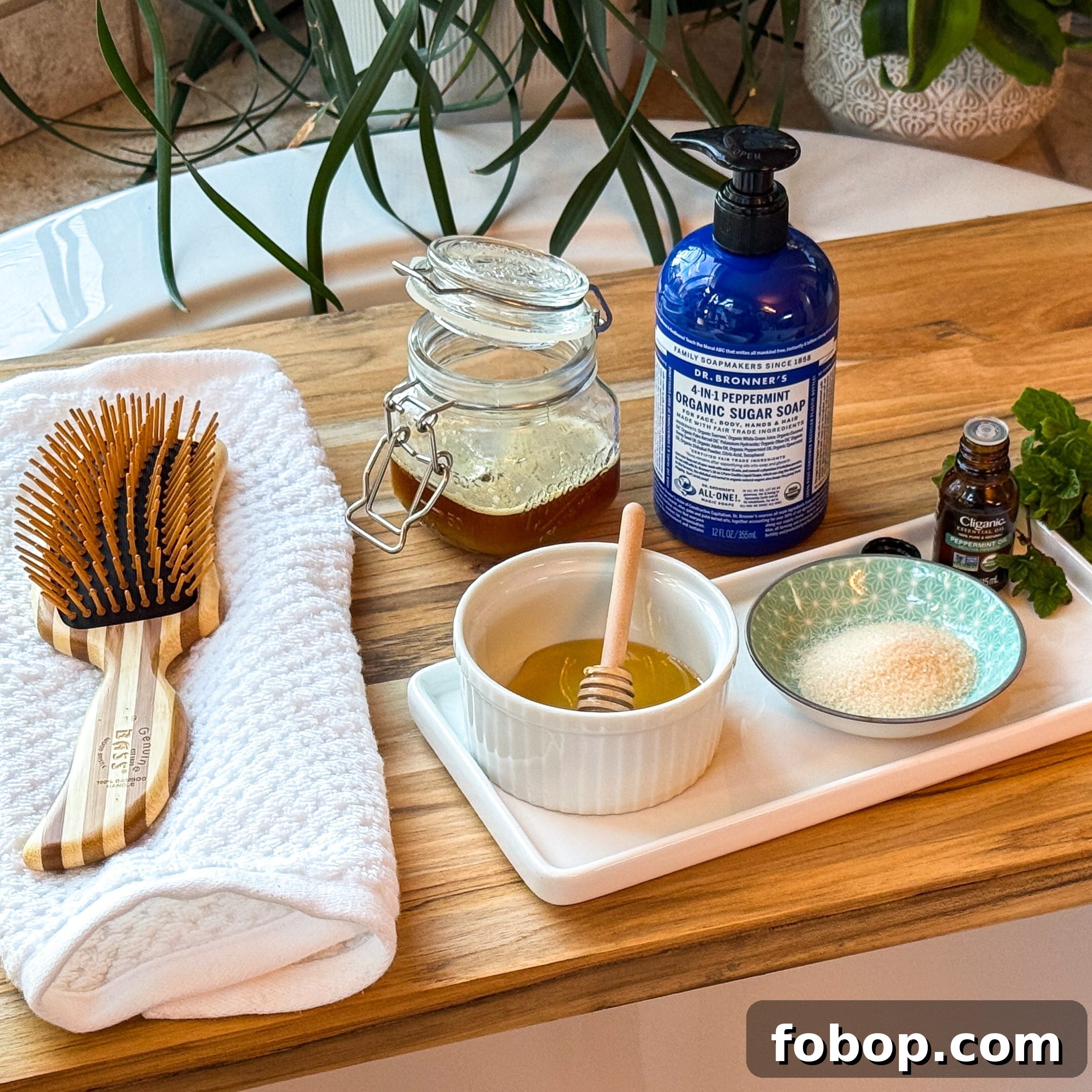
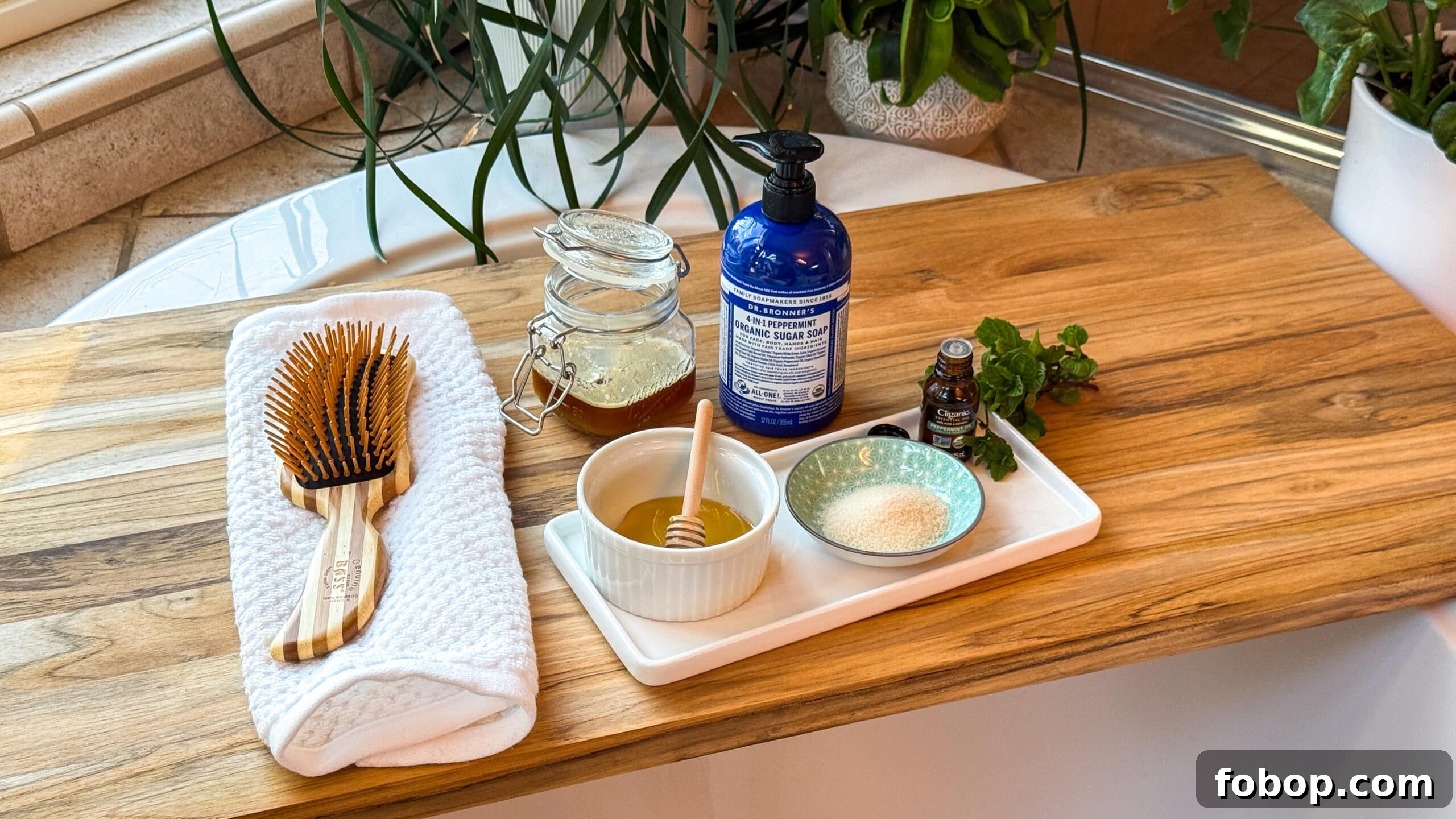
Healthy hair begins with a healthy scalp. When we focus on hair care, the scalp is often overlooked, yet it plays a central role in hair health. The scalp contains the highest concentration of sebaceous glands on the body. These glands produce sebum, an oily substance that helps keep hair and skin resilient, protected, and moisturized.
If the scalp becomes dry, overly oily, or clogged with product buildup, hair quality suffers. In those cases, a targeted scalp treatment—such as an exfoliating scrub—can help restore balance.
Table of contents:
- What are the benefits of a scalp scrub?
- Identify your scalp type & needs
- Who should use a scalp scrub? Who shouldn’t?
- Benefits of a homemade scalp scrub
- What’s in a GIY scalp scrub?
- Shelf life of homemade scrubs
- How often to use a scalp scrub
- Scalp scrub aftercare
- GIY scalp scrub recipes
- Scalp scrub FAQs
What is a scalp scrub?
A scalp scrub is a topical product designed to exfoliate and nourish the scalp. Formulations vary, but scrubs can address dryness, itchiness, oiliness, dandruff, and product buildup depending on their ingredients.
What are the benefits of a scalp scrub?
Scalp scrubs can deliver several benefits depending on their composition, including:
- Exfoliating dead skin – Removing dead skin reduces itching and flaking and helps the living skin move and breathe normally.
- Removing product buildup – Residues from conditioners, styling products, and dry shampoo can coat the scalp and hair, weighing hair down and reducing product effectiveness. Regular detox helps restore hair body and shine.
- Removing sebum/oil buildup – Excess oil from overactive sebaceous glands can clog follicles and flatten hair; scrubs help balance oil levels.
- Stimulating circulation – Massaging the scalp boosts blood flow, which supports scalp health.
- Supporting hair growth – Increased circulation and reduced buildup can encourage healthier hair growth.
- Helping manage dandruff – When formulated appropriately, scrubs can reduce the appearance of dandruff flakes.
Identify your scalp type & needs
Knowing your scalp type helps you select ingredients that support balance rather than worsen issues. Common scalp types and their characteristics:
Oily scalp signs and characteristics
An oily scalp often leaves hair looking flat or stringy and may darken roots. When you rub your fingertips on the scalp you may notice an oily sheen.
Scalp scrub goal: Reduce oil, exfoliate gently.
Dry scalp signs and characteristics
A dry scalp can be itchy, flaky, and sometimes red. Dry scalp flakes are often small and white and differ from dandruff. Dry scalps tend to produce frizz or static and may show light flakes when rubbed. If your skin elsewhere is prone to dryness, your scalp likely is, too.
Scalp scrub goal: Hydrate and provide mild exfoliation.
Balanced scalp signs and characteristics
A balanced scalp neither overproduces oil nor shows dryness. With a normal wash routine, hair looks healthy and comfortable. For many people, a scrub isn’t necessary; if not needed, it can create problems. Choose a mild formula only if you do use one.
Scalp scrub goal: Maintain balance with a gentle formula.
Dandruff-prone scalp signs and characteristics
Dandruff flakes are usually larger and range from white to yellowish. Dandruff can correlate with genetics, hormonal shifts, increased sebum, or overgrowth of the fungus Malassezia. Other conditions like seborrheic dermatitis or psoriasis can mimic dandruff, so consult a medical professional if home treatments don’t help.
Scalp scrub goal: Balance oil, provide mild exfoliation, and include antifungal ingredients when appropriate.
Sensitive scalp characteristics
A sensitive scalp reacts to new ingredients with redness or irritation. For these scalps, avoid physical exfoliants and focus on soothing, nourishing treatments instead.
Scalp scrub goal: Soothe and nourish; avoid abrasive exfoliation.
How to know if you need a scalp scrub
You might benefit from a scalp scrub if any of the following are true:
- Your hair flattens at the roots and lacks body.
- Your hair becomes oily quickly and needs frequent washing.
- Products that used to work no longer perform as well.
- You see visible flakes.
- Your scalp is itchy, red, or irritated.
Who should use a scalp scrub? Who shouldn’t?
Scalp scrubs are helpful for people with product buildup, excess oil, non-medical flaky scalps, or those who use a lot of dry shampoo or styling products. They can also boost circulation and overall scalp hygiene.
Avoid exfoliating scrubs if your scalp is irritated, broken, inflamed, experiencing a psoriasis flare, active dermatitis, or infection. Very fine or fragile hair and those with excessive shedding should also avoid strong exfoliation. Instead, these scalps can benefit from non-abrasive treatments that nourish and soothe.
If in doubt, perform a patch test on the arm, then a small section of the scalp before applying broadly.
Benefits of making a homemade scalp scrub
Making your own scalp scrub lets you control the ingredients, avoid questionable additives like preservatives or artificial fragrances, customize formulations to your needs, and often save money. Homemade scrubs can be tailored to your scalp type and rotated seasonally for best results.
What’s in a GIY scalp scrub?
A basic scalp scrub includes three components:
- A carrier base such as oil, soap, or glycerin
- An exfoliant such as salt or sugar
- Optional extras like colloidal oatmeal, honey, aloe, or essential oils
Choice depends on scalp needs: oilier scalps often benefit from soap-based scrubs, dry scalps from oil-based scrubs, and balanced scalps from glycerin-based formulas. Use fine, rounded exfoliants and hydrating bases when possible; scrubs should support the scalp, not aggressively abrade it.
What extras should I add to create a customized scalp scrub?
Extras let you tailor benefits. Colloidal oatmeal soothes and reduces itchiness. Essential oils add targeted effects: peppermint can increase circulation and provides a cooling sensation; tea tree has antimicrobial and antifungal properties; rosemary is linked to hair growth benefits; lavender calms. Fresh aloe vera soothes irritation but is not shelf stable. Choose ingredients that are gentle and purposeful.
Shelf life of homemade scrubs
Shelf life depends on ingredients. Formulations without fresh or perishable components can last a couple of weeks or more. If you include fresh aloe, lemon juice, or other spoilable items, they will not be shelf stable. Without preservatives, make small batches you can use within a few treatments and consider refrigerating to extend longevity.
How often to use a scalp scrub
Start with once every other week and adjust to your scalp’s response. Over-exfoliation can disrupt the scalp barrier, cause irritation, and even trigger increased oil production. Monitor your scalp and use scrubs as a targeted treatment rather than a daily ritual.
Your need for a scalp scrub may change with the seasons, activities, and bodily changes. Check in with your scalp before treating it.
Seasonal scalp care
Seasonal shifts affect scalp needs. Winter often calls for more nourishing oils and hydration; summer may require lighter cleansing and cooling ingredients like peppermint to manage sweat and increased activity. Adjust treatments accordingly.
Impact of the environment on scalp health
Humidity, water hardness, pollution, and activity level all influence scalp condition. When you travel or your routine changes, be ready to adapt your scalp care—soothing formulas for irritation or balancing treatments for increased oil.
How to use a scalp scrub
Use a scalp scrub on a wash day. Wet hair, scoop a small amount onto your fingertips, and massage gently in circular motions on the scalp for about 60 seconds. If hair thickness or length makes accessing the scalp difficult, section hair to expose the scalp. You can leave the scrub on a few minutes to allow active ingredients to work, then rinse thoroughly. Shampoo and condition as usual.
Double shampooing explained
For heavy buildup or after an oil-based treatment, a repeat shampoo (wash, rinse, repeat) can help remove excess oils. This method is not recommended for dry or brittle hair, which benefits from gentler handling.
Scalp scrub aftercare
After exfoliation, moisturizing helps restore emollients and protect newly exposed skin. Lightly massage a few drops of oil into the scalp, such as:
- Hempseed oil – A nourishing option; store refrigerated for stability.
- Jojoba oil – Shelf-stable and compatible with skin.
- Essential oils in a carrier – A few drops of peppermint or rosemary diluted in an oil like olive oil can extend benefits beyond the shower.
Consider following with a hair masque to strengthen and moisturize hair, especially for dry or brittle strands.
“Growing knowledge is a good thing, but when something becomes trendy, remember that not every trend is for everyone.”
I hope this guide helps you identify what your scalp needs. Share any mixtures that work well for you.
GIY scalp scrub recipes
Below are small-batch recipes tailored to different scalp needs. Quantities are intentionally modest because homemade scrubs lack preservatives; multiply for larger batches and refrigerate if desired. Swap ingredients based on preference—sugar types, essential oils, or omit extras as needed.
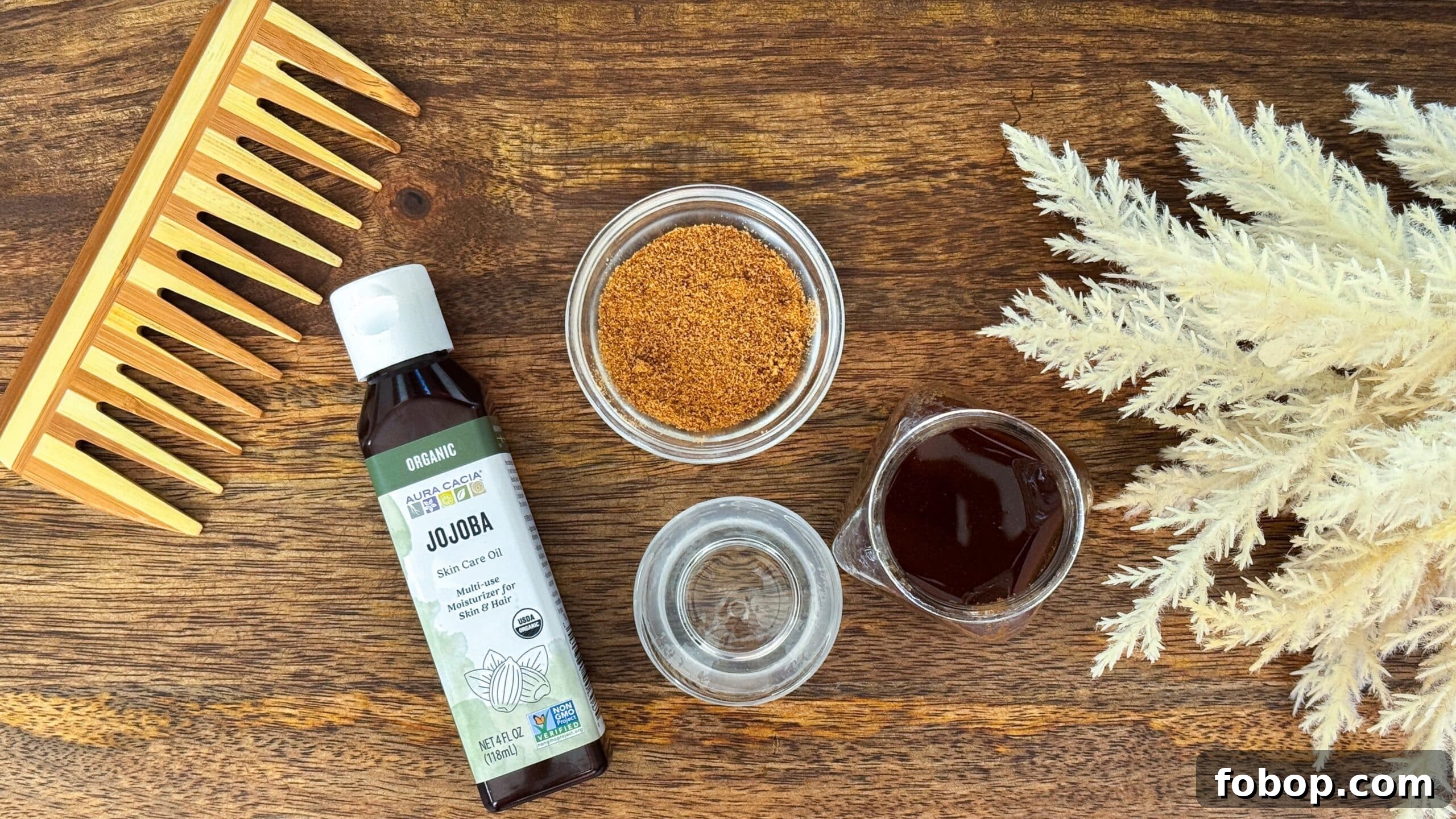
- 2 Tbsp. (30 mL) jojoba oil
- 1 Tbsp. (15 mL) coconut sugar
- Combine jojoba oil and coconut sugar in a small bowl.
- Apply to damp scalp and massage gently for 1–2 minutes.
- Rinse thoroughly and follow with your usual wash routine.
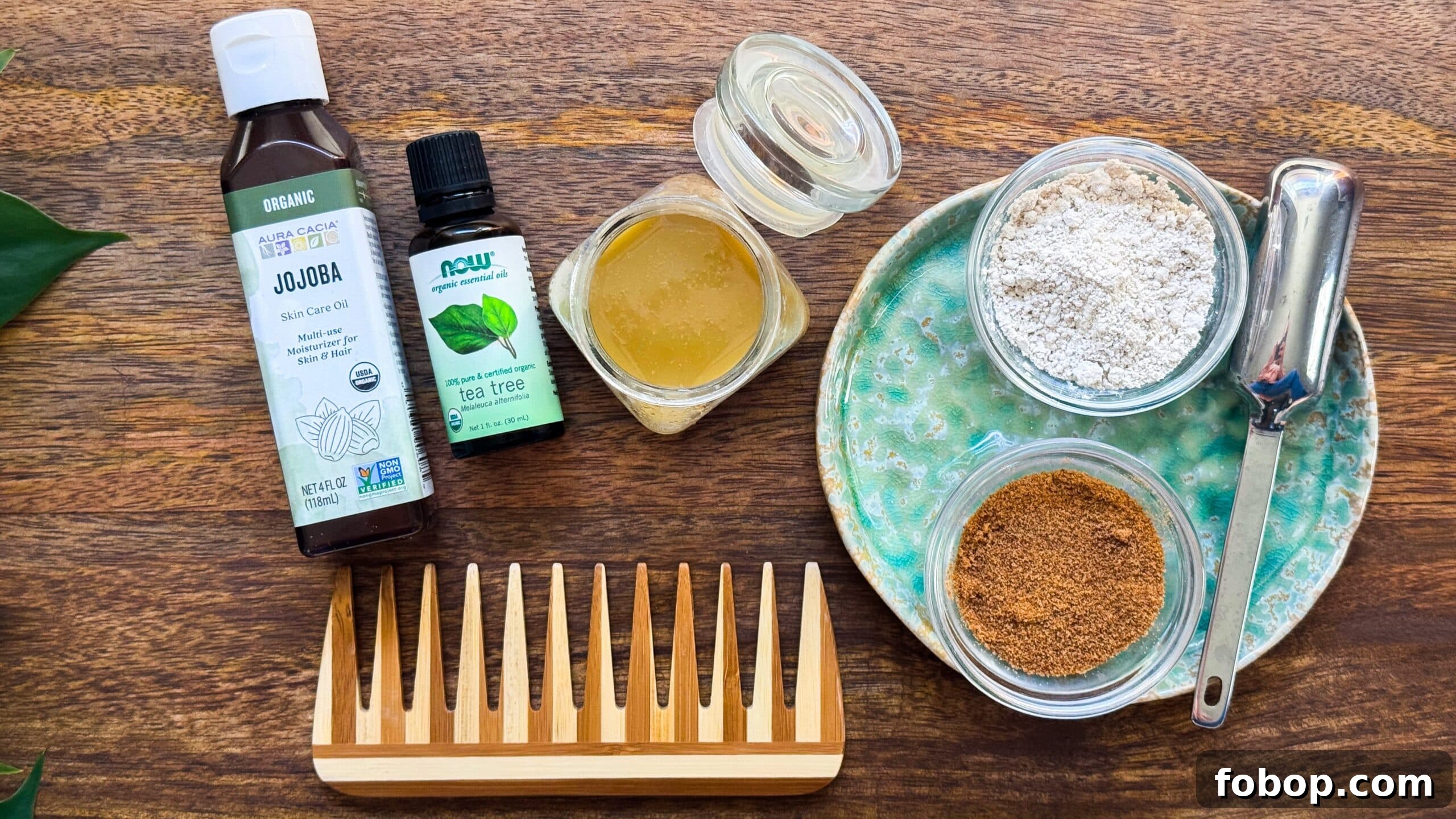
- 1 Tbsp. (15 mL) jojoba oil
- 1 Tbsp. (15 mL) coconut sugar
- 1 Tbsp. (15 mL) colloidal oatmeal
- 4 drops tea tree essential oil
- Combine jojoba oil, coconut sugar, and colloidal oatmeal in a small bowl.
- Add tea tree essential oil and mix until blended.
- Apply to damp scalp and massage gently for 1–2 minutes.
- Rinse thoroughly and follow with your usual wash routine.
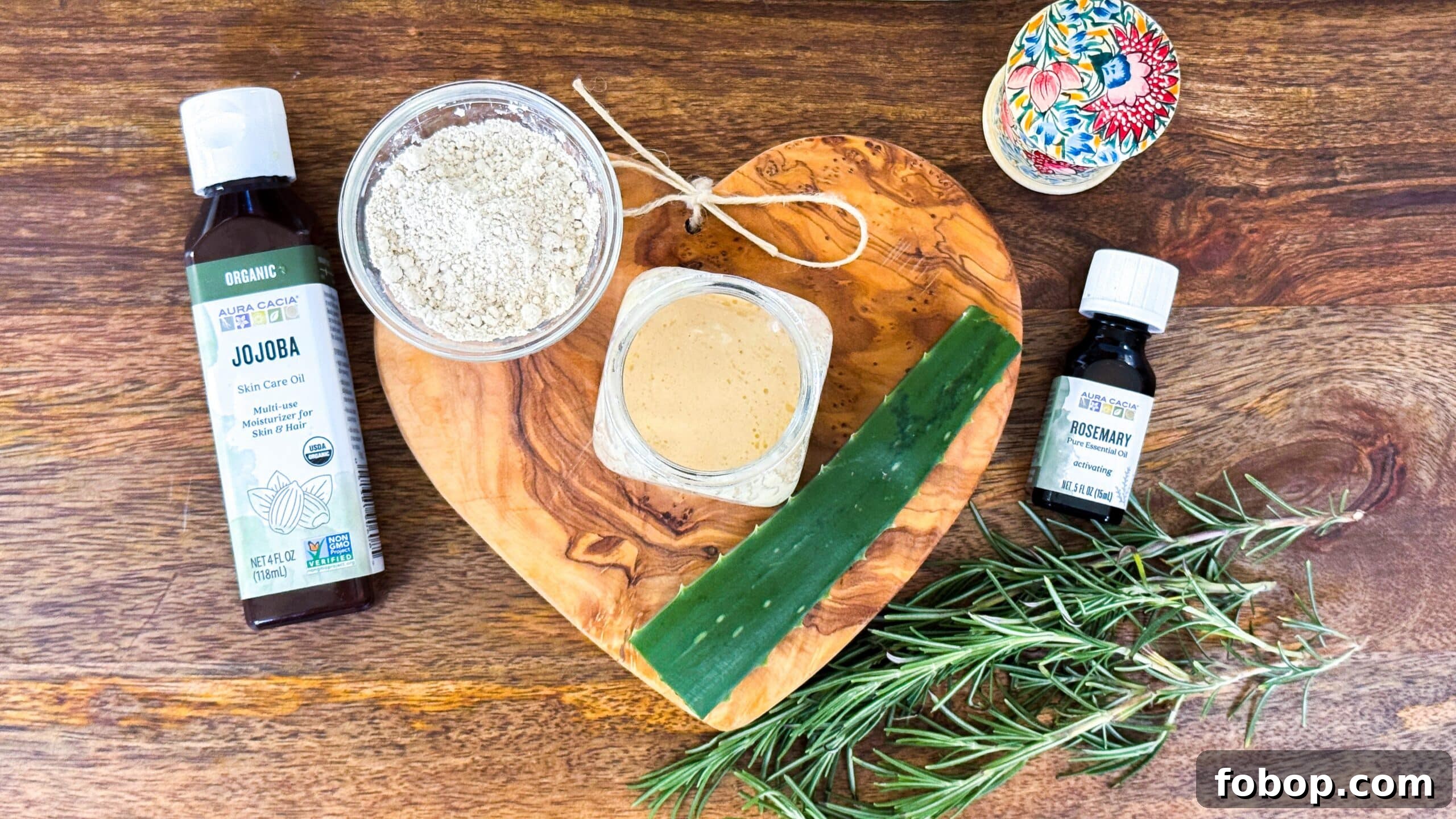
- 1 Tbsp. (15 mL) colloidal oatmeal
- 2 Tbsp. (30 mL) aloe vera
- 1 Tbsp. (15 mL) jojoba oil
- 8 drops rosemary essential oil
- Combine colloidal oatmeal, aloe vera, and jojoba oil in a small bowl.
- Add rosemary essential oil and mix until blended.
- Apply to damp scalp and massage gently for 1–2 minutes.
- Rinse thoroughly and follow with your usual wash routine.
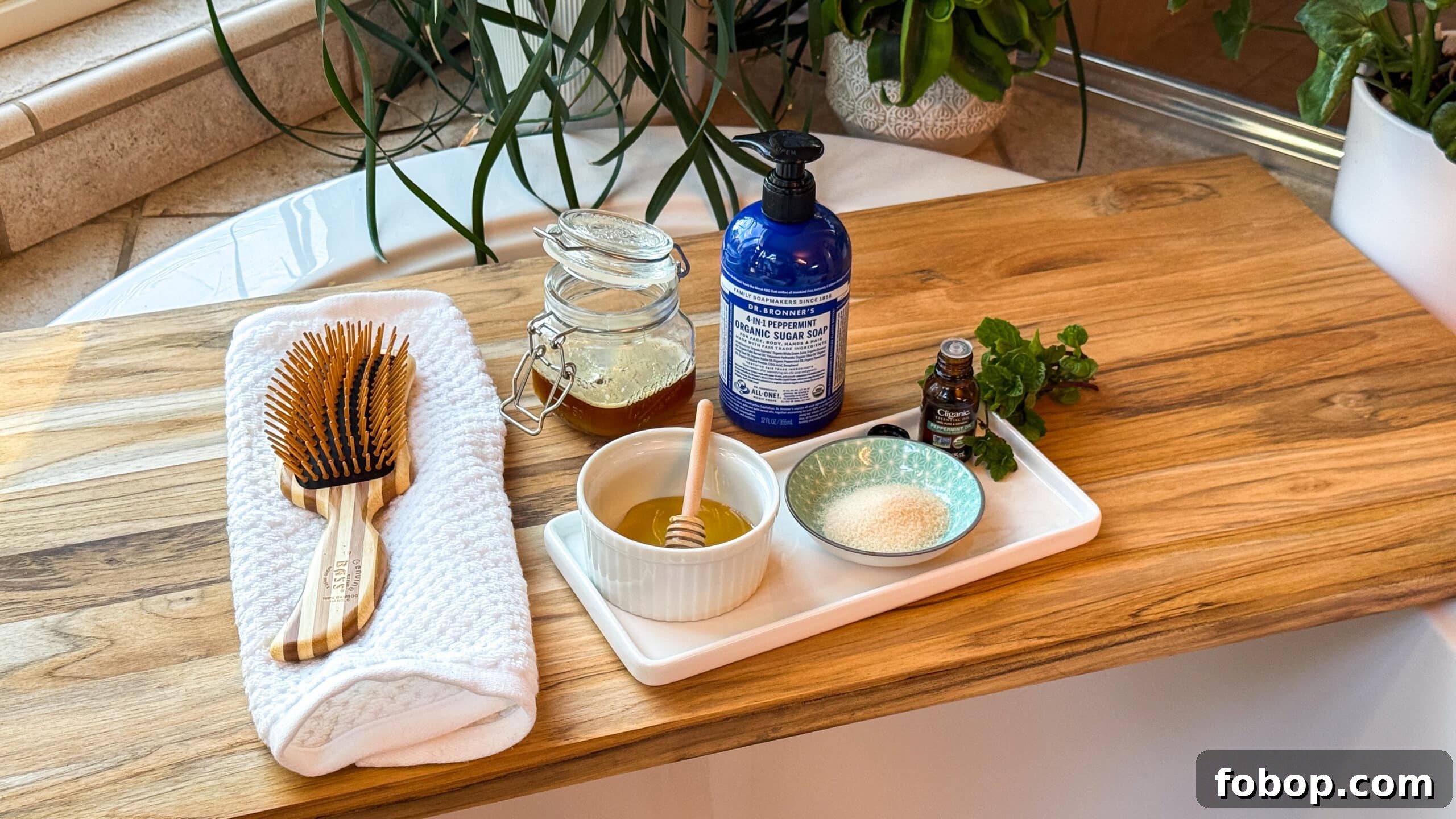
- 2 Tbsp. (30 mL) peppermint organic sugar soap
- 1 Tbsp. (15 mL) white sugar
- 1 tsp. (5 mL) raw honey
- 5 drops peppermint essential oil
- Combine soap, raw honey, and colloidal oatmeal in a small bowl.
- Add peppermint essential oil and mix until blended.
- Apply to damp scalp and massage gently for 1–2 minutes.
- Rinse thoroughly and follow with your usual wash routine.
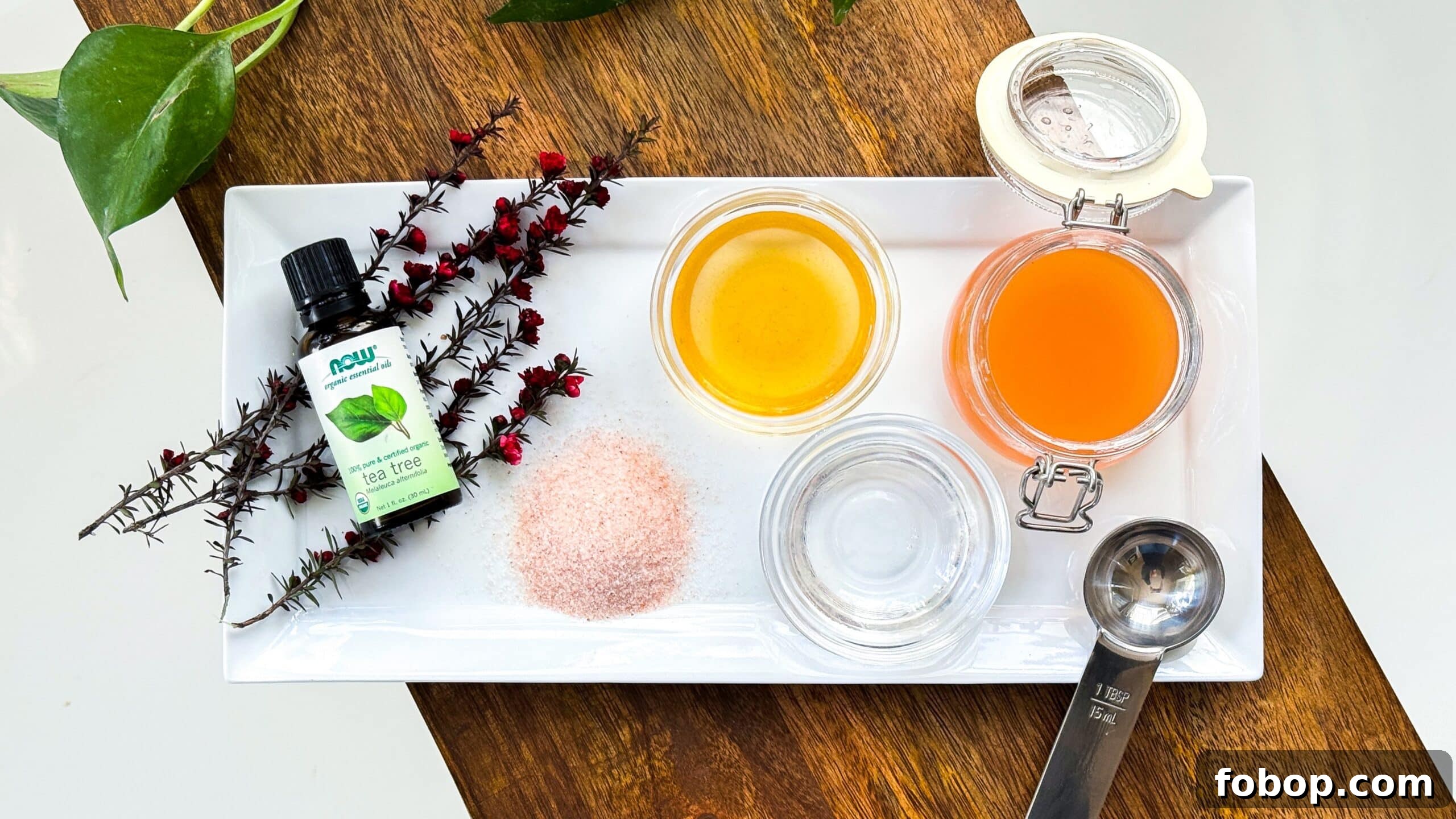
- 1 Tbsp. (15 mL) apple cider vinegar
- 2 Tbsp. (30 mL) glycerin
- 1 Tbsp. (15 mL) fine sea salt
- 4 drops tea tree essential oil
- Combine apple cider vinegar, glycerin, and sea salt in a small bowl.
- Add tea tree essential oil and mix until blended.
- Apply to damp scalp and massage gently for 1–2 minutes.
- Rinse thoroughly and follow with your usual wash routine.
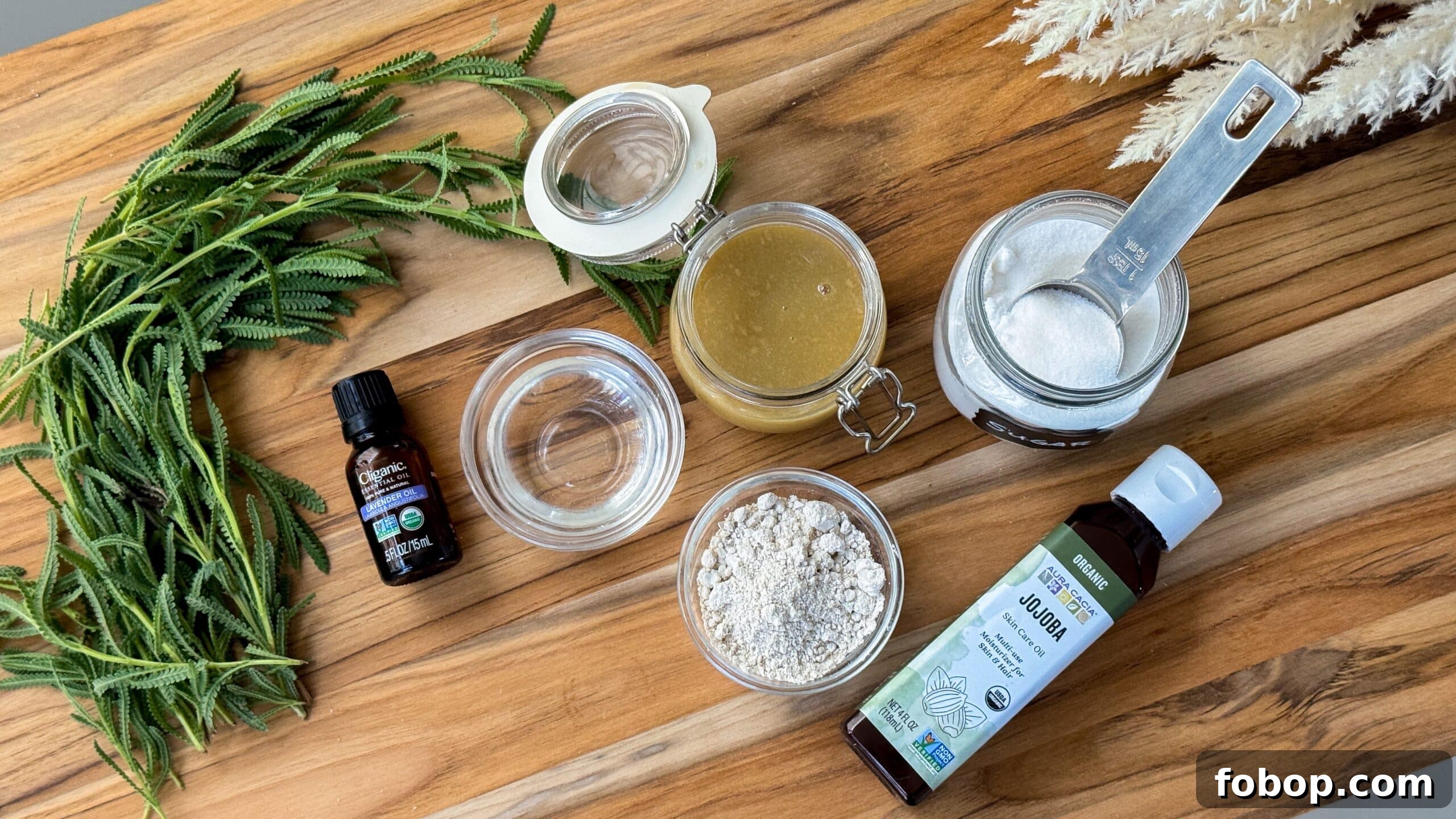
- 2 Tbsp. (30 mL) glycerin
- 1 Tbsp. (15 mL) colloidal oatmeal
- ½ Tbsp. (7.5 mL) jojoba oil
- 1 Tbsp. (15 mL) white sugar
- 4–5 drops lavender essential oil
- Combine glycerin, colloidal oatmeal, jojoba oil, and white sugar in a small bowl.
- Add lavender essential oil and mix until blended.
- Apply to damp scalp and massage gently for 1–2 minutes.
- Rinse thoroughly and follow with your usual wash routine.
Ingredient index for homemade scalp scrubs
Below is a quick reference to common bases, exfoliants, and extras used in these recipes. Keep a few formulation pointers in mind: acids and bases react, so don’t mix soap with apple cider vinegar. Coconut oil solidifies below about 66°F, which can affect texture in cooler storage.
| Ingredient | Benefits & Description |
|---|---|
| Base | |
| Jojoba Oil | Closely mimics skin’s natural oils and is well tolerated by most scalps. |
| Coconut Oil | Nourishes hair shafts and helps seal moisture; may solidify in cool conditions. |
| Sweet Almond Oil | Lightweight moisturizer that helps increase elasticity and reduce brittleness. |
| Raw Honey | Moisturizes, conditions, and can help soothe scalp discomfort. |
| Apple Cider Vinegar (ACV) | Helps remove buildup, smooth hair, and enhance shine; avoid mixing with soap. |
| Aloe Vera | Soothes and reduces inflammation; fresh aloe is best but perishable. |
| Glycerin | A humectant that draws moisture into the skin; good for balanced scalps. |
| Exfoliants | |
| Salts and sugars vary by crystal size and texture—test them between your fingers to gauge grit. | |
| Fine Sea Salt or Himalayan Salt | Coarser, more abrasive; suited to resilient, oily scalps. |
| White Sugar | Moderate exfoliation with hexagonal crystals. |
| Brown Sugar | Softer exfoliation due to finer crystals and molasses content. |
| Coconut Sugar | Gentle exfoliation with a mild aroma. |
| Extra Scalp Scrub Ingredients | |
| Peppermint Essential Oil | Cooling sensation and linked in research to improved circulation. |
| Tea Tree Essential Oil | Antimicrobial and antifungal qualities helpful for dandruff-prone scalps. |
| Rosemary Essential Oil | May improve circulation and support hair growth. |
| Lavender Essential Oil | Calming aroma and soothing properties. |
| Colloidal Oatmeal | Soothes and reduces itchiness for irritated scalps. |
Salt vs. sugar scrub comparison
Salt and sugar differ in crystal shape and skin impact. Salt (sodium chloride) crystals are cubic and feel sharper; they can be drying and suit resilient, oily scalps. Sugar crystals are hexagonal and act as humectants, drawing moisture in, so they’re gentler for balanced or drier scalps. Sensitive scalps should avoid physical exfoliants and use a non-scrub treatment instead.
Scalp scrub FAQs
What is the difference between a scalp scrub and a clarifying shampoo?
Clarifying shampoos focus on cleansing hair strands through chemical surfactants, while scalp scrubs target the scalp and often include a physical exfoliant like sugar or salt to remove buildup directly from the skin. They can be used together for a thorough detox, followed by moisturizing aftercare.
Do dermatologists recommend scalp scrubs?
Dermatologists advise assessing individual scalp needs: avoid scrubs on sensitive or irritated scalps until symptoms resolve, but occasional scrubs can be fine for those without scalp issues.
What are the signs of an unhealthy scalp?
Signs include itchiness, dull or lifeless hair, excess oil, flatness at the roots, flakes, and reduced product performance.
Is it better to exfoliate wet or dry scalp?
Exfoliating on a wet scalp is preferred for safety and effectiveness.
What’s the best way to exfoliate your scalp?
On wet hair, gently massage the scrub into the scalp with fingertips for about 60 seconds, rinse, then shampoo and condition.
Can I use a scalp scrub on color-treated hair?
Oil- or glycerin-based scrubs are generally safe for color-treated hair. Soap-based scrubs can be more alkaline and may contribute to fading, so use them cautiously.
How do I know if I’m over-exfoliating?
If your scalp becomes overly dry, irritated, or shifts from oily to dry, you may be over-exfoliating. Once every one to two weeks is usually sufficient.
How do I tell if I have buildup on my scalp?
Frequent use of styling products or dry shampoo often leads to detectable buildup. If products stop performing as expected or hair lacks lift at the roots, buildup may be present.
Further reading
- Hair Care with Dr. Bronner’s
- Hair Masques with Dr. Bronner’s
- From Shampoo to Soap – My Hair Story
- GIY Lip Scrubs and Tinted Lip Balms
This article is not medical advice and is not a substitute for consultation with a physician or licensed medical provider.