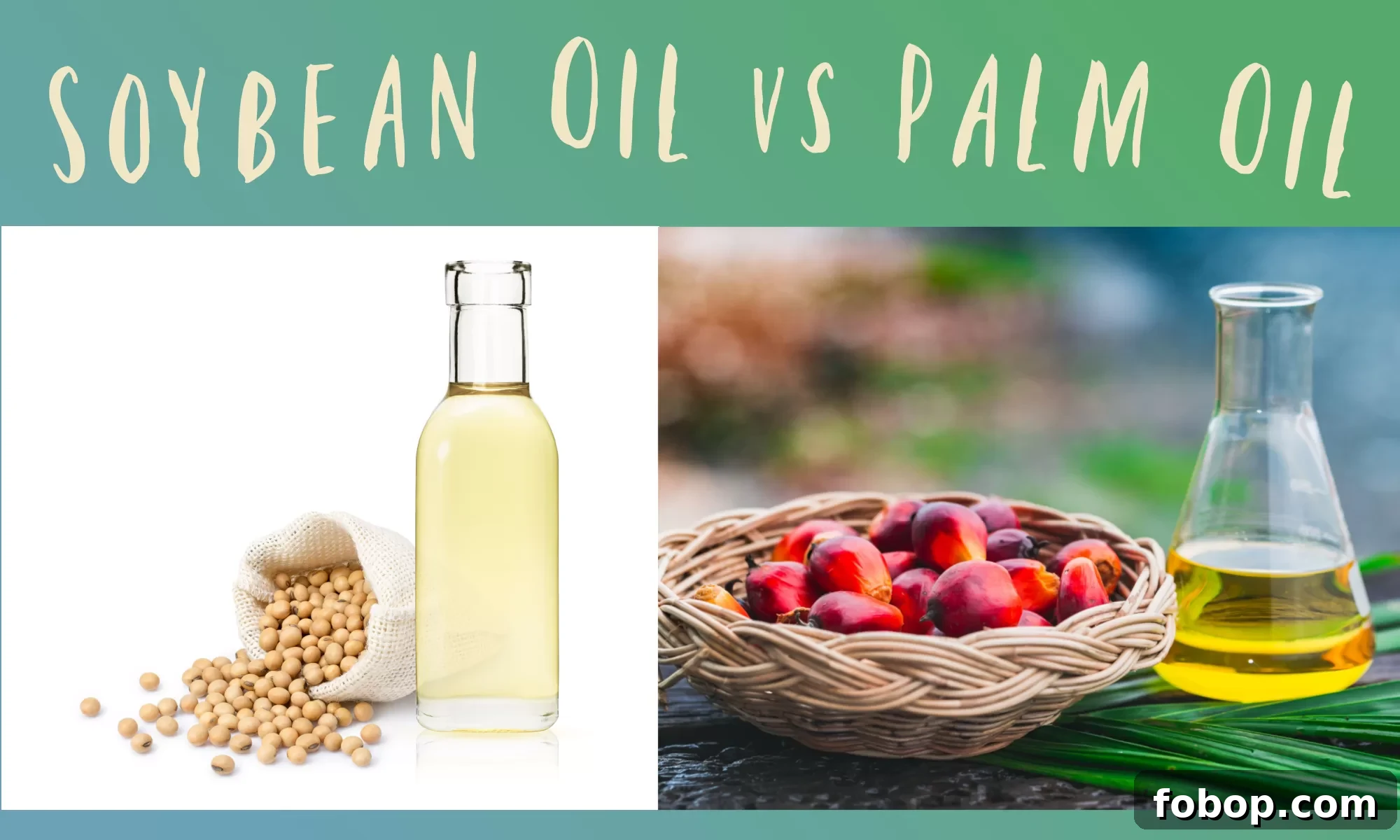
Palm oil and soybean oil are both valued in the kitchen for their high smoke points, but they differ in texture, flavor and nutritional profile. Extracted from soybeans, soybean oil is the most widely used oil in the United States, prized for its neutral taste and versatility. Palm oil comes from the fruit of oil palm trees; it’s semi-solid at room temperature, prized for a creamy texture that performs well in frying and baking. Read on to compare their strengths and learn how to use each oil effectively.
Comparing soybean oil vs palm oil
| Soybean oil | Palm oil | |
| Solid or Liquid? | Liquid | Semi-solid |
| Smoke Point (Fahrenheit) | 450 – 475 degrees | 450 degrees |
| Primary Fat | Polyunsaturated | Saturated |
| Taste | Neutral | Mild carrot |
| Good for Cooking… | Raw, low heat, medium heat, high heat | Raw, low heat, medium heat, high heat |
| Common allergens | Soy | Oil palm fruit |
| Gluten-free? | Yes | Yes |
| Keto? | Yes | Yes |
| Paleo? | No | Yes |
| Vegan? | Yes | Yes |
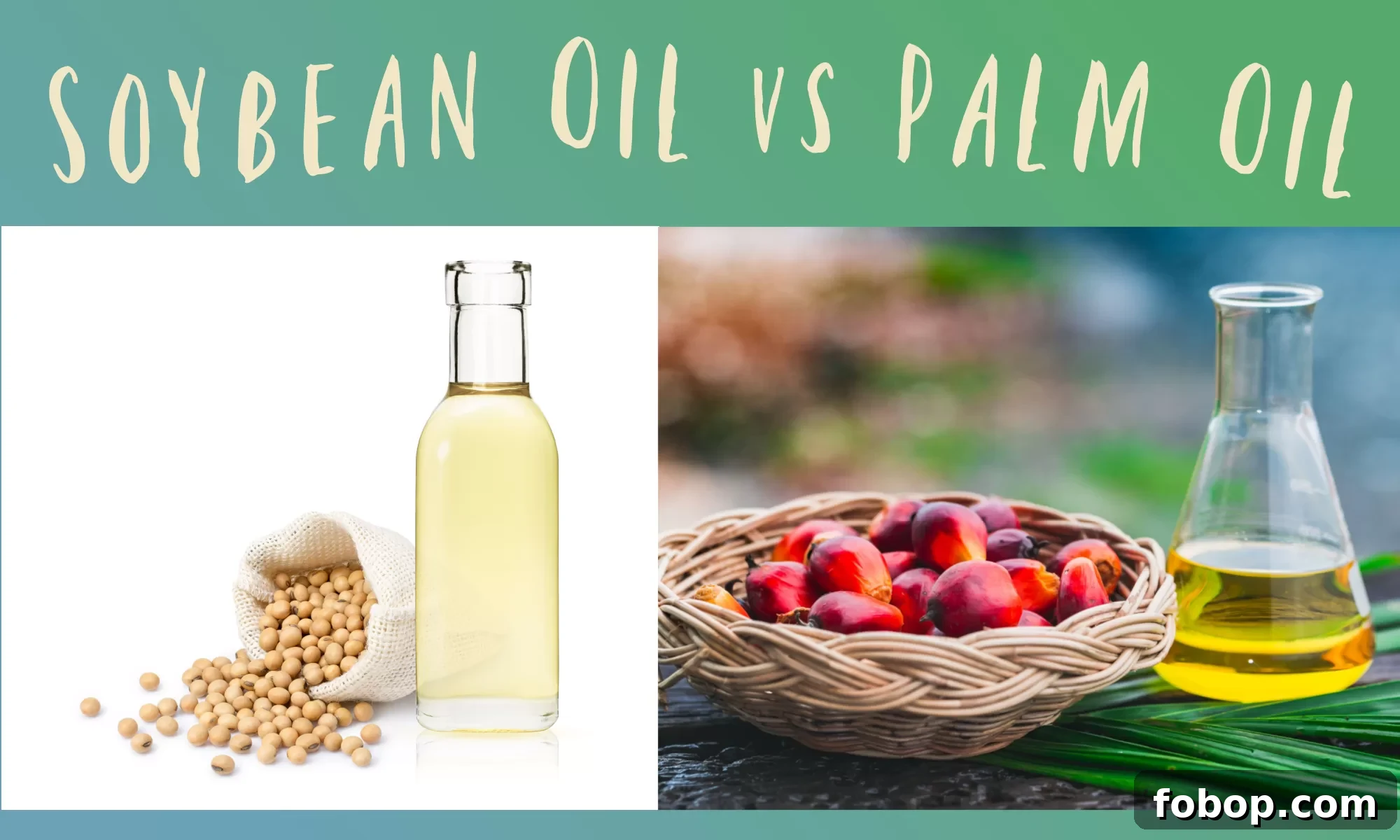
Differences between soybean oil and palm oil
Soybean oil behaves like a kitchen chameleon: its neutral flavor blends into recipes and lets other ingredients shine. Palm oil, by contrast, contributes a creamy mouthfeel and a subtle savory note—some describe it as slightly carrot-like. Both oils fit vegan, keto and gluten-free diets and both handle a wide range of cooking methods thanks to their high smoke points.
Because each oil tolerates high temperatures, they’re suitable for everything from dressings and low-heat cooking to stir-frying and deep frying. When choosing palm oil, opt for sustainably produced and minimally processed options to reduce environmental and ethical concerns.
Baking and cooking with soybean oil vs palm oil
Soybean oil’s mild flavor makes it ideal for baked goods—cookies, breakfast bars, muffins and pastries—where it keeps products moist without changing the intended flavor profile. It’s a practical all-purpose oil for salad dressings, sautéing and deep frying because it mixes well with other fats and ingredients.
Palm oil is semi-solid at room temperature and melts quickly with heat, lending a creamy consistency that can enhance soups, stews and slow-cooked dishes. It has a mild savory character that rarely overpowers other flavors. In baking, palm oil can help stabilize and cream ingredients, but unrefined red palm oil may tint baked goods with an orange-red hue; refined (white) palm oil avoids that issue.
Can soybean oil and palm oil be substituted for each other?
Yes—these oils are often interchangeable, particularly when a recipe calls for a neutral-flavored oil or one with a high smoke point. Keep in mind texture and flavor differences: palm oil’s semi-solid, creamy nature can affect the mouthfeel of a recipe, while soybean oil maintains a neutral profile. For direct swaps, common vegetable oil is a close alternative to soybean oil, while ghee can mimic palm oil’s richer mouthfeel and flavor in many dishes.
Nutrition: Soybean oil vs palm oil
Soybean oil is high in polyunsaturated fats and provides omega-3 fatty acids along with vitamins K and E. It contains a larger share of polyunsaturated fats per tablespoon compared with palm oil. Palm oil has a higher proportion of saturated fat, which can raise LDL cholesterol when consumed in excess, but it also supplies monounsaturated fats. Both oils are calorie-dense, so moderation is wise.
Below is a per-tablespoon comparison.
| Per tablespoon (15mL) | Soybean oil | Palm oil |
| Calories | 120 | 126 |
| Polyunsaturated | 7.9g | 1.2 g |
| Monounsaturated | 3.1g | 5.0 g |
| Saturated | 2.1g | 6.7 g |
| Trans | 0.1g | 0 g |
| Total Fat | 13.6g | 13.6 g |
| Cholesterol | 0 | 0 |
The primary fat source in each oil is highlighted above in bold.
How to store soybean oil and palm oil
Store both oils in tightly sealed containers in a cool, dark place away from heat and light. Unopened soybean oil typically stays fresh for up to two years; opened bottles are best used within a year. Palm oil’s shelf life varies: refined palm oil can last about two years unopened, while unrefined palm oil lasts around a year. Once opened, palm oil is generally best used within six months, and refrigeration can extend its usable life.
Soybean oil vs palm oil: What’s the verdict?
If you need an all-purpose, neutral-flavored oil, soybean oil is a dependable choice and explains its widespread use in American kitchens. Palm oil remains valuable for its creamy texture and its role in regional cuisines and many packaged foods—it’s a versatile option for curries, stews and thick soups. Both oils offer culinary flexibility; selecting between them depends on desired texture, flavor and sustainability considerations.
Used thoughtfully, either oil can expand your cooking repertoire and deliver satisfying results.
FAQ
Yes. For recipes that call for a neutral-flavored oil or require a high smoke point, soybean oil can substitute for palm oil. Consider texture differences—palm oil’s semi-solid nature can affect the final mouthfeel.
Healthfulness depends on the context. Soybean oil provides polyunsaturated and monounsaturated fats along with vitamins K and E, which are beneficial in moderation. Like all oils, it’s calorie-dense, so use sparingly as part of a balanced diet.