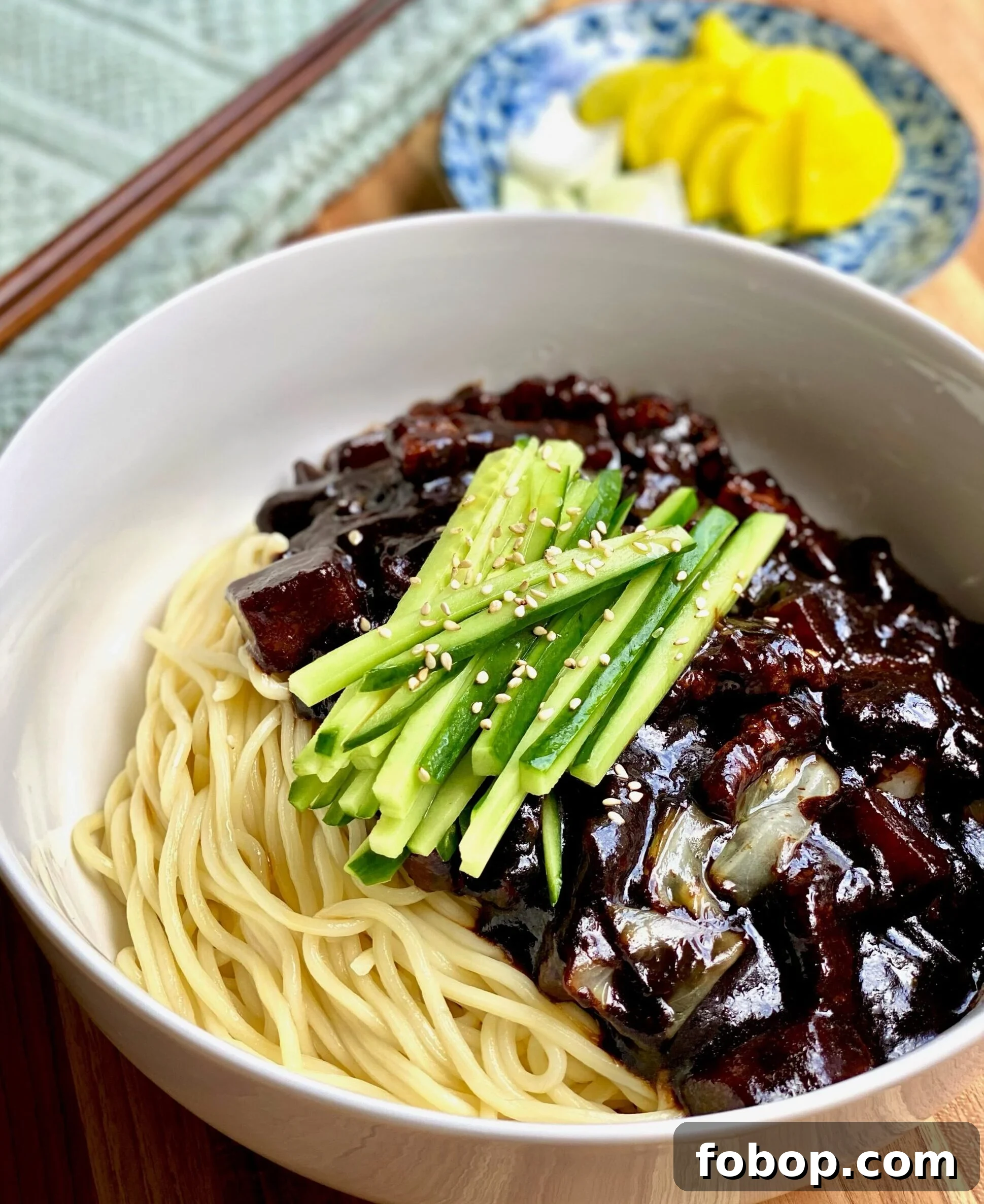
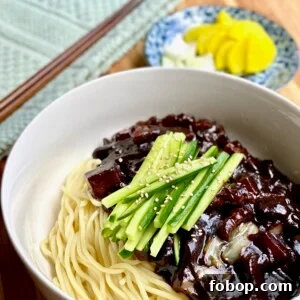
Jajangmyeon is one of Korea’s most beloved takeout dishes. This black bean noodle bowl offers a deep umami flavor balanced with a hint of sweetness, which makes it a favorite for both adults and children.
Whenever I eat jajangmyeon I’m transported back to Korea. For me it’s a nostalgic comfort food—memories of the delivery rider on a motorbike, heavy metal containers in tow, dropping off piping-hot noodles and later collecting empty bowls linger every time I take a bite.
Why You’ll Love This Recipe
- Restaurant quality: With testing and a few key techniques, this version tastes like it came from a good restaurant.
- Kid-friendly: Noodles are universally appealing, and the sweet-savory sauce is especially attractive to children.
- Great for meal prep: The sauce freezes and refrigerates well—just cook the noodles fresh when you’re ready to eat.
- Customizable: Swap the protein or add extra vegetables to suit your preferences. Pork belly is traditional, but beef or chicken work too.
Ingredients
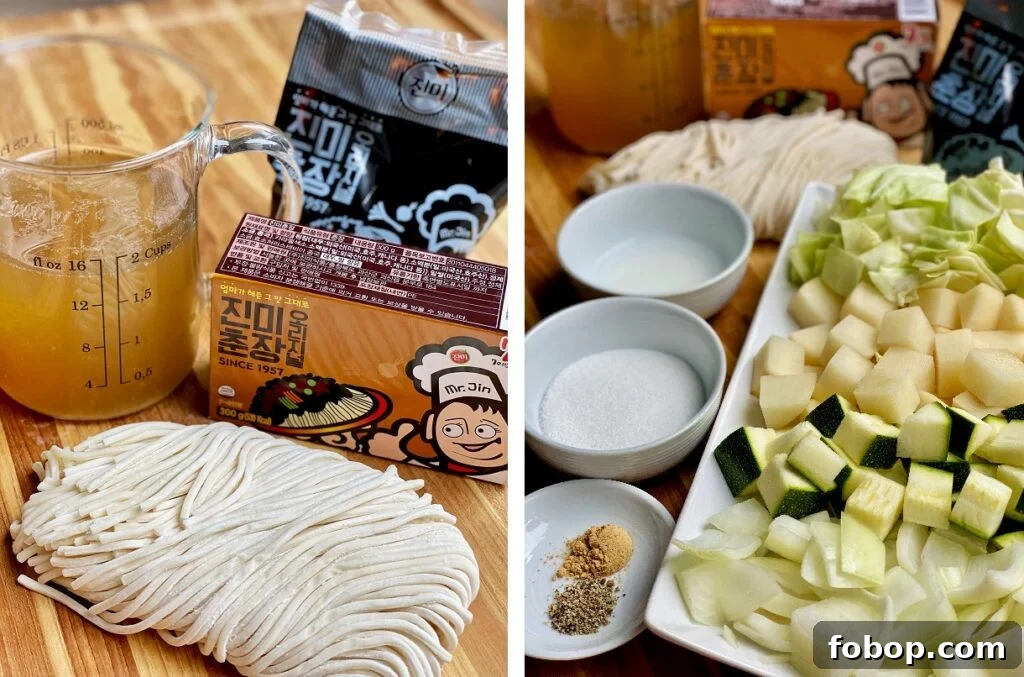
- Black bean paste (Chunjang) – Frying the paste properly is essential to remove bitterness and unlock its flavor, regardless of brand.
- Vegetables – Potato, cabbage, onion, and zucchini are classic. Mushrooms, carrots, or Korean radish can also be added.
- Beef broth – Using real beef broth gives the sauce more depth and brings it closer to restaurant flavor.
- Slurry – A starch (cornstarch or similar) mixed with water to thicken the sauce to your preferred consistency.
- Seasoning – Ginger powder and black pepper are enough. A small pinch of MSG and a dash of sesame oil finish the dish nicely, but are optional.
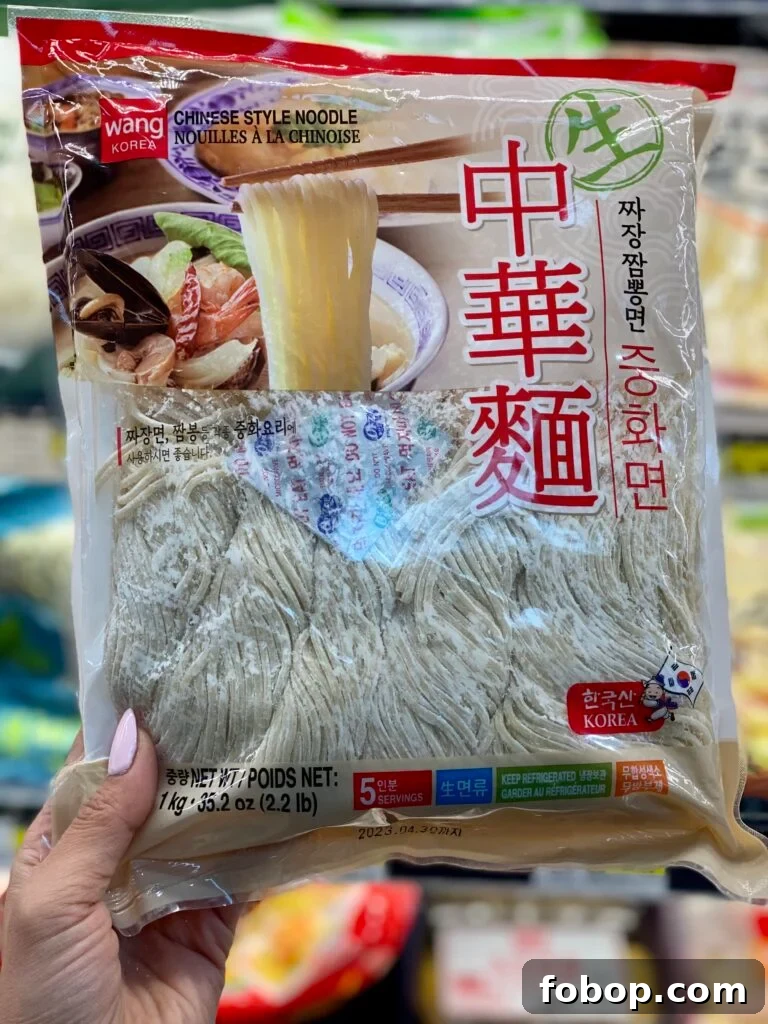
- Noodles – Look for chewy jajangmyeon or Joong-hwa-myeon style noodles; the Wang brand is a common choice.
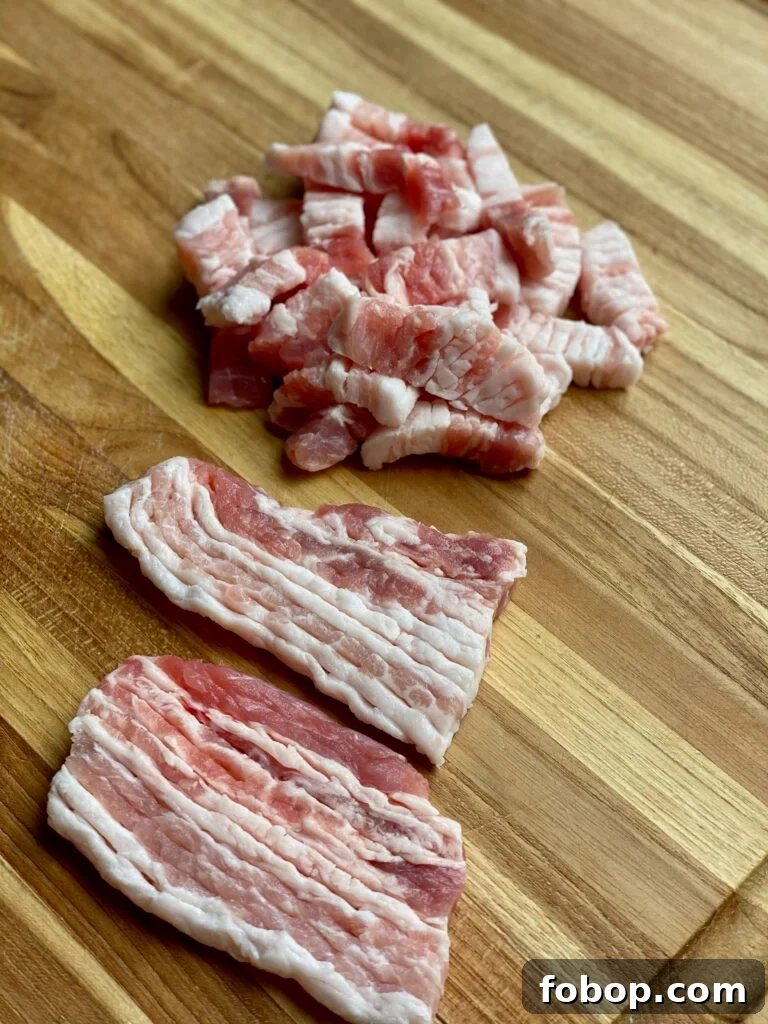
- Pork belly – Preferred for a rich result, though chicken or beef can be substituted.
Pro Tip
Score the pork belly before slicing. Scoring helps render fat evenly, develops flavor, and improves tenderness—especially helpful if the pork isn’t the highest quality.
Must-have sides for Jajangmyeon
Danmuji (yellow pickled radish) is practically mandatory. Its bright, acidic crunch cuts through the richness of the sauce and refreshes the palate.
Sliced cucumber provides crisp texture and fresh contrast—use plenty if you like a brighter bite in every forkful.
Variations
If you don’t have noodles or prefer rice, spoon the sauce over steamed white rice for jajang-bap—the same delicious sauce served with rice. Kimchi can be a better pairing for jajang-bap than danmuji, offering a tangy, fermented contrast.
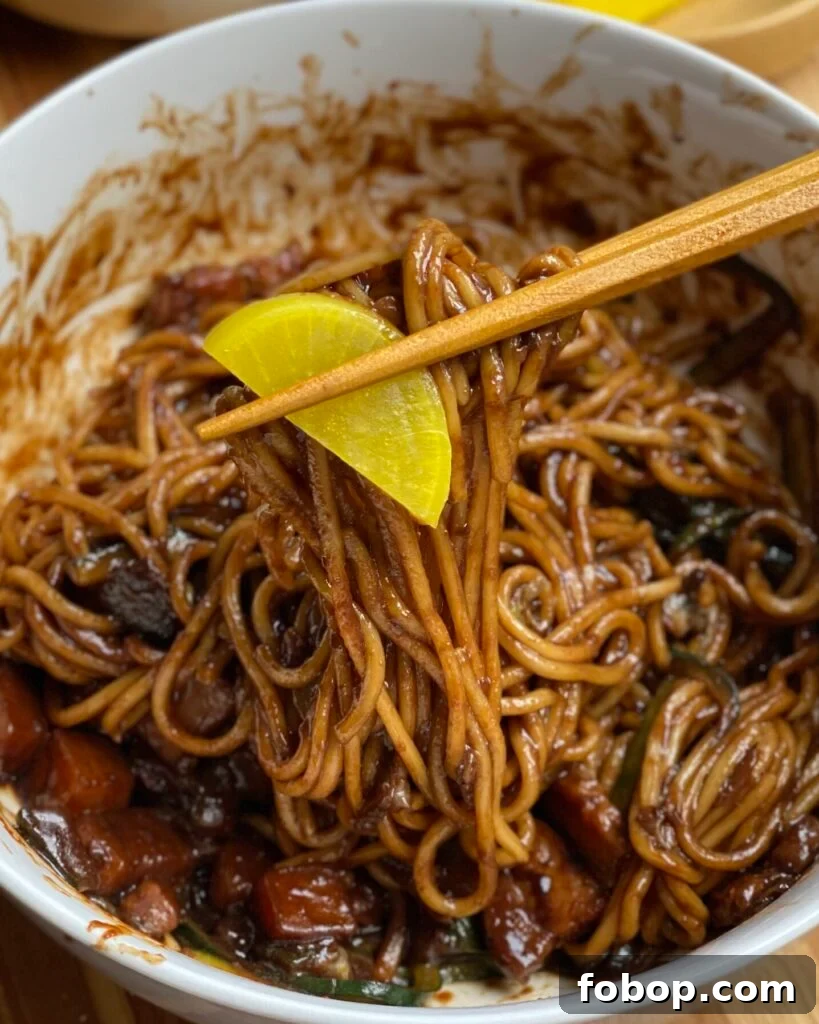
Tips for making restaurant-quality jajangmyeon
Fry the black bean paste thoroughly. This is the most common mistake—frying the paste in oil removes bitterness and develops its complex flavor.
Score the pork belly. Allow the fat to render so you can use that oil to sauté the vegetables and build flavor.
Use beef broth. It adds a deeper savory base than chicken broth and improves the overall richness.
Consider a pinch of MSG. Used sparingly, MSG enhances savory flavor much like restaurants do. It’s optional but helpful for an umami boost.
Under-cook the noodles slightly. Many package instructions overcook them; boil a minute or two less, then rinse under cold water to stop cooking and remove excess starch.
Frequently Asked Questions
Look for chewy wheat noodles labeled for jajangmyeon or Joong-hwa-myeon. Brands like Wang carry suitable noodles commonly found at Asian markets.
Jajangmyeon has a rich, savory umami base with a touch of sweetness and a mild bitterness from the black bean paste. The combination is hearty and comforting.
Pronounced roughly as “jjah-jahng-myun” (Ja = “jjah”; Jang = “jahng”; Myeon = “myun”).
Jajangmyeon is a Korean–Chinese dish introduced to Korea by Chinese immigrants and adapted over time to suit Korean tastes.
More Korean noodle recipes
Korean
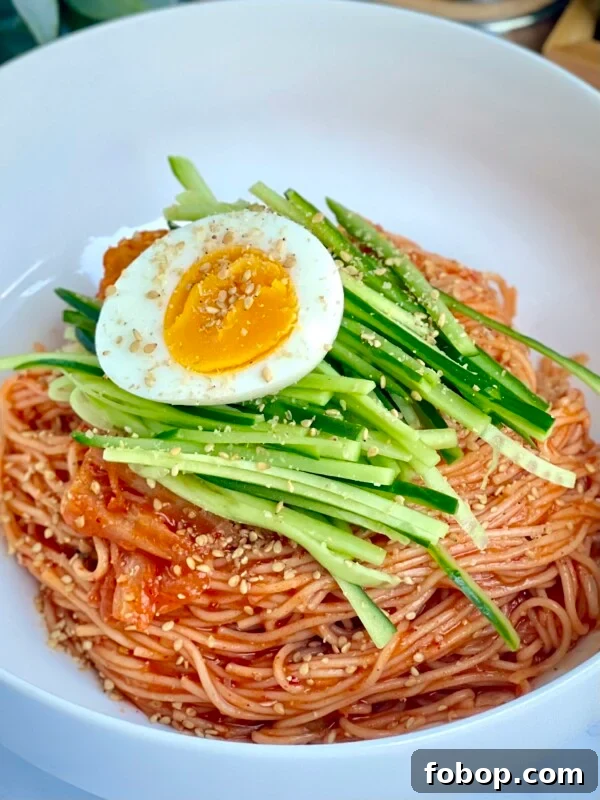
Bibim Guksu (Korean Spicy Cold Noodles)
Korean
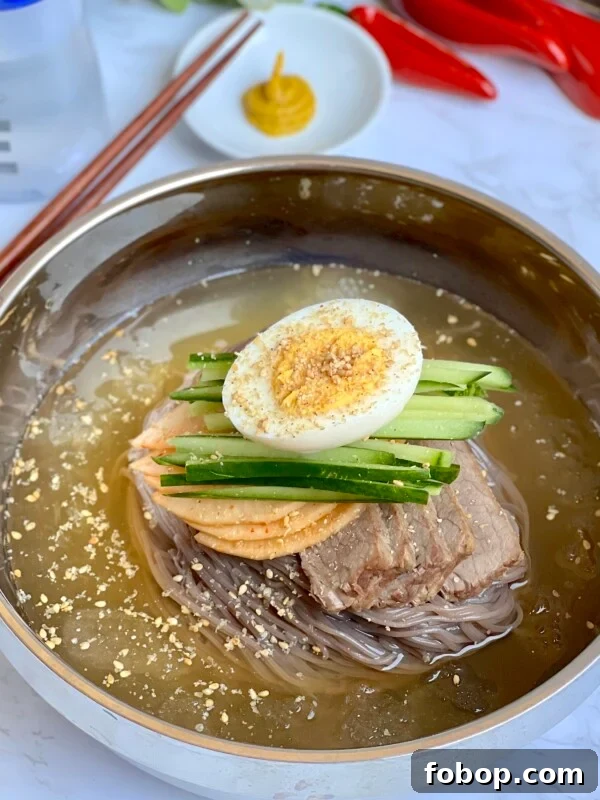
Mul Naengmyeon (Korean Cold Noodles)
Korean
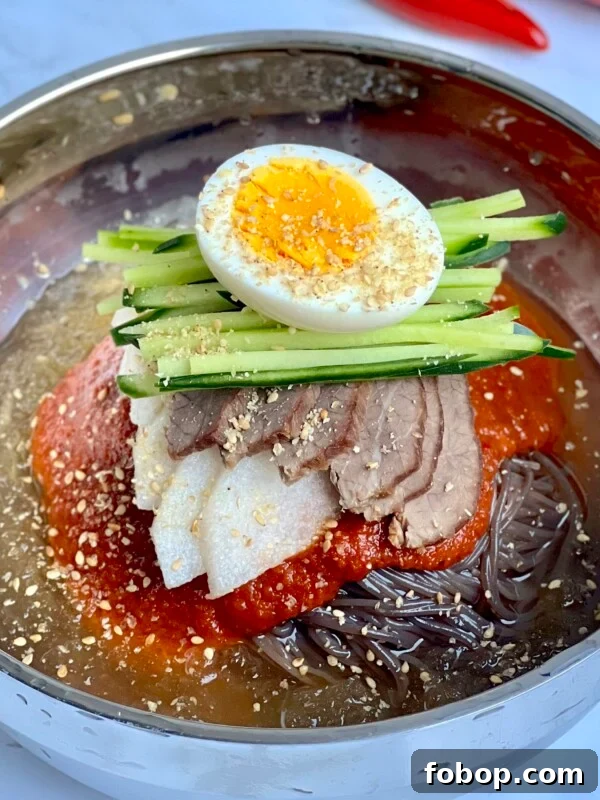
Bibim Naengmyeon (Korean Spicy Cold Noodles)
Did You Try This Recipe?
If you tried this jajangmyeon or any recipe here, please leave a star rating and share your thoughts in the comments. Your feedback helps others discover and enjoy this dish. Thank you.
Jajangmyeon 짜장면 – Korean Black Bean Noodles
Ingredients
- 1/2 lb pork belly, scored and thinly sliced
- 1 small onion, diced
- 1/2 cup Yukon gold potato, diced
- 1/2 cup zucchini, diced
- 1 cup cabbage, chopped
- 3 tbsp oil
- 1/2 cup chunjang (black bean paste)
- 1–3 tbsp sugar (adjust to taste)
- 1/2 tsp ginger powder
- 1/2 tsp black pepper
- 1 1/2 cups beef broth
- 1/4 tsp MSG (optional)
- 2–3 servings jajangmyeon noodles (cook slightly less than package time)
Slurry
- 2 tsp cornstarch
- 2 tbsp water
Garnish
- Sesame oil
- Sesame seeds
- Sliced cucumber
Instructions
- Prepare vegetables: cut onion, potato, zucchini, and cabbage into roughly 1/2-inch pieces.
- Score the pork belly and slice into 1-inch strips. Let it come to room temperature.
- Heat a nonstick pan over medium. Cook pork belly until lightly browned on both sides and a good amount of fat has rendered—leave the oil in the pan.
- Add onions and potatoes and sauté until the onions turn translucent, about 2–3 minutes.
- Add zucchini and cabbage and cook another 2–3 minutes.
- Make a well in the center of the pan. Add 3 tbsp oil in the well, then place the black bean paste on the oil and spread it. Tilt the pan so oil pools on the paste and fry the paste in the oil for about 3 minutes.
- Mix everything together and continue frying 2–3 minutes. Add ginger powder, black pepper, and sugar. Start with 1 tbsp sugar and add more to taste.
- Pour in beef broth and stir to combine. Add MSG if using.
- Stir in the cornstarch slurry and cook until the sauce is nearly at your desired thickness. Remove from heat—the sauce will thicken further as it cools slightly.
- Serve the sauce over jajangmyeon noodles or steamed rice. Finish with a small drizzle of sesame oil, garnish with sliced cucumber and sesame seeds, and serve with danmuji (yellow pickled radish).
Nutrition information is an approximation and should be used as a guideline only.
Additional Info
Author: Stella Navarro-Kim
Prep Time: 10 minutes • Cook Time: 15 minutes • Servings: 2
Cuisine: Korean, Chinese • Course: Main
Keywords: black bean noodles, jajangmyeon